
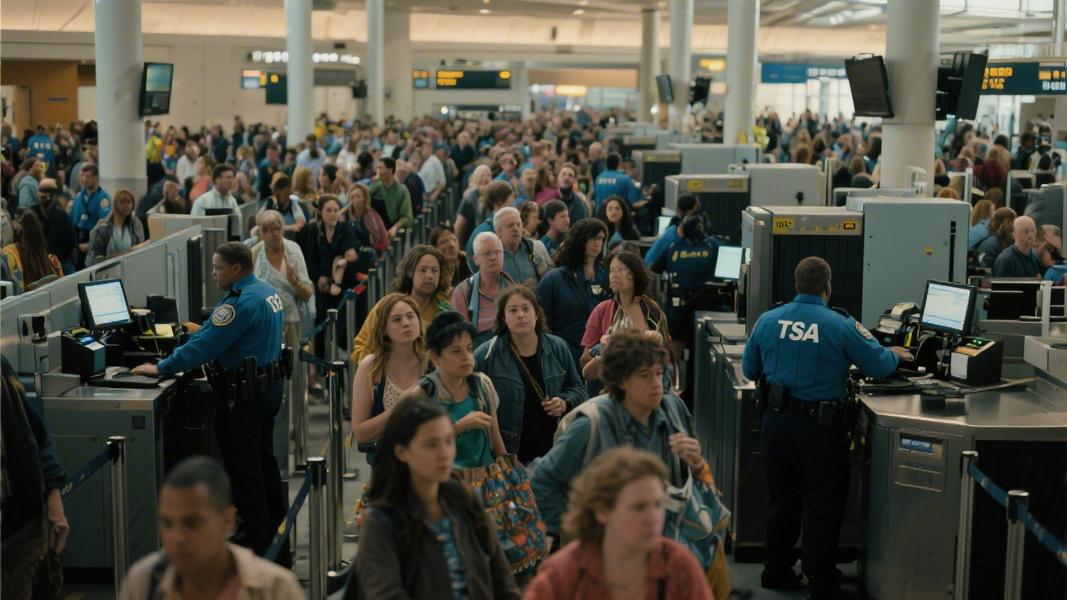
Spring break was supposed to mean sunshine and cheap flights. Instead, for thousands of American travelers this week, it’s meant standing in security lines that stretch far enough to make you question every life decision that led you to an airport.
The partial government shutdown — now squarely targeting the Department of Homeland Security — has drained TSA checkpoints of staff at the worst possible moment. With spring break travel surging across the country, the combination of peak passenger volume and a depleted workforce has produced security wait times of up to three hours at major U.S. airports, leaving many travelers scrambling, frustrated, and in some cases, simply watching their flights leave without them.
The Numbers Tell the Story
How busy are we talking? On Sunday, March 8 alone, nearly 2.8 million travelers passed through TSA checkpoints — the highest single-day volume since January 4 — according to data reported by Business Insider. That’s an enormous crush of people on any normal weekend. Pair it with an agency bleeding officers, and you’ve got a genuine crisis unfolding in real time at terminals across the country.
Since the DHS shutdown began, more than 300 TSA officers have left the agency. Unscheduled absences are running at roughly 6% nationwide — a figure that sounds modest until you consider what it means at a high-traffic checkpoint during one of the busiest travel weeks of the year. Fox Business noted the grim downstream effect plainly: “For passengers that did not factor in the possibility of longer lines, many are missing their flights as a result.”
Blame Is Flying as Fast as the Delays
Politically, the finger-pointing started almost immediately. Republicans were quick to frame the chaos as a Democratic failure, with one pointed statement circulating widely: “The Democrats’ DHS shutdown has led to HOURS long security lines at airports across the country, leading Americans to miss their spring break flights.” Democrats, for their part, have pushed back on that framing, arguing the shutdown reflects broader dysfunction in Washington rather than any single party’s agenda. That debate is unlikely to be resolved before the lines get shorter.
Still, for the traveler standing in a snaking queue at O’Hare or LAX with a boarding pass set to expire in forty minutes, the partisan backstory is cold comfort. iHeart highlighted the staffing shortage’s direct impact on checkpoint operations, noting that the crunch is hitting hardest at the country’s busiest hubs — precisely the airports where delays have the most cascading effect on connecting flights and travel plans.
What Travelers Are Facing Right Now
The practical advice from travel experts is straightforward, if a little grim: arrive at least three hours early for domestic flights, consider TSA PreCheck if you haven’t already, and mentally prepare for the possibility that even that buffer might not be enough. Spring break runs through late March for many school districts, which means this isn’t a one-weekend problem. The pressure on checkpoints is likely to persist for weeks.
That’s the catch. A shutdown that began as an abstract Washington standoff has now landed — quite literally — in the laps of families trying to get to Florida, college students headed to Cancún, and retirees finally taking that trip they’ve been putting off. The shutdown doesn’t feel abstract anymore when you’re watching the departure board flip to “CLOSED” on your flight.
Whether Congress moves to resolve the DHS funding impasse before the rest of spring break plays out remains to be seen. In the meantime, the TSA is doing what it can with what it has — which, right now, is considerably less than it needs. And somewhere in a terminal, someone is definitely missing their flight.
