
When systems fail people — on the road, in the classroom, in the halls of government — the damage doesn’t always look the same. But it tends to land on the same communities.
That’s the thread running through a remarkable convergence of stories this week, drawn from literature, policy archives, and the lived experience of students and families caught inside institutions that move too slowly, or not at all. Taken together, they raise an uncomfortable question: who actually bears the cost when decisions get made at a distance?
A Body Count in the Classroom
Start with Chicago. 17,000 students displaced. 15,000 staff suddenly without placements. And a school system that, by the numbers, closed buildings where 89% of the enrolled students were Black. The superintendent at the time, facing a wall of justified fury, insisted, “I think I understand the anger and angst. In the skin that I wear, this is clearly not a racist attack.” Whether you believe that or not probably depends on which side of those closures you were standing on.
It’s a line that’s aged badly. The demographics were not ambiguous. The disruption was not theoretical. Children moved. Teachers scrambled. Entire school communities — built over decades — were dissolved in a single administrative stroke. And the justification, as it so often is, was fiscal. Efficiency. Consolidation. The language of spreadsheets applied to the lives of kids.
Infrastructure, Promises, and the Long Road Nowhere
This isn’t new, of course. Decades before Chicago’s closures made headlines, a different kind of institutional failure was playing out in West Virginia. In 1935, Ernest L. Bailey, the state’s road commissioner, stood before federal officials and requested an allotment of $20,000,000 for the construction and improvement of non-Federal roads. The roads, he argued, were in desperate shape. Communities were cut off. Commerce was strangled. The appeal was straightforward — build the infrastructure, connect the people.
Whether the money came through, or whether it went the way of so many such requests — absorbed into bureaucracy, reallocated, delayed — is a story that has repeated itself across nearly every decade since. That’s the catch. The ask is always reasonable. The follow-through is always complicated.
What Literature Knows That Policy Forgets
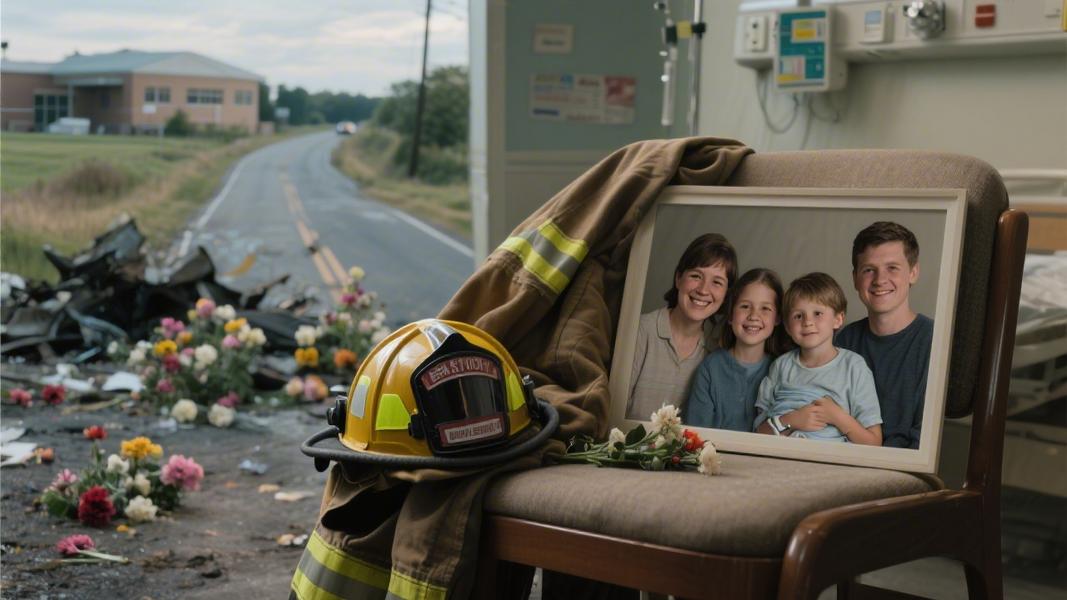
Sometimes fiction gets closer to the bone than any policy brief ever could. Sandra Richmond’s 1985 novel Wheels for Walking opens with a head-on collision that leaves eighteen-year-old Sally Parker paralyzed from the chest down. It’s brutal in its directness. A teenager. A road. A life rerouted permanently in a single moment.
Thomas Wolfe understood that same sudden rupture. In Look Homeward, Angel, published back in 1929, characters hear something go wrong before they can even process it — “They spoke matter-of-factly, and hastened up the steps as they heard a crash upstairs, and a woman’s cry,” Wolfe wrote. Short sentence. Long consequence. The crash comes first. The understanding follows. It almost always does.
Still, there’s something worth sitting with in both of those moments. Neither is a metaphor, exactly. They’re portraits of how fast ordinary life can pivot — and how unprepared the systems around us tend to be when it does.
The Countdown Nobody Hears
How do decisions get made when the stakes are highest? Carefully, you’d hope. Deliberately. In a film reconstruction of D-Day command decisions, Admiral Alan Goodrich Kirk delivers what might be the most chilling kind of line — calm, clipped, inevitable: “in exactly two minutes the fleet will open fire.” The moment is documented in academic analysis of how historical film depicts military authority. It’s a small detail. But it captures something true about how institutional power operates — with precision, on schedule, and rarely pausing to ask who’s in the way.
That quality — the administrative countdown, the policy memo, the budget cut announced in a press release — is exactly what connects a West Virginia road commissioner in 1935 to a Chicago school board in the 2010s. The fleet opens fire. The schools close. The students move. And somewhere in the record, a note gets filed, and something is lost.
The Cost of Distance
What all of these stories share — the paralyzed teenager, the displaced schoolchildren, the unfunded roads, the literary crashes nobody saw coming — is a reckoning with distance. The distance between a decision and its consequences. Between the person who signs the order and the person who lives inside it.
It’s not always malice. Sometimes it’s indifference. Sometimes it’s just the ordinary machinery of institutions doing what institutions do — optimizing for the center, shedding the edges, and calling it progress. The anger that follows is never really a surprise. It’s just inconvenient.
As one of those Chicago parents might have put it: understanding the anger isn’t the same thing as doing something about it.
