
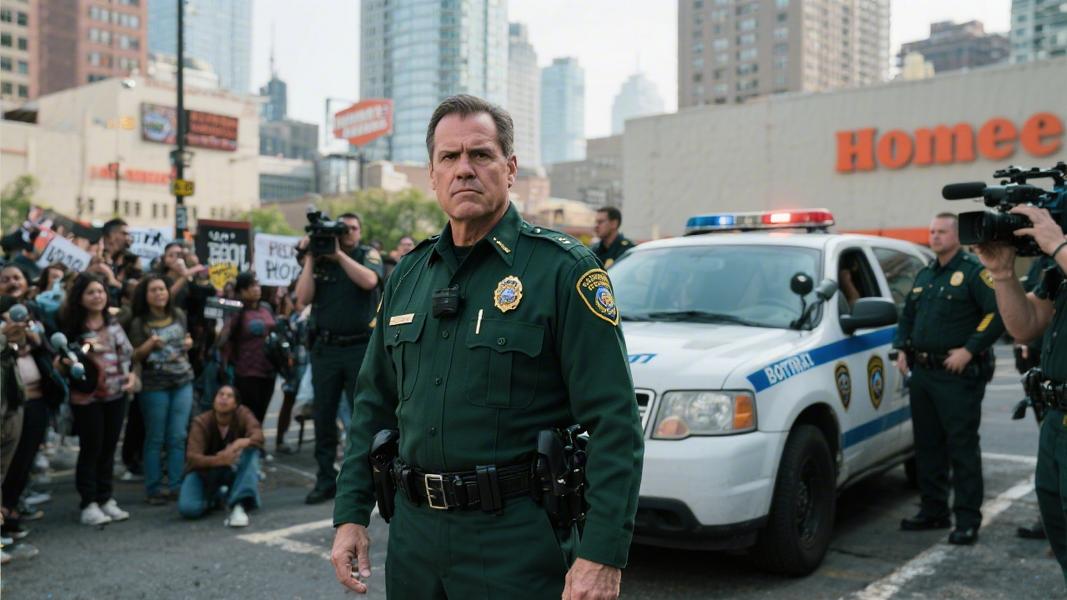
Gregory Bovino, the outspoken Border Patrol official who became one of the most visible — and polarizing — faces of the Trump administration’s immigration crackdown, is calling it a career. After 30 years in federal service, he’s out at the end of March 2026.
His departure caps a turbulent stretch that took him from the California-Mexico border to the parking lots of Home Depot stores in Los Angeles, to the streets of Minneapolis — where things went badly, and publicly, wrong. Bovino’s retirement is the latest high-profile exit from an immigration enforcement apparatus that has seen significant reshuffling in recent months, coming alongside the reassignment of Homeland Security Secretary Kristi Noem.
From the Border to the Interior
For years, Bovino served as chief patrol agent of the El Centro sector along the California-Mexico border — a demanding but relatively conventional post for a career Border Patrol official. That changed fast once the Trump administration began deploying agents into the country’s interior cities. Bovino didn’t just participate in that effort. He led it.
His team of green-uniformed Border Patrol agents hit Los Angeles first, in June 2025, conducting immigration arrest operations that drew immediate backlash from local officials and community groups. The scenes at Home Depot parking lots became something of a flashpoint — images that crystallized the debate over how far interior enforcement should go, and how it should look. Then came Chicago, Charlotte, New Orleans, and finally Minneapolis, where the operation would ultimately unravel around him.
During those deployments, agents under Bovino’s command were documented stopping individuals and asking for their immigration status based on factors that included a person’s accent — a practice that critics said amounted to racial profiling and drew fresh legal scrutiny to the entire operation.
Thousands of Arrests — and Serious Questions
It’s not as though the operations produced nothing. Bovino, 55, oversaw raids that netted thousands of arrests, including convicted gang members, murderers, and child sex abusers. The administration held those numbers up regularly as evidence that the crackdown was working. Supporters credited Bovino with doing what previous administrations had been unwilling to do.
But it’s not that simple. His tactics in Kern County, carried out near the end of the Biden presidency under the name Operation Return to Sender, were later ruled illegal by a federal judge. That ruling didn’t slow the broader operation down — but it cast a long shadow over his methods and the legal durability of what his teams were doing on the ground.
Minneapolis, and the Moment Everything Changed
What finally ended Bovino’s run wasn’t a court ruling. It was January 2026, and the fatal shootings of two U.S. citizens — Renee Good and Alex Pretti — during operations in Minneapolis. The killings themselves triggered political backlash. What made it worse was what came next.
Immediately after Pretti’s death, Bovino publicly claimed — without citing any evidence — that Pretti had intended to “massacre” federal agents. The statement landed like a grenade. Criticism came not just from the left, but from within the Trump administration itself. Within days, Bovino was removed from leading Operation Metro Surge, the Minneapolis crackdown he had been overseeing. Border Czar Tom Homan was dispatched to the city to take over on the ground.
White House Press Secretary Karoline Leavitt called Bovino “a wonderful man” while announcing the transition — the kind of send-off that’s warm enough to soften a demotion but doesn’t quite obscure what it is. Homan, she said, would be “the main point of contact on the ground in Minneapolis.”
Thirty Years, and a Final Statement
Bovino had been serving as commander-at-large of the Border Patrol from October 2025 through January 2026 — a role that placed him at the center of the most aggressive phase of interior immigration enforcement in recent memory. Now, at the end of this month, that chapter closes.
In a statement, Bovino struck a reflective tone. “The greatest honor of my entire life,” he said, “was to work alongside Border Patrol agents on the border and in the interior of the United States in some of the most challenging conditions the agency has ever faced.” Whatever one thinks of the tactics, there’s little doubt the conditions were exactly that.
Still, the legacy he leaves behind is contested terrain — thousands of arrests on one side of the ledger, two dead U.S. citizens, a federal judge’s ruling, and videos of agents questioning people because of how they sound on the other. Thirty years of federal service, and in the end, it’s the last few months that people will be arguing about for a long time.
