
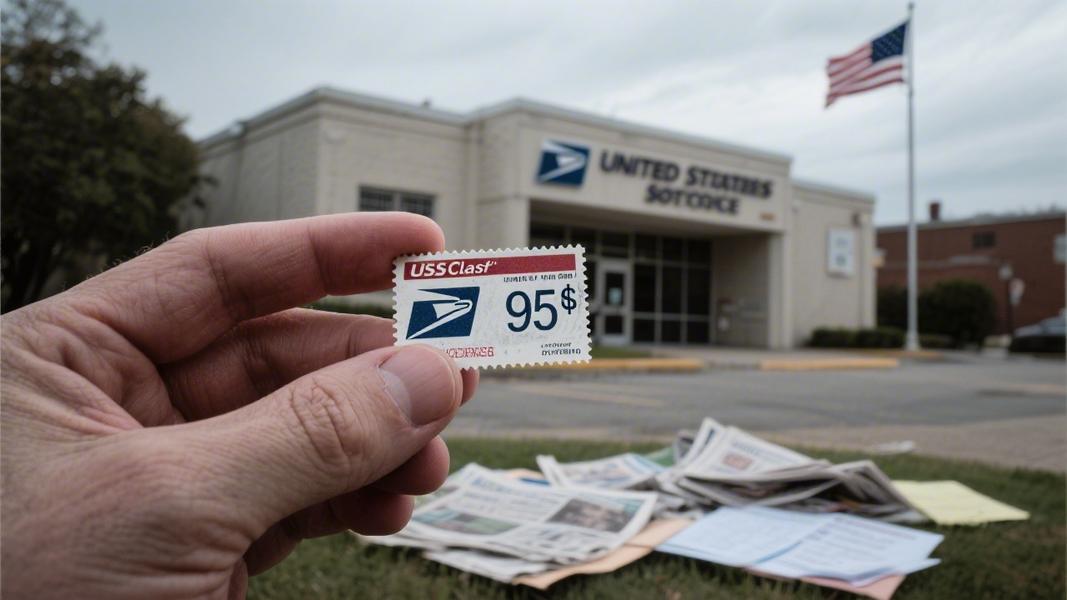
The price of mailing a letter could soon cost nearly a dollar — and the man now running the U.S. Postal Service says there may be no other choice.
Postmaster General David Steiner told Congress this week that the USPS is eyeing a first-class stamp price somewhere between 90 and 95 cents — a sharp jump from the current 78-cent rate that only took effect in July 2025. The agency, he warned, is not just struggling. It’s running out of time.
A Crisis, Not Just a Rate Hike
How bad is it? Steiner didn’t mince words. Testifying before lawmakers, he said the Postal Service posted a staggering $9 billion loss in 2025 and, without meaningful changes, could literally run out of money within a year. “I am not sure that the American public is aware that the Postal Service is at a critical juncture,” Steiner said. “Less than a year from now, the Postal Service will be unable to deliver the mail if we maintain the status quo.”
That’s not the kind of line a federal official drops lightly in front of Congress. It’s a warning shot — aimed at lawmakers, the public, and anyone who still drops a birthday card in a blue mailbox.
Steiner laid out the math in blunt, almost corporate terms. “As you all know, there are only three things that any company can do to improve financial performance — sell more products, raise prices or cut costs,” he said. “On the pricing side, we need to look for higher prices on both our package and mail products.” It reads like a turnaround memo from a struggling retailer. Except this is the institution that binds together 160 million delivery addresses across the country.
What’s Already Changed — and What Hasn’t Yet
Still, the jump to 90-plus cents on a stamp isn’t happening tomorrow. For now, the price increases that took effect January 18, 2026 left first-class mail entirely untouched. No change to the stamp. No change to metered letters or international first-class mail, either, as confirmed in USPS rate change documentation.
What did go up was shipping. The January changes hit package services with notable force: Priority Mail jumped 6.6%, starting at $10.20 for a one-pound shipment; Priority Mail Express rose 5.1%, now opening at $33; and USPS Ground Advantage climbed 7.8%, starting at $7.30. Parcel Select went up 6.0%. The USPS announced the competitive service price changes in November 2025, framing them as necessary adjustments to stay viable in the package delivery market.
The detailed pricing tiers — some categories starting as low as $1.63 — were laid out in Notice 123, the agency’s official rate schedule. For small businesses and high-volume shippers, those numbers matter considerably more than the price of a single stamp.
The Stamp Hike Is Coming — Just Not Yet
But it’s not that simple to separate the two conversations. The January shipping increases and the proposed stamp hike are part of the same financial emergency. The USPS has signaled a mid-2026 price change for first-class Forever stamps, though specific figures haven’t been formally announced. What is confirmed is a July 12, 2026 effective date already listed on the Postal Service’s official price change calendar — a date that now carries considerably more weight given Steiner’s congressional testimony.
Mailing service platforms and shippers have been tracking all of this closely. A breakdown from Stamps.com confirmed that the January 2026 round affected only competitive package services, with mailing services and first-class stamps left unchanged — for now. A walkthrough of the January changes, published in video format, echoed the same conclusion: shipping costs are rising, the stamp is holding, but that window appears to be closing.
The Bigger Picture
There’s a quiet irony in all of this. First-class mail volume has been declining for years as Americans shifted to email, digital billing, and online communication. The very thing that made stamps less essential is now part of what’s draining the Postal Service’s finances — fewer letters means less revenue from the product that once anchored the entire operation.
Raising the stamp to 95 cents won’t reverse that trend. If anything, it might accelerate it. But Steiner’s argument, stripped down, is that the alternative — doing nothing — leads somewhere far worse. An institution that delivers Social Security checks, prescription medications, and absentee ballots doesn’t get to quietly go insolvent without consequences that ripple far beyond the mailroom.
Whether Congress acts, whether the rate hike materializes at 90 cents or 95 cents or something in between, one thing is clear: the era of the cheap American stamp may be ending. And the Postmaster General is betting that the American public, once they understand the stakes, will be willing to pay for it — even if they’re not quite ready to hear the price.
