
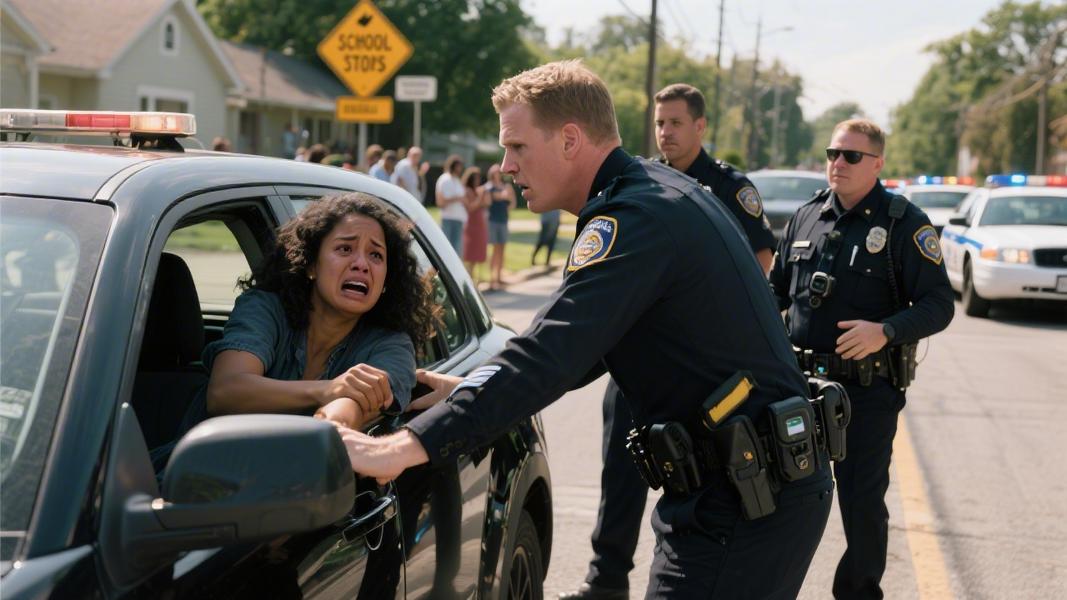
A routine traffic stop in Hurst, Texas has turned into anything but routine — sparking a viral firestorm, a formal excessive force complaint, and a departmental investigation that ultimately cleared the officer involved.
At the center of it all is Taneisha Thompson, a woman pulled over by Corporal Morgan of the Hurst Police Department for allegedly driving 40 mph in a 25-mph school zone. What followed — captured on bodycam and a separate video that spread rapidly across social media — has reignited a deeply familiar debate about police use of force, civilian rights during traffic stops, and who gets to decide when enough is enough.
How It Unfolded
According to bodycam footage released by the Hurst Police Department, Cpl. Morgan stopped Thompson for speeding in a school zone — a serious enough infraction on its own. The situation deteriorated quickly when Thompson refused to accept the citation, reportedly throwing it out the window. Officers then attempted to remove her from the vehicle after she declined to exit voluntarily. That’s when things got physical.
The viral video showed officers pulling Thompson from her car — a scene that, depending on who’s watching, reads either as a necessary escalation or a disturbing overreach. Reactions online were swift and polarizing, as they tend to be.
The Injuries
How bad was it? According to Thompson’s attorney, Lee Merritt, pretty bad. “Mrs. Thompson had a black eye, she had a busted lip, requiring 3 to 4 stitches, and other scarring and soft tissue injuries that she’s recovering from,” Merritt told CBS News Texas. A black eye. Stitches. Soft tissue damage. Whatever one believes about the legality of the stop or the officer’s conduct, those are real injuries on a real person.
Still, the Hurst Police Department isn’t budging. Police Chief Billy Keadle issued a firm defense of his officer’s actions, stating plainly: “Cpl. Morgan acted in full accordance with the law and the department’s policies and the department stands firmly behind his actions.” That’s about as unambiguous as official statements get.
The Investigation — and Its Conclusion
A formal complaint of excessive force was filed on January 20, 2026. The department’s internal affairs division took it up, conducted its review, and determined the claims were unfounded. Case closed — at least internally.
But it’s not that simple, is it? Internal affairs investigations clearing their own officers are hardly a new phenomenon in American policing, and critics have long questioned whether such reviews can ever be truly impartial. Thompson’s legal team, led by Merritt — a high-profile civil rights attorney — has shown no signs of letting the matter rest with a departmental ruling.
Where Things Stand
For now, Hurst PD has its bodycam footage, its internal clearance, and its chief’s public backing of Cpl. Morgan. Thompson has her injuries, her attorney, and a video that millions of people have already watched and formed opinions about. Neither side appears ready to move on quietly.
The speeding violation that started it all — 15 miles over the limit in a school zone — is the kind of infraction that gets children killed. That context matters. So does what happened after the blue lights came on. Both things can be true at once, which is precisely what makes cases like this so difficult to resolve — and so impossible to stop watching.
