
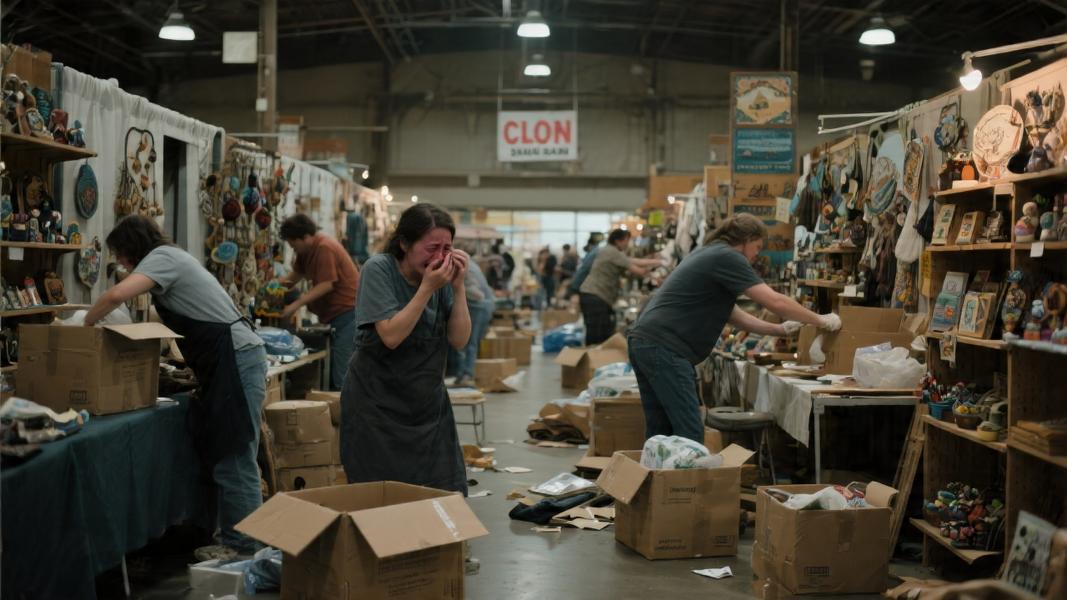
One Tuesday morning email was all it took. Painted Tree Boutiques — a retail chain that had built its identity around small, independent vendors — abruptly shuttered all of its more than 60 locations nationwide, leaving hundreds of business owners scrambling to recover their merchandise, their money, and in some cases, their livelihoods.
The company cited rising costs, shifting market conditions, and changes in consumer shopping behavior as the driving forces behind the decision. Its last official day of business was Monday, April 13, 2026 — though vendors didn’t learn any of this until an email landed in their inboxes the following morning, instructing them to remove their merchandise by April 24. For many, it was the first indication anything was wrong. For others, it confirmed what they’d already suspected.
A Sudden End to a Decade-Long Model
Founded in 2015, Painted Tree operated as an indoor marketplace — something between a boutique and a flea market, but more curated than either. Independent vendors rented booth space, stocked their own products, and designed their own displays. The company handled foot traffic and transactions; the vendors handled everything else. It was a model that worked well enough to grow into a national chain. Until, apparently, it didn’t.
In the Dallas-Fort Worth area alone, six locations operated — in Mansfield, North Richland Hills, Grapevine, Frisco, Highland Village, and Lewisville. The Mansfield store alone housed roughly 240 booths, according to vendor estimates, with many vendors renting space at more than one location simultaneously. Do the math across the full chain and the number of affected small businesses climbs quickly into the thousands.
The Warning Signs Were There
Here’s the thing, though. For some vendors, this wasn’t entirely out of nowhere. In the months before the closure, vendors reported experiencing delayed or outright incorrect payments — with some waiting up to six months to be paid. That’s not a minor accounting hiccup. That’s a signal.
Still, the abruptness of the shutdown caught nearly everyone off guard. Painted Tree’s payment structure meant vendors were typically paid in a lump sum at the beginning of the following month. With the chain closing mid-April, many vendors may never see payment for any sales made during April at all. The money, in other words, may simply be gone — absorbed into whatever financial unraveling led to this moment. Houston-area small business owners described being blindsided by the news, with little clarity on what recourse, if any, they have.
Ladies Night Was Still on the Calendar
Want to know just how sudden this really was? As late as Monday night — the same night that would turn out to be Painted Tree’s final night in business — the company was still promoting a Ladies Night event scheduled for Thursday, April 16, on its social media channels. No hint of trouble. No hedging. Just a cheerful promotional post for an event that would never happen.
By Tuesday morning, the email had gone out. The doors were effectively closed. The Ladies Night post presumably still sat there on someone’s feed, a small and slightly surreal artifact of a business that no longer existed.
Corporate Silence and Unanswered Questions
Painted Tree’s official statement leaned on broad, almost philosophical language. “The retail landscape has changed in ways none of us could have fully anticipated,” the company said. That’s true, in a sense — but it’s also the kind of statement that explains everything and nothing at the same time.
The company has not responded to questions about the abruptness of the shutdown or whether bankruptcy proceedings are involved. That silence has done little to ease the anxiety of vendors who are now racing against an uncertain clock. As one vendor put it, the email said they had until the 24th to collect their merchandise — but, as she noted, “rumor has it that the landlords could shut the doors at any time.”
That uncertainty — not just about the timeline, but about the money, the merchandise, and the legal landscape — is what vendors are living with right now. Small business owners who built their side incomes, or in some cases their primary incomes, around the Painted Tree model are left trying to figure out what comes next with very little information and even less time.
It’s a familiar story in American retail, really — a concept that rode one wave, couldn’t catch the next, and left the people closest to the ground floor holding the tab. The retail landscape changed, as Painted Tree said. It just didn’t give anyone a heads-up before it did.
