
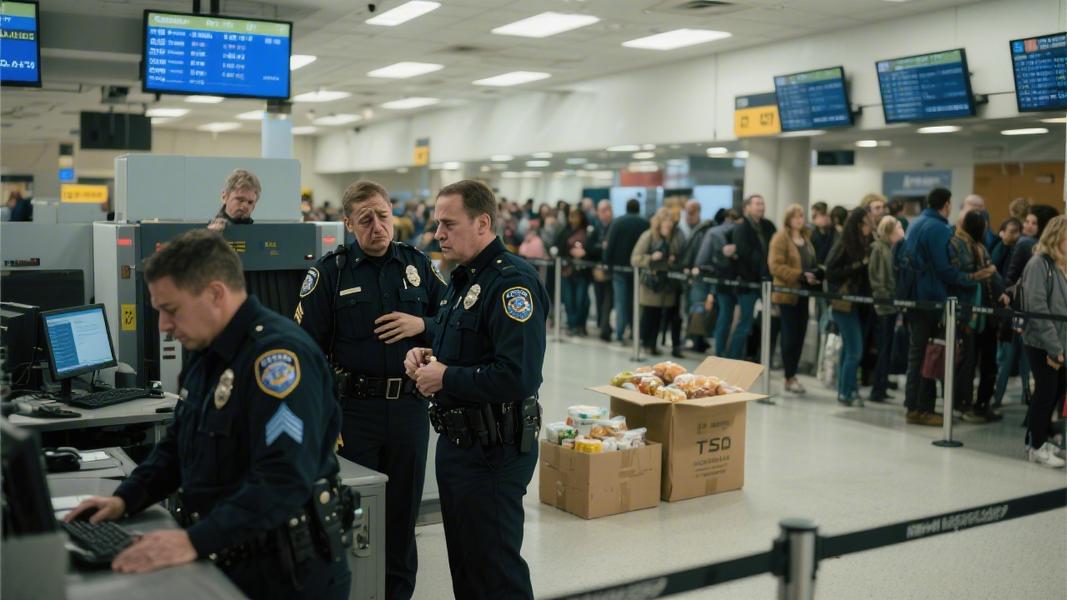
Five weeks without a full paycheck. Benefits still being deducted. And millions of travelers expecting someone to show up and keep their flights safe.
That’s the reality facing tens of thousands of Transportation Security Administration officers across the country as a partial government shutdown — now in its 35th day — grinds federal workers toward a breaking point. What began on February 14 has metastasized into a full-blown operational crisis at some of America’s busiest airports, with resignations mounting, security lines stretching for hours, and experts warning the worst may still be ahead.
Workers Running on Empty
In North Texas, TSA officer Brown put it plainly. Reported by CBS News, Brown described a situation that has become grimly common across the workforce: “The last time I got a paycheck was one week’s worth, was five weeks ago,” adding that deductions for benefits were still being taken out regardless. That’s not a hardship. That’s a financial emergency — and it’s playing out for more than 50,000 TSA officers nationwide, many of whom are working without pay for the third time in six months.
The numbers tell the rest of the story. As of Tuesday, 366 TSA screeners have quit since the shutdown began. Thousands more simply haven’t shown up. Absence rates at JFK, Atlanta, and New Orleans airports have surged between 25 and 40 percent, according to sources familiar with internal agency data. Philadelphia International Airport has seen outright checkpoint closures. The math isn’t complicated — fewer officers means longer lines, and longer lines mean a security architecture that’s visibly fraying.
How Bad Is It, Really?
Bad enough that a senior administration official, speaking anonymously, reached for a metaphor that doesn’t leave much room for optimism. “Like a snowball going down the hill,” the official told Politico. The concern isn’t just the immediate disruption — it’s what comes next. Spring break travel is already stressing a system operating well below capacity. But summer is where officials are losing sleep. “I’m extremely worried, not just short term but throughout the summer,” the official said. “World Cup and America250 could be crippled if this isn’t resolved asap.”
That’s not hyperbole. The 2026 FIFA World Cup and the America250 celebrations are expected to draw unprecedented volumes of international and domestic travelers to U.S. airports. Hosting those events with a depleted, demoralized TSA workforce isn’t just an inconvenience — it’s a national security and economic liability. Still, a resolution hasn’t materialized, and negotiations remain stalled.
Airports Already Feeling It
Walk through Hartsfield-Jackson Atlanta International Airport right now and you’ll understand why travelers are frustrated — and why they’re also, to their credit, placing blame in the right direction. More than one-third of TSA officers at the nation’s busiest airport called out, producing hours-long security lines. “I feel bad for the workers… They need to be paid!” one traveler said at Hartsfield-Jackson — a sentiment that’s becoming harder to argue with the longer this drags on.
Similar scenes have unfolded at Houston’s George Bush Intercontinental, New York’s LaGuardia, and Philadelphia International, where the situation has been particularly acute. The disruption isn’t evenly distributed — some airports are managing better than others — but the directional trend is unmistakable and, experts warn, accelerating.
A Partial Fix on the Table?
One proposal circulating among negotiators would sidestep the larger budget impasse entirely — at least temporarily. “A bill that would pay the TSA agents, keep the lights on for a very short period of time and allow time for this negotiation,” one official described, speaking on condition of anonymity. It’s a narrow lifeline, not a solution. But at this point, narrow lifelines are what’s on offer.
Congressional Republicans have been pointed in their framing, characterizing the ongoing Department of Homeland Security funding lapse as a Senate Democrat-led shutdown — one that, in their telling, is actively fueling airport disruptions and heightening security risks during an already volatile stretch of severe spring weather and elevated travel demand. Democrats, predictably, see the blame differently. What both sides share, whether they’ll admit it or not, is responsibility for a workforce that’s being asked to protect the traveling public while wondering how to pay rent.
The Human Cost Behind the Headlines
It’s easy to reduce this story to flight delays and political finger-pointing. But the 100,000-plus DHS employees caught in this standoff aren’t abstractions — they’re people who chose public service, took on the unglamorous work of keeping airports safe, and are now watching their savings evaporate while Washington haggles. The resignations that have already happened won’t be reversed when a deal is eventually struck. Institutional knowledge walks out the door with every officer who decides they’ve had enough.
That snowball the official mentioned? It doesn’t roll back up the hill on its own.
