
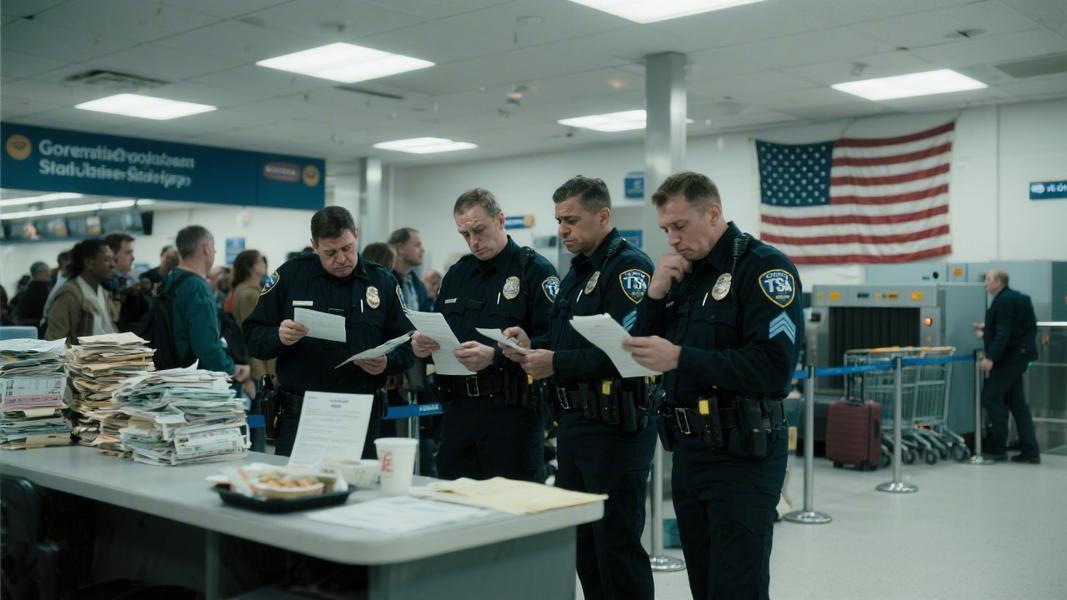
The paychecks finally came. But for hundreds of Transportation Security Administration officers, they came too late.
After 45 days without pay during a partial government shutdown ordered by President Trump, TSA officers across the country began seeing backpay hit their accounts — 160 hours worth, for most. It should have been a relief. Instead, the money landed in bank accounts already ravaged by late fees, missed bills, and in some cases, resignation letters that had already been submitted and accepted.
The Human Cost Behind the Headlines
Johnny Jones knows this workforce better than most. As president of Local 1040 AFGE and secretary/treasurer of TSA Council 100, he represents nearly 50,000 TSA members nationwide — and he’s been watching them struggle in real time. “For the last five months, TSA officers went to work for three months without pay. Think about that,” Jones said.
One employee racked up nearly $2,000 in late fees alone. Others drained savings, leaned on family, or simply couldn’t hold on. The backpay, while welcome, didn’t erase the damage — it mostly went straight toward debt. That’s not a recovery. That’s triage.
Still, Jones isn’t ready to give up on the officers who walked away. “Pick up the phone, call your manager, call the person you resigned to, and tell them you’d like your job back,” he urged. He added that he’s pushing TSA management to actively reach out to those who quit and welcome them back. It’s a long shot for some, but Jones is playing the long game. He’s been a TSA officer for 24 years, and he’s not the type to fold under pressure. “I’m not going to let a nail that hit my tire stop my road trip,” he explained. “Unfortunately, I have to stop on the side of the road and change the tire or fix it.”
The Staffing Crisis Isn’t Over
How bad is the fallout, exactly? More than 510 officers have quit since the shutdown began — some estimates put the figure closer to 480 in earlier counts, with the number still climbing. The resignations have triggered increased call-outs and staffing strains at checkpoints nationwide. Funding being restored doesn’t flip a switch. Hiring, onboarding, and training take time — time that airports, and travelers, don’t have.
By day 41 of the DHS shutdown, airports were already reporting record-long security lines. Smaller airports faced the real possibility of temporary closure. And if another paycheck cycle had been missed, TSA workers would have collectively lost nearly $1 billion in wages. That number is staggering — and it almost happened.
But it’s not just TSA. Other agencies — the Coast Guard, FEMA, and CISA — were still going without pay even as TSA officers finally got theirs. The Coast Guard situation is particularly alarming given what’s on the horizon.
A World Cup Warning
Here’s where the timing gets genuinely worrying. The FIFA World Cup is expected to bring somewhere between 6 and 10 million additional travelers through U.S. airports and ports of entry. That’s an enormous surge layered on top of a workforce that’s already been hollowed out by months of financial chaos. TSA has warned that the shutdown’s fallout will linger well after funding clears — and a major international event of this scale could make everything dramatically worse.
Coast Guard readiness, meanwhile, has already been eroded heading into the tournament. The agency responsible for maritime security at major coastal venues was operating without consistent pay for weeks. Whether that gap can be closed in time remains an open question — and not a comfortable one.
Jones put it plainly: the road trip isn’t over. The tire’s been changed, but the car’s been through a lot, and there are still miles to go. For the officers who stayed, who showed up day after day without a paycheck, the hope now is that the people in charge remember what was asked of them — and don’t ask it again.
