
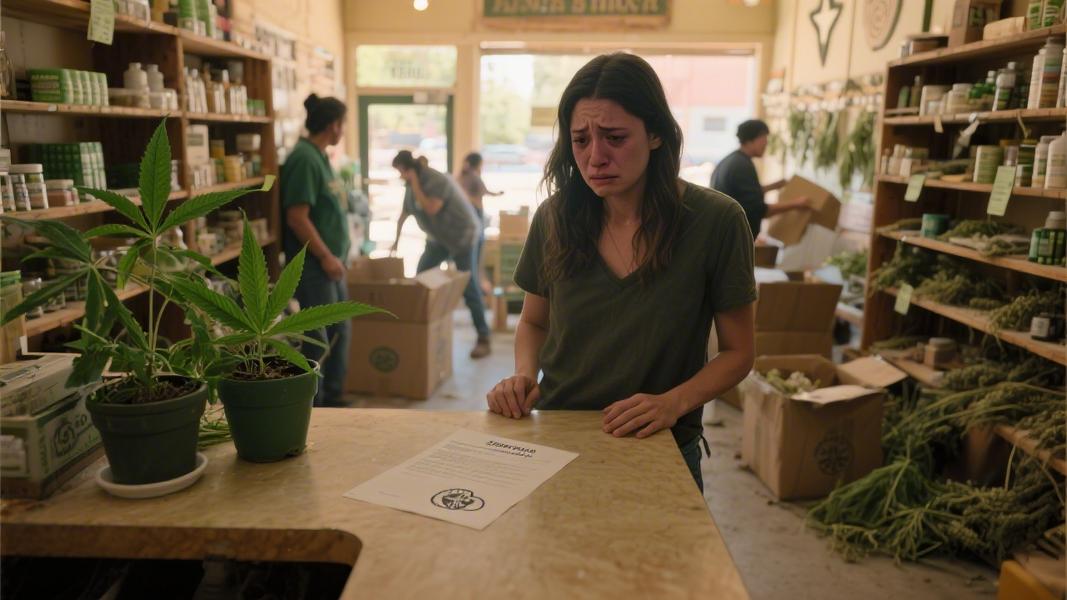
Sixteen workers showed up to Emerald Organics in Fort Worth last week and were told not to come back — at least not for now. Their boss, Candice Stinnett, didn’t have a choice.
A sweeping set of new rules from the Texas Department of State Health Services took effect on March 31, targeting smokable hemp products — and the industry is fighting back hard. A coalition of Texas hemp businesses filed an emergency lawsuit in Travis County district court, seeking to block regulations they say will gut a legal, multimillion-dollar industry that lawmakers never authorized the agency to dismantle.
A Personal Stakes, an Industry on the Line
Stinnett furloughed 16 of her 29 employees after the new rules made it nearly impossible to keep selling her core products. For her, this isn’t just a business dispute. “I was 21 when I was diagnosed with blood cancer, and throughout my treatment, I was introduced to the therapeutic and medicinal benefits of this plant,” she said. She built Emerald Organics around that conviction. Now she’s watching it teeter.
Her story isn’t unique. Across Texas, hemp shop owners, manufacturers, and farmers are scrambling to figure out what’s still legal to sell — and whether they can afford the new cost of doing business even if they do.
What the Rules Actually Do
That’s the catch. The regulations don’t just ban certain products outright — they quietly redefine what “hemp” means, and the consequences cascade from there. The DSHS is now factoring THCA into its calculations of total THC content, which makes most natural smokable hemp flower products noncompliant under the new framework. “The biggest change is that they are interpreting the definition of hemp differently, which will then affect the sale of THCA flower,” said Cynthia Cabrera, President of the Texas Hemp Business Council, one of the plaintiffs in the suit.
The rules also come with a steep new price tag. Licensing fees for hemp-derived THC manufacturers jump from $258 to $10,000 per facility. Retail registrations climb from $155 to $5,000 per location. For a small shop running two or three storefronts, that math gets ugly fast. Industry leaders say those numbers alone will force closures before any product ban even kicks in, as noted by reporting on the fee structure.
The Legal Argument: Agencies Overreaching?
The lawsuit — filed by the Texas Hemp Business Council, Hemp Industry & Farmers of America, and several dispensaries and manufacturers — argues that DSHS and the Texas Health and Human Services Commission have essentially rewritten state law without going through the Legislature. The plaintiffs lean on a pointed legal principle: “An administrative agency may not substitute its own policy judgment for the outcome produced by the constitutional lawmaking process,” according to court filings obtained by Globe Newswire.
The authority DSHS is working from, the suit contends, dates back to a 2019 legislative grant — one that never anticipated, or authorized, the agency to make these kinds of sweeping definitional changes. Whether a judge agrees is another matter entirely.
Strategic Timing, and a Friday Deadline
Here’s an interesting wrinkle: the coalition deliberately waited until after March 31 to file. Why? To show the damage was real, not hypothetical. “This lawsuit is going after an injunction to prevent the state from putting in place the rules that came from DSHS,” said a representative from Hometown Hero, a hemp company among the plaintiffs. A hearing was set for Friday, with the industry hoping to secure a temporary restraining order before the regulations sink deeper roots, explained Fox 7 Austin.
Still, it’s worth being precise about what this lawsuit is and isn’t. The plaintiffs aren’t fighting every new rule on the books. Child-resistant packaging, an age-21 purchasing requirement, updated labeling, testing standards, bookkeeping obligations — none of that is being challenged. The industry says it can live with consumer protection measures. What it can’t live with, they argue, is a regulatory agency quietly banning an entire product category and pricing out small businesses through licensing fees that bear no relation to what the Legislature sanctioned.
What Comes Next
The penalties for noncompliance are no joke either — up to $10,000 per day for shops caught selling products that fall outside the new rules. For businesses already operating on thin margins, that’s not a fine. That’s a death sentence. And with a Friday hearing looming, the clock is ticking in more ways than one.
For Candice Stinnett and the 15 other employees at Emerald Organics waiting to find out if they still have jobs, the outcome of that courtroom argument isn’t abstract policy — it’s a paycheck. “An administrative agency,” the lawsuit warns, can’t just rewrite the law. The question now is whether a Texas judge agrees — and how quickly.
