
A camp medical officer admitted under oath that she never reported 27 deaths to state health authorities — deaths she was legally required to flag within 24 hours. That admission, delivered quietly in a Texas hearing room, has become the latest flashpoint in a disaster that has already claimed more than 130 lives and left a community searching for answers.
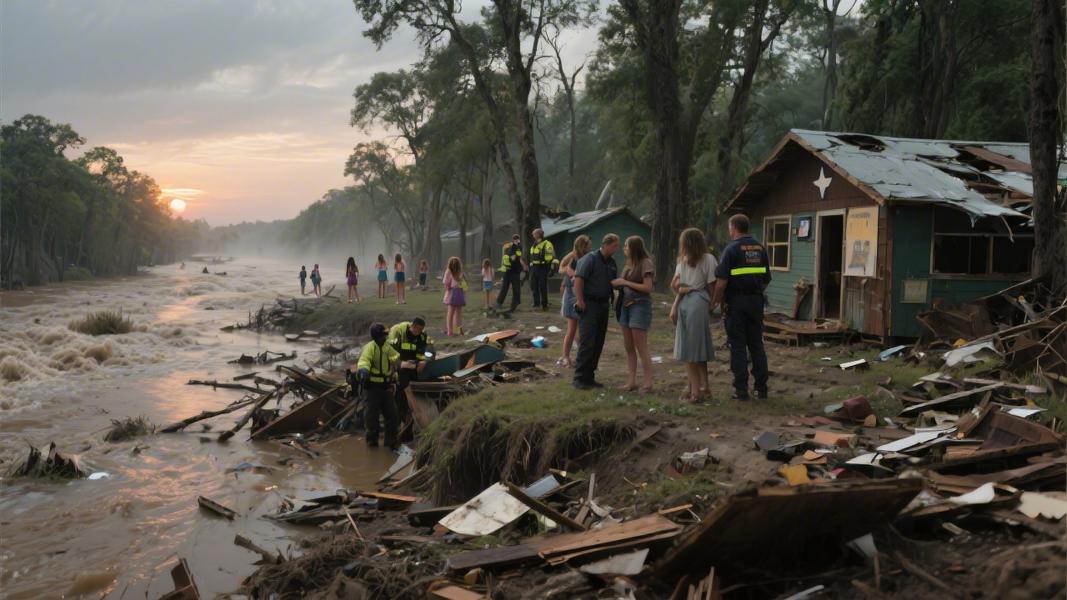
The catastrophic flooding of the Guadalupe River in the Texas Hill Country turned deadly in the early hours of what should have been an ordinary summer morning at Camp Mystic, a beloved girls’ camp near Kerrville. When the waters receded, 25 campers and two counselors were dead. The total death toll from the broader floods has since surpassed 138 people, with damages estimated at a staggering $18 billion. Now, months later, the reckoning is just beginning — and it’s getting ugly.
A Medical Officer’s Admission
Mary Liz Eastland, Camp Mystic’s medical officer, took the stand and told investigators something that stopped the room: she had not reported the deaths to the Texas Department of State Health Services, despite a clear requirement under the Texas administrative code to do so within 24 hours. Her explanation was almost unbearably human. “I did not think of this requirement in the moments happening after the flood,” she said. It’s hard to imagine the chaos of those hours. It’s also hard to ignore that the requirement exists for exactly those moments.
Her grief was not abstract. Eastland couldn’t pinpoint when she first learned of the campers’ deaths — testifying it was “a day or several days” after the flood. And then there’s this: her own father-in-law, Richard “Dick” Eastland, the camp’s director, was also killed. When pressed on whether she understood the gravity of what went unreported, she answered simply — “I guess so.” Two words that carry a lot of weight.
A Director Who Died Trying
Whatever questions surround Camp Mystic’s preparedness, Dick Eastland’s story is not one of indifference. By multiple accounts, the camp director died in the floodwaters while attempting to save girls caught in the surge along the Guadalupe River. He didn’t run. That matters, and it complicates the narrative in ways that don’t fit neatly into a lawsuit or a legislative hearing. Still, his death doesn’t resolve the institutional failures that investigators say were already baked in long before the water rose.
What the Investigations Are Revealing
The Texas Rangers and the Department of State Health Services are both now investigating complaints of neglect at the camp. The probe isn’t just about what happened during the flood — it’s about what didn’t happen before it. Flood safety experts have noted that emergency action plans existed on paper at camps like Mystic but were never meaningfully practiced by staff or campers. That gap — between policy and preparation — may have cost lives.
How did it get this far? Parents of nine campers and counselors are now suing state health department workers directly, alleging that officials licensed Camp Mystic despite knowing it lacked a required evacuation plan. Lt. Gov. Dan Patrick has reportedly requested that the camp’s license not be renewed. The state, in other words, is being accused of greenlighting a facility that wasn’t ready — and then watching 27 people die there.
A System That Failed Its Own Tests
That’s the catch. The rules were there. The reporting requirements, the evacuation plan mandates, the licensing standards — none of it was improvised after the fact. These were existing frameworks, designed precisely for moments of crisis. And yet, by investigators’ own findings, they either weren’t followed or weren’t enforced. A medical officer who didn’t file a report. A camp that may have been licensed without a proper evacuation plan. A death toll that climbed past 138 before the summer was over.
The Hill Country floods will be studied for years — in courtrooms, in legislative chambers, in emergency management training rooms. The questions they raise aren’t new ones. They’re the same questions that surface after every preventable mass-casualty event: Who knew what, and when? Who signed off, and why? And perhaps most painfully — what would it have taken to make someone act differently before the water came?
Mary Liz Eastland didn’t think of the reporting requirement in those desperate moments after the flood. The harder question now is whether anyone in a position of authority thought of what was required long before the river ever rose.
