
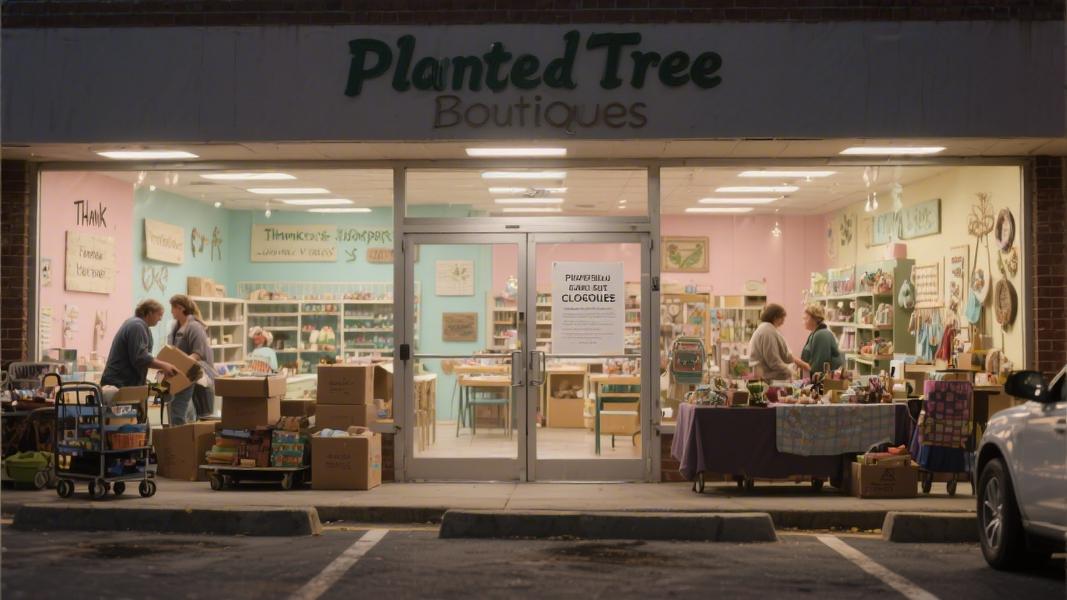
Painted Tree Boutiques is gone — and it happened fast. The beloved marketplace chain, which gave thousands of small vendors and crafters a brick-and-mortar home across the country, has shuttered every single one of its locations, leaving shoppers and booth holders alike scrambling for answers.
The closures, which swept through the company’s more than 60 national locations, hit Texas particularly hard. The company had built a substantial footprint in the state, operating six North Texas stores alone — in Frisco, Grapevine, Highland Village, Lewisville, Mansfield, and North Richland Hills — plus additional locations in Austin and elsewhere. Now, all of them are dark.
A Business Model Under Pressure
Painted Tree operated on a concept that felt tailor-made for the handmade economy: lease booth space to independent vendors, take a commission on sales, and let the merchandise — quilts, candles, reclaimed furniture, vintage finds — speak for itself. It worked, for a while. The model attracted a loyal, niche customer base and gave small-scale crafters something they rarely get: real retail shelf space without the crushing overhead of running their own storefront.
But it’s not that simple, and it never really was. The company cited rising operational costs, shifting market conditions, and — perhaps most telling — changes in how consumers actually shop. That last part stings a little, given that Painted Tree’s entire identity was built around the tactile, browse-all-afternoon experience that online shopping can’t quite replicate. Apparently, not enough people were still making the trip.
Vendors Left Holding the Bag
What does an abrupt, chain-wide closure mean in practice? For the vendors — many of them hobbyists turned small-business owners — it means merchandise stranded in shuttered stores, lost income, and a mad dash to find alternative sales channels. These weren’t corporate suppliers with legal teams on retainer. These were people selling hand-poured soy candles and refinished mid-century dressers out of 10-by-10 booth spaces. The rug got pulled, and pulled quickly.
Still, the writing may have been on the wall for some time. The retail landscape has been brutal to specialty boutique concepts, particularly those dependent on foot traffic and discretionary spending. Inflation squeezed shoppers. Rents didn’t budge. And the gravitational pull of online marketplaces — Etsy, Facebook Marketplace, Instagram storefronts — kept siphoning off the very customer base that once made places like Painted Tree feel essential.
The Broader Picture
Painted Tree wasn’t some fly-by-night operation. With more than 60 locations nationwide, it had achieved genuine scale — a rare feat for a marketplace concept built around handmade and artisan goods. That scale, in the end, may have compounded its vulnerability. More stores meant more leases, more staffing, more overhead — all of it bearing down at a moment when consumer habits were quietly but decisively shifting.
How bad is it for the local retail ecosystem? Bad enough. In communities like Frisco and Highland Village, Painted Tree wasn’t just a store — it was a weekend destination, a place where local makers could build something resembling a customer base. Those relationships don’t just migrate cleanly to an Etsy page.
The company has not publicly detailed any restructuring plans, sale of assets, or potential for any locations to reopen under new management. For now, the announcement stands as it is: all stores closed, no exceptions, no timeline for what comes next.
What Comes Next
For displaced vendors, the path forward is uncertain and deeply personal. Some will pivot to farmers markets and craft fairs. Others will double down on social media selling. A few will probably walk away from retail altogether, chalking it up to a lesson learned about the fragility of depending on someone else’s infrastructure to move your product.
There’s a certain irony in all of it. The handmade marketplace concept was supposed to be the antidote to the cold, algorithmic world of big-box retail — a warmer, more human alternative. But in the end, it proved just as susceptible to the same economic forces grinding down every other retailer on the block.
Painted Tree built its brand on the idea that small things, made carefully by real people, deserved a real place in the world. Whether that idea finds a new home — or quietly fades alongside the stores themselves — remains to be seen.
