
A 24-year-old Indian national is facing federal immigration consequences after authorities say he bit a 3-year-old girl’s face during an unprovoked attack at a San Antonio park — an assault made all the more alarming by what investigators say happened the first time he crossed a legal line in this country.
Atharva Vyas, who entered the United States in August 2023 on a student visa, was arrested last week following an attack at Espada Park in San Antonio, Texas. Immigration and Customs Enforcement lodged a detainer on April 18, 2026, after Vyas allegedly assaulted Gabriella Perez, 27, and her young daughter Amelia, 3 — injuries to both that left the community shaken and renewed scrutiny on how immigration enforcement handles repeat offenders. It’s a case that raises uncomfortable questions, and the timeline doesn’t flatter anyone.
What Happened at the Park
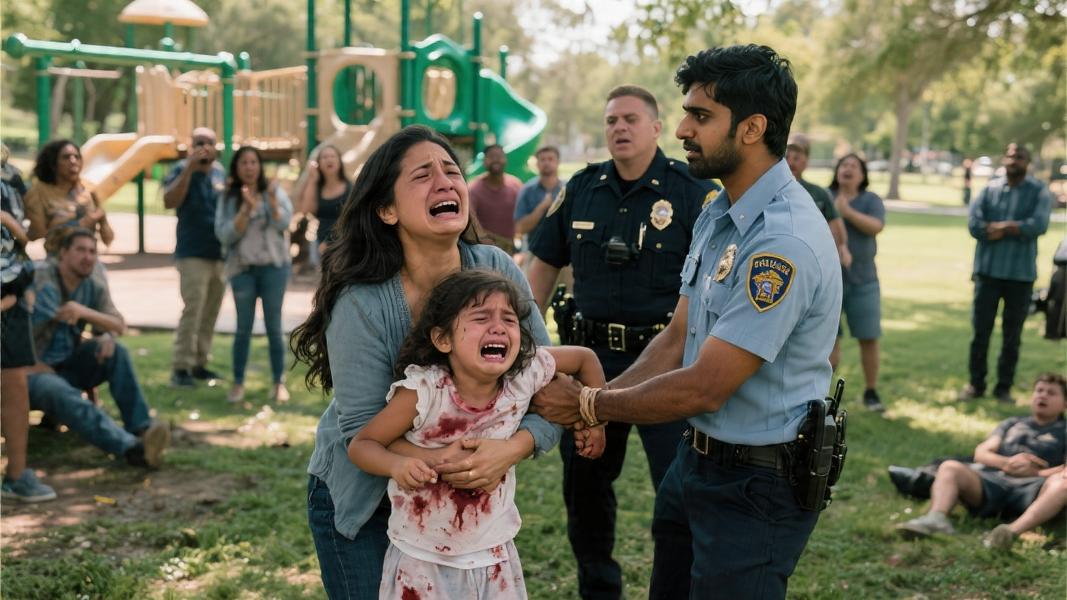
According to investigators, Vyas approached Perez at the park and pulled her hair before punching her — hard enough that she dropped her daughter. He then allegedly bit the child directly on the face. Both sustained bodily injuries. It was the kind of attack that, described plainly, is almost difficult to process. A mother. A toddler. A public park on an ordinary day.
Vyas was subsequently charged with injury to a child with intent to cause bodily injury, assault causing bodily injury, and illegal entry. He was booked into the Bexar County Detention Center, where the ICE detainer is now in place, meaning federal immigration authorities intend to take custody of him once local proceedings run their course.
A Prior Arrest — and No Federal Response
Here’s where it gets complicated. This wasn’t Vyas’s first brush with the law since arriving in the country. Just three months after entering the U.S. on his student visa, he was arrested for felony assault on the University of Texas campus. That was late 2023. The Biden administration, documented in subsequent reporting, took no immigration enforcement action at that time.
That decision — or rather, that non-decision — is now drawing fresh criticism. The argument from immigration enforcement advocates is straightforward: a felony assault charge against a visa holder should trigger deportation proceedings, full stop. Whether one agrees with that position or not, it’s hard to argue with the sequence of events. He stayed. He allegedly attacked again. This time, the victim was three years old.
Still, it would be reductive to frame this purely as a policy failure without acknowledging the broader legal complexities involved. Detainers and deportation proceedings involve due process protections, and the system — by design — is not meant to move instantaneously. That said, critics aren’t wrong to ask whether the machinery moved too slowly here.
ICE Acts — This Time
The detainer lodged by ICE last week signals that federal authorities are now treating Vyas as a priority enforcement target. Under current DHS guidelines, individuals charged with crimes involving violence — particularly crimes against children — are flagged for immediate action. The charges against him reflect the severity of what prosecutors allege occurred: this wasn’t a misdemeanor scuffle. Injury to a child with intent to cause bodily injury is a felony under Texas law.
Vyas, for his part, has not yet entered a public plea. His legal representation, if any, had not made statements available at the time of publication.
A Broader Pattern Under Scrutiny
Cases like this don’t exist in a vacuum. Across the country, immigration enforcement agencies are under pressure — from both directions — to explain how individuals with prior criminal histories remain in the country long enough to reoffend. The political temperature around these cases is, to put it mildly, elevated. Every incident becomes a data point in a larger argument, and the loudest voices on either side tend to flatten the nuance.
What’s harder to flatten is the image of a mother dropping her child after being punched, and then watching that child be bitten by a stranger in a park. Whatever the policy debate, Amelia Perez is 3 years old, and she has injuries on her face to show for it.
The case continues to move through the Bexar County court system. ICE has not publicly indicated a timeline for when it would seek to take custody of Vyas, assuming local charges are resolved or bond is set. Given the current enforcement climate in Texas, federal involvement is likely to accelerate — not slow down.
A student visa, a felony arrest, no federal action, and then this. The paperwork was always there. The question is who was reading it.
