
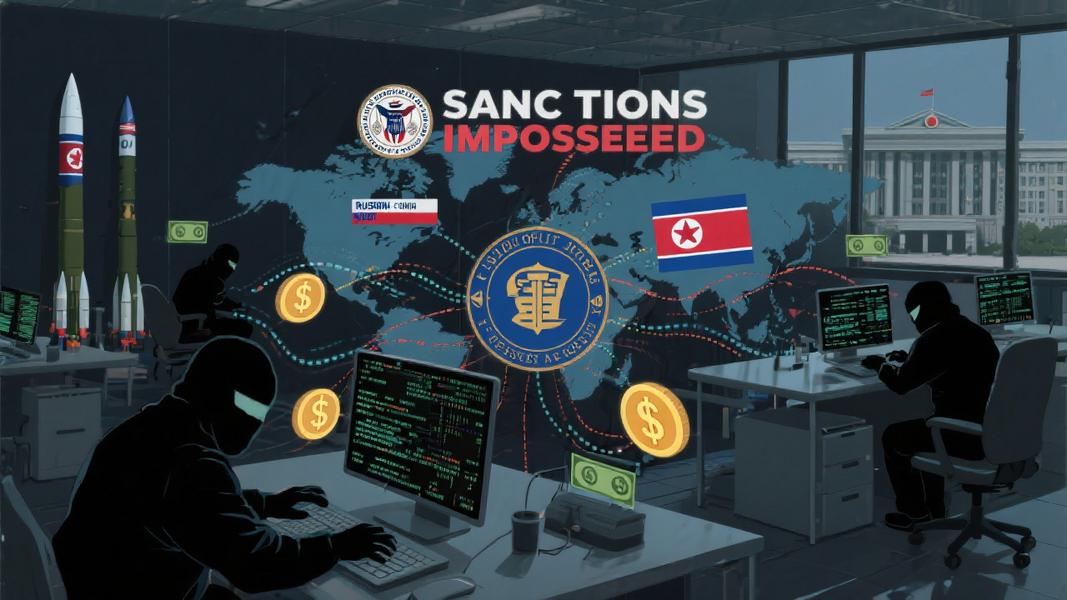
North Korea’s IT workers are pulling off one of the most elaborate corporate infiltration schemes in history, stealing U.S. company data and funneling hundreds of millions of dollars back to Pyongyang to fund weapons programs, according to new sanctions announced by the U.S. Treasury Department.
“The North Korean regime continues to target American businesses through fraud schemes involving its overseas IT workers, who steal data and demand ransom,” said Under Secretary of the Treasury for Terrorism and Financial Intelligence John K. Hurley, highlighting the growing threat these operations pose to U.S. businesses and national security.
How extensive is this operation? The Treasury Department reveals that thousands of highly skilled North Korean IT workers have been dispatched globally, operating under strict orders to generate revenue for the regime while circumventing international sanctions. These workers reportedly surrender up to 90% of their earnings to fund the country’s weapons of mass destruction and ballistic missile programs.
Digital Infiltration Tactics
The scheme operates with remarkable sophistication. Teams of DPRK IT workers use fraudulent documents, stolen identities, and elaborately constructed false personas to disguise themselves and infiltrate legitimate companies in the United States and allied nations, Treasury officials confirmed. Once inside, they often introduce malware designed to steal proprietary data.
In one particularly brazen case, a North Korean cyber actor identified only as “Song” orchestrated a network of foreign-hired IT workers who applied for remote positions at U.S. companies using stolen American identities. The plan was simple but effective — get hired, split the income, and use the positions to facilitate the regime’s illicit operations, according to Treasury documents.
“These aren’t just random hackers looking for a payday,” explained a cybersecurity expert familiar with the sanctions. “They’re government operatives with a mission to fund a nuclear program through what looks like legitimate employment.”
The Treasury Department’s actions come as part of a coordinated effort with South Korea to disrupt what officials describe as an increasingly sophisticated revenue generation scheme. Under Secretary Brian E. Nelson emphasized that “Today’s action continues to highlight the DPRK’s extensive illicit cyber and IT worker operations, which finance the regime’s unlawful weapons of mass destruction and ballistic missile programs.”
Corporate America in the Crosshairs
For U.S. companies, especially those relying heavily on remote workers in the post-pandemic landscape, the threat is both immediate and difficult to detect. These aren’t clumsy phishing attempts or obvious scams — they’re sophisticated operations conducted by highly trained professionals who can easily pass as legitimate job candidates.
The sanctions target specific individuals and companies involved in the scheme, but officials acknowledge the broader network remains active and adaptive. Companies are being urged to implement enhanced verification procedures for remote workers and to be particularly vigilant about access to sensitive systems and data.
But the reality is stark: as North Korea faces continued economic pressure from international sanctions, the regime has found in its IT workforce a resource that’s both valuable and deployable without geographic constraints. Until companies develop better methods to verify the true identities of remote workers, the digital front door remains dangerously ajar.
