
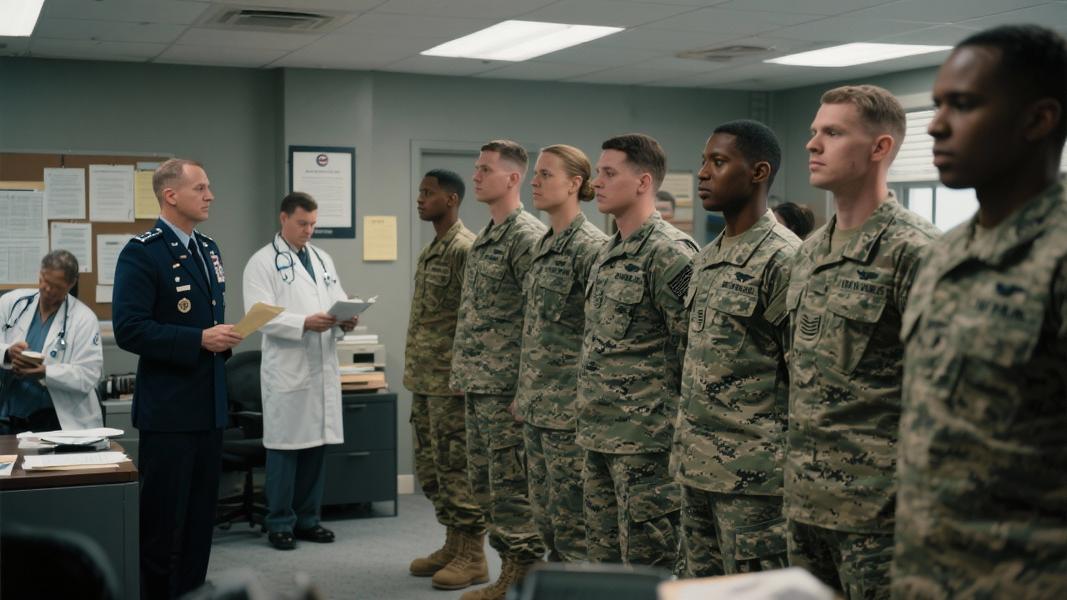
U.S. Army tightens facial hair policy, limiting medical exemptions and requiring treatment plans for those with shaving profiles. The move, part of a broader Pentagon initiative, has sparked debate about military appearance standards versus medical accommodations.
New Restrictions on Shaving Waivers
The U.S. military is cracking down on facial hair exceptions, with Secretary of War Pete Hegseth reinforcing that service members must maintain a “clean shaven and neat presentation for a proper military appearance,” according to a Pentagon statement released this week.
Under the updated policy, permanent shaving waivers are now prohibited except for religious accommodations, and soldiers who require medical exemptions for more than 12 months within a 24-month period could face administrative separation. The Army has formalized these changes in Directive 2025-13, significantly tightening what had become a common accommodation for soldiers suffering from razor bumps and other skin conditions.
“This update reinforces our culture that fosters discipline – and discipline equals readiness,” said Sgt. Maj. of the Army Michael R. Weimer in an official Army release. “Through a phased implementation we are working with providers through commanders to effectively address grooming standards to ensure we maintain a professional force.”
Medical Process Gets More Rigorous
Gone are the days of simple “shaving profiles.” Soldiers now seeking non-religious facial hair exemptions must obtain both a temporary medical profile (DA Form 3349-SG) and an exception-to-policy memo authorized by an O-5 level officer in their chain of command. The Army requires that soldiers keep presentable copies of these documents whenever in uniform or civilian clothes while on duty.
The policy takes particular aim at pseudo-folliculitis barbae (PFB), commonly known as razor bumps, a condition that disproportionately affects Black service members. Military medical officers will now provide written recommendations concerning shaving waivers, but commanders retain final approval authority. Those granted waivers must participate in mandatory medical treatment plans, as outlined in the Pentagon’s updated standards.
What happens if treatment doesn’t work? That’s the catch. After more than one year of medical treatment, unit commanders “will initiate separation of Service members who require a shaving waiver,” according to Pentagon guidance on the matter.
Balancing Tradition with Medical Concerns
The policy represents a significant shift in how the military handles medical accommodations for grooming standards. Commanders must now “apply consistent criteria and appropriately consider the Department’s interests in safety and uniformity when authorizing individual exceptions,” while healthcare providers are tasked with developing treatment plans for affected service members.
This tightening comes as various military branches have been grappling with grooming standards in recent years. While some services have relaxed certain appearance regulations, the Army appears to be moving in the opposite direction regarding facial hair.
The directive emphasizes that exceptions should remain temporary, with a clear focus on eventually returning soldiers to full compliance with standard grooming requirements. Religious accommodations remain the only pathway for permanent facial hair authorization in the U.S. Army.
For thousands of soldiers currently serving with shaving profiles, the clock is now ticking. They’ll need to either respond to medical treatment, secure religious accommodations, or potentially face separation from military service in the months ahead.
