
Department of War Approves $90 Million in Infrastructure Grants to Support Military Communities
The Department of War announced a significant boost to military community infrastructure on Wednesday, awarding ten grants totaling approximately $90 million to enhance facilities supporting U.S. military installations across the country. These Defense Community Infrastructure Program (DCIP) grants will leverage an additional $59.9 million in non-federal funding, creating a combined investment of about $150 million in critical infrastructure projects.
“Today, the Department of War awarded ten Defense Community Infrastructure Program grants from the Office of Local Defense Community Cooperation, totaling approximately $90 million,” the department announced in an official statement.
Enhancing Military Readiness Through Community Support
What exactly does the DCIP program aim to accomplish? At its core, the initiative enables states, territories, and local communities to undertake infrastructure improvements that directly support military installations while enhancing their resilience and quality of life for service members and their families.
The competitive program funds projects that are owned by eligible entities such as state or local governments or not-for-profit, member-owned utilities. These projects must be located outside military installations—unless they’re on property under military jurisdiction with a specific real estate agreement, according to program guidelines.
Mr. Dale Marks, Assistant Secretary of War for Energy, Installations, and Environment, emphasized the strategic importance of these investments. “Enhanced partnerships with state and local communities are critical to the success of our installations and their missions,” said Marks. “The Defense Community Infrastructure Program continues to play a vital role in building and maintain these successful partnerships. This year’s program continues to build on the Department’s efforts to invest in critical infrastructure with our defense communities to enable the readiness and lethality of our installations.”
From Alaska to Washington: Key Projects Receiving Funding
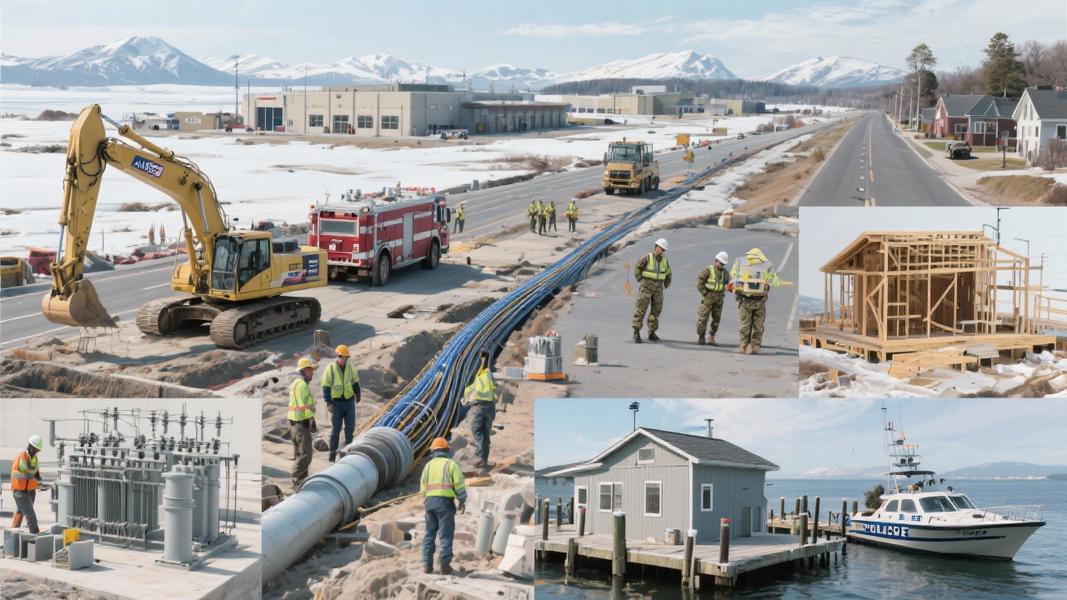
The Fiscal Year 2025 grants will support a diverse array of infrastructure projects spanning multiple states and territories. These include telecommunications upgrades, electrical infrastructure improvements, fire station construction, water main replacement, pier stabilization, road reconstruction, and innovative waste management solutions.
Among the most substantial awards is a $14 million contribution toward a $23.5 million fiber optic project in Alaska supporting Joint Base Elmendorf-Richardson. California will receive $7 million for a $13.9 million fire station serving Marine Corps Camp Pendleton, while Washington state secured $20 million toward a $40 million anaerobic digester benefiting Naval Base Kitsap—representing some of the largest individual investments in the program.
Competition for these funds is fierce. The Office of Local Defense Community Cooperation evaluates proposals based on how well they enhance installation resilience against extreme weather events, environmental conditions, and man-made threats that might otherwise compromise military readiness and mission success.
Building Military-Community Partnerships
The DCIP funding mechanism is specifically designed to help address critical infrastructure deficiencies in communities supporting military installations. These projects span essential services including transportation, schools, hospitals, emergency services, and utilities such as water, telecommunications, electric, and natural gas facilities.
For communities hosting military installations, these investments represent more than just infrastructure improvements—they’re a recognition of the symbiotic relationship between military readiness and community support. By strengthening the infrastructure that surrounds and supports military bases, the Department of War aims to enhance both operational capabilities and quality of life.
The program also illustrates how federal defense spending can leverage additional local investment, with nearly $60 million in matching funds being contributed by recipient communities—a testament to the shared commitment between the Department of War and local governments to support military installations and the personnel who serve there.
