
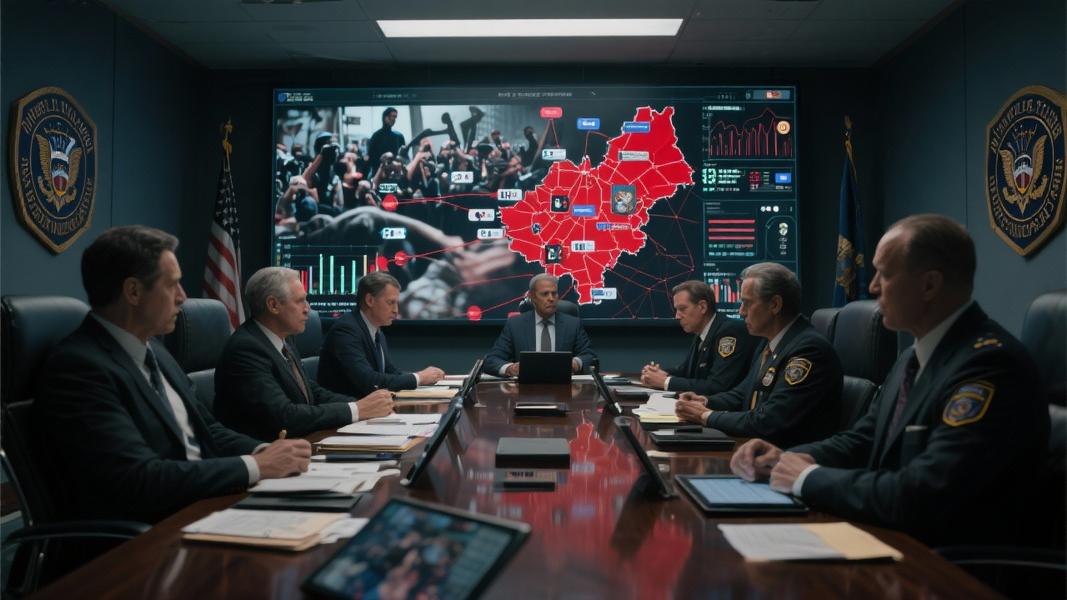
The White House has unveiled an unprecedented crackdown on political violence, authorizing sweeping new powers to target what it describes as coordinated domestic terrorism campaigns that have “dramatically increased” across the nation.
In a detailed memorandum released yesterday, the administration cited a shocking rise in politically motivated attacks, including the recent assassination of conservative figure Charlie Kirk, a 2024 killing of a healthcare executive, and two separate attempts on the President’s life during last year’s election cycle. The document paints a disturbing picture: attacks on Immigration and Customs Enforcement officers up more than 1,000 percent since January, a deadly shooting at a Dallas ICE facility, and nationwide riots causing over $2 billion in property damage.
Organized Campaign, Not Isolated Incidents
What makes this directive particularly significant is how it frames the violence. “This political violence is not a series of isolated incidents and does not emerge organically,” the memorandum states. “Instead, it is a culmination of sophisticated, organized campaigns of targeted intimidation, radicalization, threats, and violence designed to silence opposing speech.”
The White House specifically calls out self-described “anti-fascist” movements, claiming they use this label as a “rallying cry” to justify violence against American institutions. In particularly strong language, the document describes this as an “anti-fascist lie” being weaponized to wage “a violent assault against democratic institutions.”
Is this a fundamental shift in how the federal government approaches domestic extremism? It certainly appears so. The directive empowers the National Joint Terrorism Task Force (JTTFs) to lead a comprehensive national strategy to “investigate, prosecute, and disrupt” individuals and organizations involved in political violence, from recruitment to funding sources.
New Legal Arsenal
Federal agencies now have explicit instructions to deploy a range of criminal statutes against those involved in political violence. These include laws against assaulting federal officers, conspiracy against rights, solicitation to commit crimes of violence, money laundering, and terrorism funding, among others. The RICO Act — traditionally used against organized crime — is also mentioned as a potential tool.
Perhaps most notably, the Treasury Department and IRS have been tasked with following the money. The Treasury’s Terrorism and Financial Intelligence Office will “deploy investigative tools, examine financial flows, and coordinate with partner agencies to trace illicit funding streams,” while the IRS will ensure no tax-exempt entities are “directly or indirectly financing political violence or domestic terrorism,” according to the document.
Domestic Terrorist Designations
In what could become one of the most controversial aspects of the directive, the Attorney General now has authority to recommend groups as “domestic terrorist organizations” based on investigations. The memorandum references a September 22 order that already designated Antifa as such an organization — a move that signals the administration’s willingness to use this new power.
Civil liberties groups are likely to scrutinize this provision carefully. The designation process gives the Attorney General broad discretion to submit lists of suspected terrorist groups directly to the President through the Homeland Security Advisor.
The directive also elevates domestic terrorism to a “national priority area,” instructing the Attorney General and Secretary of Homeland Security to develop grant programs for law enforcement to “detect, prevent, and protect against threats” in this category.
That said, questions remain about implementation. The memorandum requires regular progress updates to the President, but doesn’t specify public reporting requirements or oversight mechanisms beyond the executive branch.
For a nation already deeply divided along political lines, this aggressive new approach to domestic extremism marks a significant escalation in federal powers — one that supporters will call necessary for public safety and critics will undoubtedly challenge as potentially overreaching. Either way, the message from the White House is clear: political violence, regardless of ideology, now faces the full force of federal law enforcement.
