
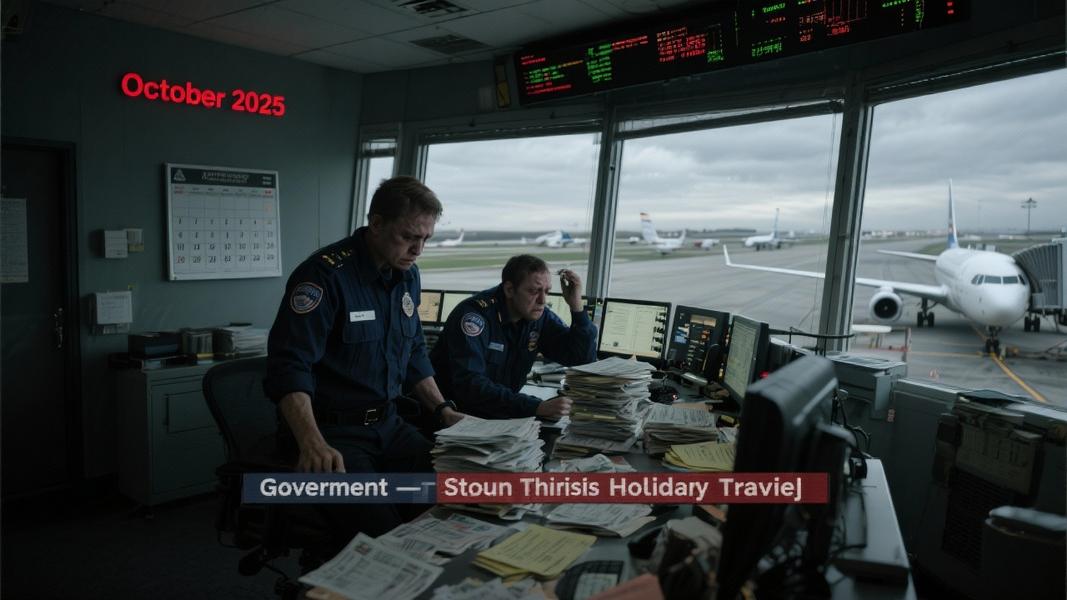
The government shutdown that began October 1, 2025, has thrown America’s aviation system into mounting turmoil, with air traffic control towers closing, flight delays spreading nationwide, and thousands of critical personnel working without pay.
Less than a week into the shutdown, the first major breakdown occurred when the Hollywood Burbank Airport’s control tower near Los Angeles went dark for nearly six hours on October 6 due to staffing shortages. The tower closure triggered cascading flight delays averaging two-and-a-half hours, with airport officials simply stating: “The tower is closed due to staffing.”
That early warning sign has since evolved into a nationwide pattern. Controller shortages have spread to multiple major hubs including Boston, Philadelphia, Atlanta, Houston, Nashville, Dallas, and Newark, creating a ripple effect of operational disruptions throughout America’s interconnected flight network.
Paychecks Stopped, But Work Hasn’t
For the nation’s roughly 13,000 air traffic controllers, the situation is growing increasingly desperate as the shutdown drags into its third week. Next Tuesday will mark their first missed paycheck for work already performed in October, forcing many to make impossible choices.
“They’re angry… They’re frustrated that the Congress — at least in the Senate — is focused on paying for health care benefits for illegals as opposed to paying their paychecks for the great work that they provide to the American people,” Transportation Secretary Sean Duffy declared in a pointed statement that highlighted the partisan tensions surrounding the shutdown.
The crisis extends beyond controllers. TSA security screeners have already shown increased unscheduled absences at some airports after receiving their final paychecks over the weekend. While their union says these absences haven’t yet caused major disruptions, they warn that longer security lines could materialize any day now, adding another layer of complications for travelers.
Second Jobs Instead of Second Runways
What happens when the people responsible for guiding hundreds of planes safely through America’s crowded skies are forced to deliver pizzas after their shifts just to pay rent?
“I don’t want my air traffic controllers to take a second job… I want them coming to their facilities and controlling the airspace, but they’re having to make decisions about how they spend their time to make sure they put food on their table,” Duffy emphasized, highlighting the dangerous compromises the shutdown is forcing.
The situation has created a perfect storm for an aviation system already stretched thin. “It’s like having a drought the year after you had a drought,” Greg Raiff, CEO of Elevate Aviation Group, told The Associated Press, underscoring how the shutdown is compounding existing staffing and infrastructure challenges.
Experts and union leaders caution that the aviation system was already struggling with chronic understaffing and outdated technology before the shutdown began. These cracks in the foundation could rapidly widen if essential workers continue missing paychecks.
No Guarantees for Travelers
“I can’t guarantee you that your flight’s going to be on time. I can’t guarantee you that your flight’s not going to be cancelled,” Duffy stated bluntly, adding ominously, “It’s going to depend on our air traffic controllers coming in to work every single day… If they do not, we’ll know whose fault it is.”
The White House has characterized the situation as Democrats’ “reckless government shutdown” that has “plunged America’s air traffic control system towards a tailspin,” while describing controllers as “dedicated patriots keeping our skies safe” who are now “left to scrape by without paychecks.”
Perhaps most concerning is the long-term damage the shutdown might inflict on the aviation workforce pipeline. Trainees at the Air Traffic Control Academy are reportedly reconsidering their career choices. “They’re thinking about leaving the Academy — smart young men and women — because they don’t want to work for a system that won’t pay them, that doesn’t guarantee them a paycheck,” Duffy explained, warning of “problems that ricochet in the months and the years to come.”
For now, America’s aviation professionals continue showing up for work, guiding planes safely through increasingly turbulent times — even as their own financial futures remain up in the air.
