
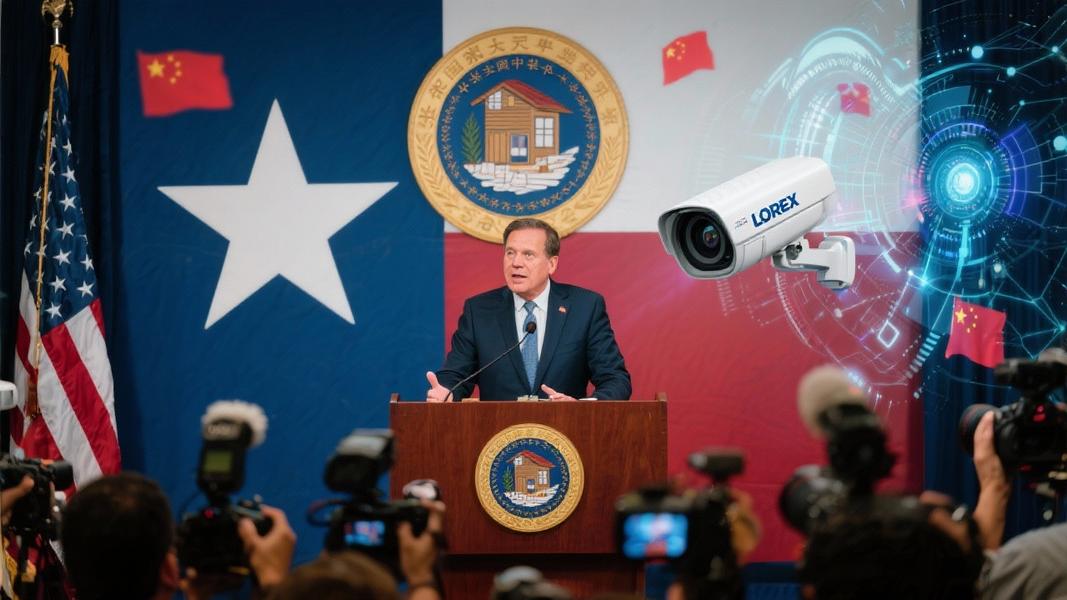
Texas Attorney General Ken Paxton has launched an investigation into Lorex Technology Inc., probing whether the popular security camera company’s alleged ties to China could pose a national security threat to Texans.
The investigation centers on concerns that Lorex may have misled consumers by marketing its home security cameras as safe while concealing ongoing connections to Dahua Technology, a Chinese company that has been designated as a “Chinese military company” by U.S. authorities.
“Texans should never have to worry that the devices protecting their homes could be tied to foreign adversaries. Any company that gives the CCP a foothold in American life will face the full force of Texas law,” Paxton stated in announcing the investigation.
What makes this case particularly concerning? Despite Lorex being sold to Taiwan-based Skywatch in 2022, investigators believe Dahua remains a major supplier of critical components for Lorex products. This supply chain relationship has raised red flags about potential backdoor access to surveillance footage in American homes and businesses.
Security Cameras, Security Risks
The U.S. Department of Defense has formally identified Dahua as a “Chinese military company,” while both the Department of Commerce and Federal Communications Commission have imposed restrictions on Dahua products due to national security concerns. Yet Lorex cameras continue to be widely available at major retailers including Amazon, Costco, and Best Buy throughout Texas.
The Texas investigation will determine if Lorex violated consumer protection laws by marketing its products as secure while potentially concealing risks associated with its supply chain. Paxton’s office is examining whether consumers were adequately informed about the potential for foreign surveillance or data access through these devices.
Texas isn’t alone in scrutinizing the company. Nebraska’s Attorney General has already filed a lawsuit against Lorex, alleging similar violations of state consumer protection laws through deceptive marketing practices.
Corporate History Raises Questions
Lorex’s corporate lineage itself presents a complicated picture. The company was acquired by Dahua in 2012 and operated under Chinese ownership for a decade before being sold to Taiwan-based Skywatch in 2022. Despite this ownership change, investigators believe the supply chain relationship with Dahua has continued largely uninterrupted.
“The concern isn’t just about who owns the company on paper,” said a cybersecurity expert familiar with the investigation who requested anonymity to speak freely. “It’s about who makes the components, who writes the code, and who potentially has access to the data.”
The federal designation of Dahua as a “Chinese military company” carries significant weight. Such classification indicates U.S. intelligence agencies believe the company has substantial ties to China’s military and security apparatus, potentially enabling state-sponsored surveillance or espionage activities.
Broader Tech Scrutiny
While Paxton has recently launched a broader initiative investigating multiple technology companies for potential violations of state data privacy laws, the Lorex investigation represents a separate action specifically focused on national security concerns and potential foreign influence.
For consumers, the stakes are high. Security cameras are explicitly purchased to protect homes and businesses, not to potentially expose them to unauthorized access. The investigation highlights the growing challenge of securing technology supply chains in an increasingly complex global market.
Lorex has not yet publicly responded to the Texas investigation, and attempts to reach the company for comment were unsuccessful.
As smart home devices become increasingly prevalent in American households, the Lorex case underscores a sobering reality: the very technology we rely on for security might itself become a vulnerability if foreign adversaries gain backdoor access through compromised supply chains.
