
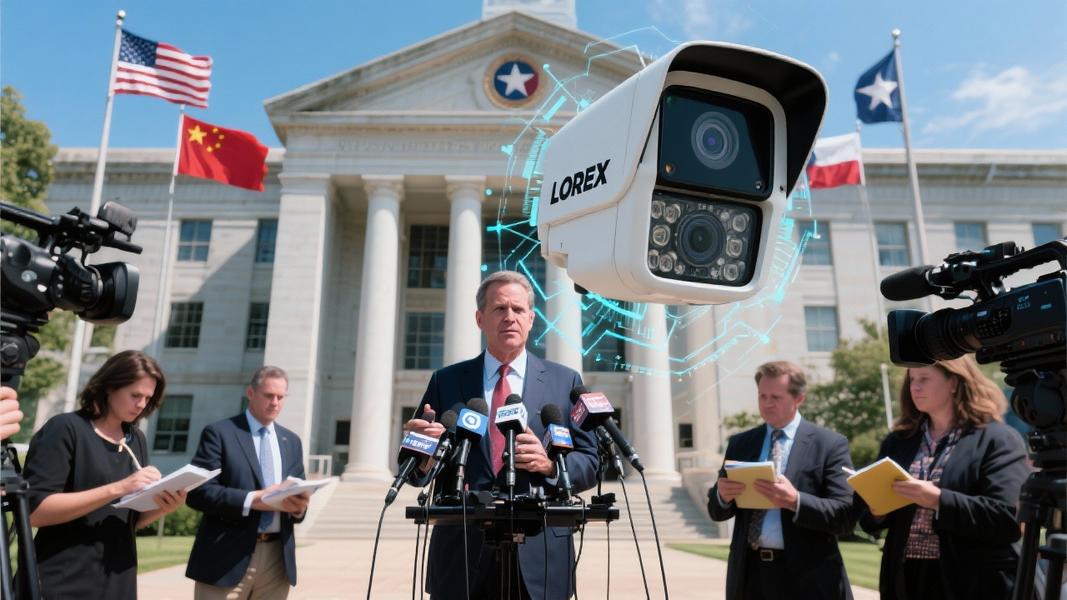
Texas Attorney General Ken Paxton has opened a new front in his battle against perceived foreign threats, launching an investigation into Lorex Technology Inc., a popular home security camera company, over concerns about its ties to the Chinese Communist Party.
The investigation centers on allegations that Lorex has misrepresented the security of its products to Texas consumers while maintaining connections to Dahua Technology, a Chinese company that has been flagged by federal authorities as a national security threat.
Security Cameras Under Scrutiny
“Texans should never have to worry that the devices protecting their homes could be tied to foreign adversaries,” Paxton said in a statement. “Any company that gives the CCP a foothold in American life will face the full force of Texas law.” The strongly-worded warning comes as part of a broader push by the Attorney General to investigate tech companies for potential data privacy violations.
Lorex, founded in 1991, was acquired by Dahua in 2012 before being sold to Taiwan-based Skywatch in 2022. Despite the ownership change, Dahua reportedly continues to supply critical components for many Lorex cameras, raising questions about where customer data might end up.
The U.S. Department of Commerce and Federal Communications Commission have previously imposed restrictions on Dahua, identifying it as a “Chinese military company” with potential hacking and surveillance risks. Yet Lorex products remain widely available to Texas consumers through major retailers like Amazon and Costco.
A Pattern of Legal Challenges
Texas isn’t the only state taking action. Nebraska Attorney General Mike Hilgers has gone a step further, filing a lawsuit against Lorex for allegedly misleading consumers about the safety of its home security cameras, according to legal documents.
The Lorex investigation adds to Paxton’s growing portfolio of tech-related probes. His office recently launched investigations into 15 other technology companies, including Character.AI, for alleged violations of the SCOPE Act and the Texas Data Privacy and Security Act.
What’s at stake for everyday consumers? Privacy experts point to the potentially sensitive nature of security camera footage, which often captures intimate details of home life, family routines, and property layouts.
The investigation raises thorny questions about global supply chains in the tech industry. Even when companies change ownership or rebrand, their hardware components and software dependencies often remain tied to original manufacturers – creating what security analysts call “persistent vulnerability pathways.”
The China Connection
Paxton’s concern about Chinese Communist Party influence reflects a broader national security debate that has intensified in recent years. Federal authorities have increasingly scrutinized Chinese technology companies, particularly those with access to American consumer data or critical infrastructure.
For its part, Lorex has not publicly responded to the Texas investigation. The company’s marketing materials emphasize its current Taiwan-based ownership while typically not mentioning its ongoing relationship with Dahua.
Despite the mounting legal challenges, consumers seem largely unaware of the controversy. Sales of Lorex products continue through mainstream retailers, with many customers attracted by their competitive pricing and feature sets.
As this investigation unfolds, it highlights the complex reality of modern consumer technology: the camera watching your front door might be connected to a global web of companies, components, and governments that extends far beyond what’s printed on the box.
