
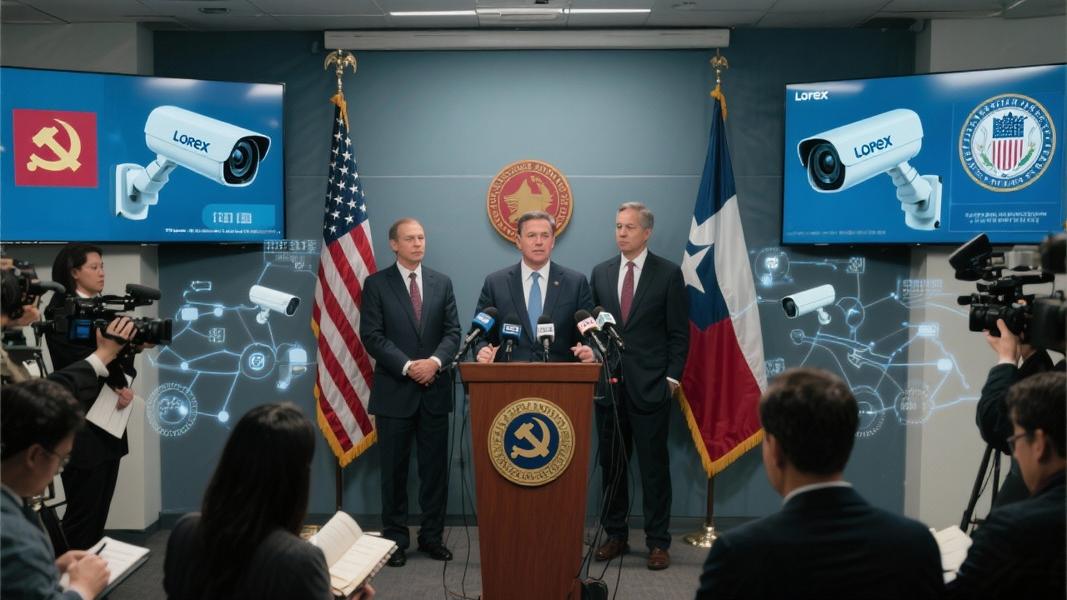
Texas Attorney General Ken Paxton has launched an investigation into home security camera manufacturer Lorex Technology Inc., raising alarms about potential ties to the Chinese Communist Party that could pose national security risks to Texans.
The probe centers on concerns that Lorex cameras and equipment, which are marketed as security devices for homes and businesses, might be funneling sensitive data to foreign adversaries. “Texans should never have to worry that the devices protecting their homes could be tied to foreign adversaries. Any company that gives the CCP a foothold in American life will face the full force of Texas law,” Paxton declared in a statement announcing the investigation.
A Complex Corporate History
Lorex’s ownership structure raises questions about its current connections. The company, founded in 1991, was acquired by Chinese surveillance giant Dahua Technology in 2012. Though Lorex was later sold to Taiwan-based Skywatch in 2022, Dahua reportedly continues to supply key components for Lorex cameras, according to industry sources.
Why does this matter? Dahua is one of several Chinese tech firms that have faced restrictions in the United States over national security concerns. In 2019, the company was blacklisted by the U.S. government for its alleged role in human rights abuses against Uyghur Muslims in China’s Xinjiang region.
Despite the ongoing investigation, Lorex products remain widely available to Texas consumers through popular retailers including Amazon, Costco, and Best Buy.
Growing Legal Scrutiny
Texas isn’t the first state to raise concerns about Lorex. Nebraska Attorney General Mike Hilgers has already filed a lawsuit against the company, alleging that it misled consumers about the safety of their home security cameras, as noted in legal filings.
The actions reflect a growing trend of state attorneys general taking the lead on consumer protection issues related to technology and data privacy, particularly when federal action has been limited.
“These investigations highlight the increasingly complex relationship between consumer technology and national security,” said cybersecurity analyst Mia Chen, who was not involved in the investigation. “The average person buying a security camera likely isn’t thinking about geopolitics, but these devices can potentially create significant vulnerabilities.”
For Texans who already own Lorex cameras, the investigation creates uncertainty. Security experts recommend that consumers consider updating passwords, ensuring firmware is current, and possibly disconnecting devices from the internet when not in use.
Lorex has not yet issued a public response to Texas’s investigation. The company has previously maintained that its products are secure and that customer data is stored on local devices rather than in cloud servers.
As smart homes become increasingly common, the Lorex investigation serves as a reminder that the devices we invite into our most intimate spaces may bring unseen guests along with them.
