
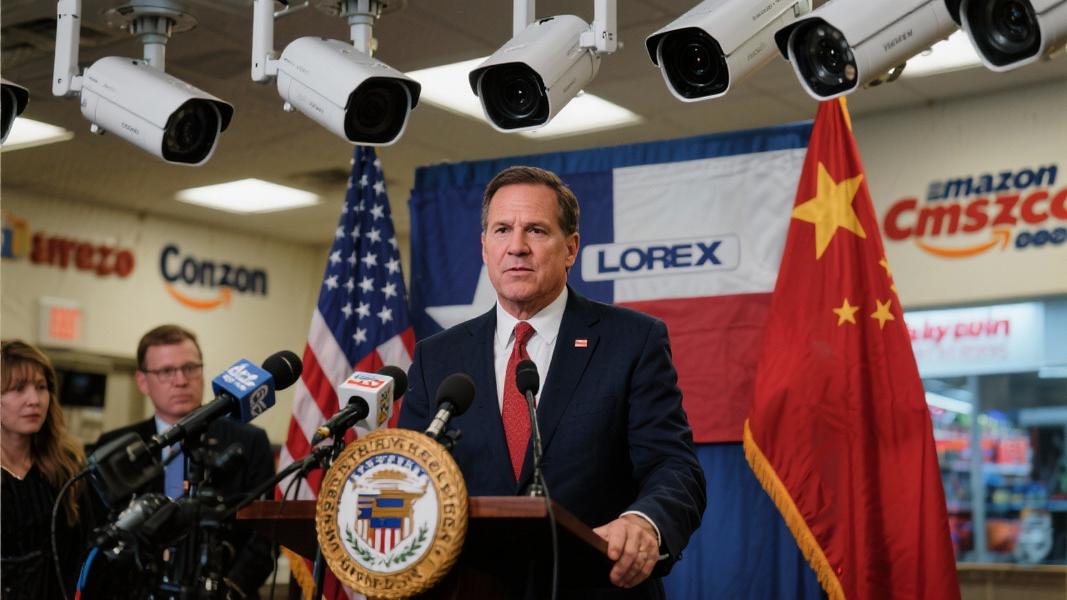
Texas Attorney General Ken Paxton has launched an investigation into security camera manufacturer Lorex Technology Inc. over potential ties to the Chinese Communist Party, raising alarm about surveillance devices that could be compromising Texans’ privacy and national security.
The probe, announced this week, centers on whether Lorex has been deceptively marketing its surveillance cameras as safe and secure while allegedly maintaining connections to foreign adversaries. “Texans should never have to worry that the devices protecting their homes could be tied to foreign adversaries,” Paxton said. “Any company that gives the CCP a foothold in American life will face the full force of Texas law.”
A Complicated Corporate History
The investigation stems from Lorex’s tangled ownership history and ongoing business relationships. Lorex was acquired by Chinese company Dahua Technology in 2012, then later sold to Taiwan-based Skywatch in 2022. Despite the ownership change, investigators are concerned that Lorex continues to rely heavily on Dahua for key camera components.
That connection is particularly troubling since Dahua has been officially designated as a “Chinese military company” by the U.S. government — a classification that typically triggers significant restrictions on American business dealings.
So how are these cameras still ending up in Texas homes?
Despite federal restrictions on Dahua products due to national security concerns, Lorex cameras remain widely available to Texas consumers through major retailers including Amazon and Costco. This apparent contradiction between federal security designations and market availability forms a central focus of Paxton’s investigation.
Security Concerns in the Smart Home Era
The case highlights growing tensions between consumer convenience and national security in an era where smart home devices increasingly monitor our most private spaces. Security cameras, once simple recording devices, now feature cloud connectivity, facial recognition, and remote access — capabilities that could potentially be exploited if compromised by foreign actors.
Critics of companies with ties to China have long warned that the country’s national intelligence law requires Chinese companies to cooperate with state intelligence work. That requirement could theoretically compel companies like Dahua to provide access to data flowing through their components, even when branded under different names.
Paxton’s office hasn’t yet detailed specific evidence of security breaches in Lorex products, but the investigation signals growing scrutiny of consumer electronics with international supply chains and complex corporate structures.
For Texas consumers who have already purchased Lorex cameras, the investigation creates uncertainty about devices they’ve installed to protect their homes. The attorney general’s office hasn’t issued guidance on continued use of existing products while the investigation proceeds.
As smart home technology becomes increasingly embedded in daily life, this case may represent just the beginning of a broader examination of where our devices come from — and who might be watching through them.
