
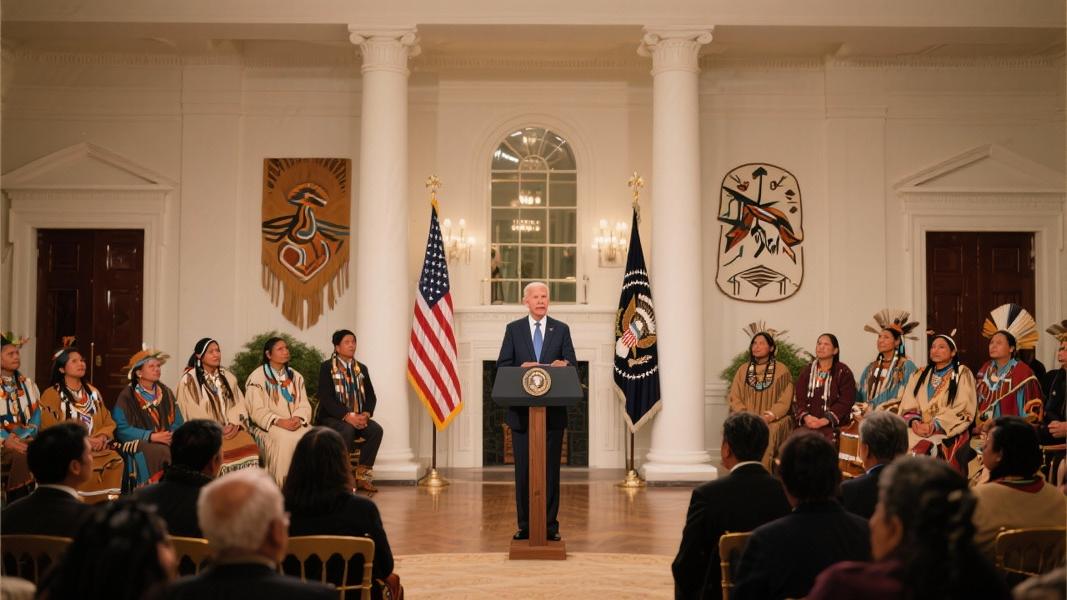
In a significant shift from previous administrations, the White House has announced expanded federal recognition for the Lumbee Tribe of North Carolina as part of its 2025 National Native American Heritage Month initiatives, fulfilling what officials call “a long overdue” commitment to one of the largest tribes east of the Mississippi.
The presidential message, released earlier this week, also outlined plans to broaden educational opportunities for Native students, allowing those eligible to attend Bureau of Indian Education Schools to direct federal funding toward private, faith-based, or charter institutions — a move that has drawn both praise and scrutiny from Indigenous advocacy groups.
Building on a Complicated History
“This National Native American Heritage Month, we celebrate Native Americans’ enduring contributions to our Nation’s greatness,” the President stated in the official message. “As President, I remain committed to advancing the prosperity and well-being of all Native Americans.”
The focus on the Lumbee Tribe’s recognition represents the culmination of a decades-long struggle. The tribe, with approximately 55,000 members primarily in North Carolina, has sought full federal recognition since 1888, facing numerous legislative setbacks despite partial recognition in 1956.
Last year’s proclamation had already signaled a strengthening of tribal relationships, emphasizing the administration’s commitment to “respecting Tribal sovereignty and self-determination and working in partnership with Tribal Nations to bring new prosperity and security to Native peoples.”
Confronting Past Injustices
Why now? The timing coincides with broader federal efforts to address historical trauma inflicted on Native communities. The Department of the Interior has chosen “Weaving together our past, present and future” as this year’s theme, with particular attention to the legacy of Federal Indian Boarding Schools.
“We will focus on the failed policies of the past with a focus on the Federal Indian Boarding Schools and moving into the present and the work being done to address the intergenerational trauma Native people still face,” the Department states on its official Heritage Month website.
These institutions, which operated from 1819 to 1969, separated an estimated 100,000 Indigenous children from their families, forcing them to abandon their languages and cultural practices — a policy now widely recognized as cultural genocide.
The National Indian Council on Aging (NICOA) has highlighted the importance of acknowledging this painful history while building toward meaningful partnerships. “During National Native American Heritage Month, we pledge to maintain the meaningful partnerships we have with tribal nations, and we renew our commitment to our nation-to-nation relationships as we seek to give all our children the future they deserve,” the organization noted in its statement.
From Summits to Policy
This latest announcement builds on foundation laid during the 2022 White House Tribal Nations Summit, where administration officials met with representatives from federally recognized tribes. That gathering demonstrated “an opportunity for Tribal Leaders to engage directly with officials in the highest levels of the Administration.”
But the road ahead remains complex. Critics question whether educational “freedom” will translate to genuine improvement in outcomes for Native students, who continue to face significant disparities in graduation rates and access to higher education. Others wonder if the Lumbee recognition signals similar action for other tribes still seeking federal acknowledgment.
The educational provisions, in particular, represent a departure from previous approaches, potentially redirecting Bureau of Indian Education funding toward non-BIE institutions — a policy shift that will likely face careful scrutiny from tribal education advocates concerned about maintaining culturally appropriate learning environments.
As November unfolds with celebrations and commemorations across the country, this year’s Heritage Month stands as a reminder of both how far federal-tribal relations have come and the distance yet to travel in addressing centuries of broken promises.
