
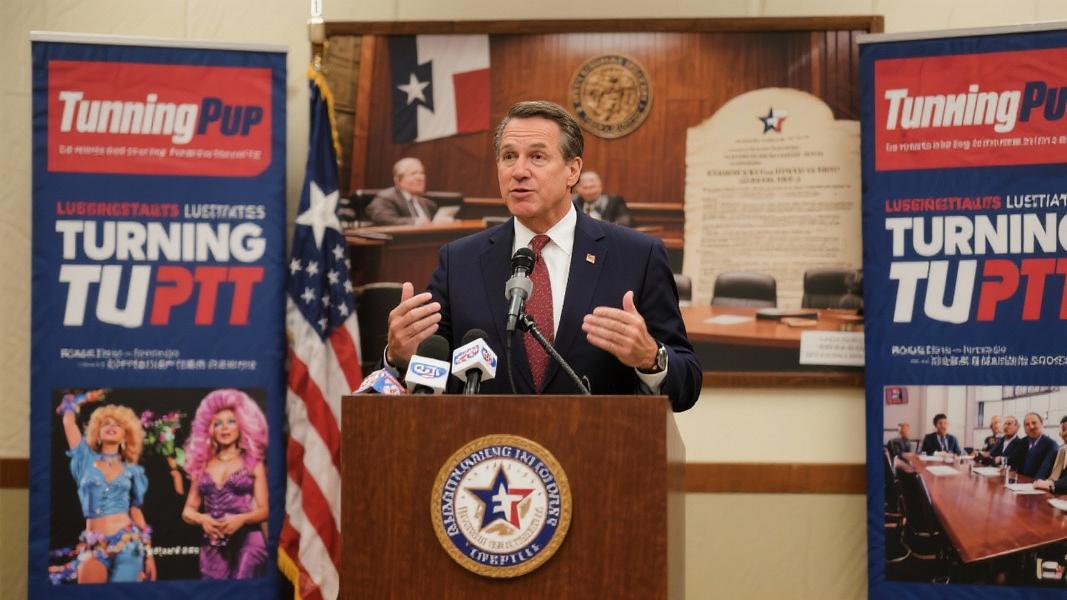
Texas can now enforce its controversial law restricting drag performances in front of minors after a federal appeals court overturned a lower court’s block on the measure Thursday, marking a significant victory for state officials who have pushed to limit what they describe as “sexually oriented performances.”
The Fifth Circuit Court of Appeals vacated a 2023 permanent injunction that had prevented Texas from implementing Senate Bill 12, which prohibits drag performers from dancing suggestively or wearing certain prosthetics on public property or in the presence of children. The ruling states that businesses hosting such performances could face fines up to $10,000, while individual violators might be charged with a Class A misdemeanor.
“Major win: I successfully defended a law protecting children from being exposed to sexually illicit content at erotic drag shows,” Texas Attorney General Ken Paxton declared on social media following the decision. “I will always work to shield our kids from exposure to erotic and inappropriate sexually oriented performances.”
Not All Drag Shows Targeted
The three-judge panel emphasized a key distinction in their ruling: not all drag performances are inherently sexually explicit. The court found that most of the plaintiffs — including a drag performer, a drag production company, and pride groups — failed to demonstrate they intended to conduct performances that would actually fall under the law’s definition of “sexually oriented.”
This nuance appears to have been crucial in the court’s decision. Judges Kurt Engelhardt and Leslie Southwick, who formed the majority, expressed “genuine doubt” that certain explicit behaviors like “pulsing prosthetic breasts in front of people” or “being spanked by audience members” qualify as constitutionally protected expression — “especially in the presence of minors.”
What’s at stake here? The law specifically targets performances with sexual themes or content, rather than drag as an art form itself. This distinction allowed the court to uphold the law while suggesting that many typical drag performances might continue without legal issues.
Dissenting Opinion
Not all judges agreed with the ruling. Judge James Dennis partially dissented, arguing that SB 12 was overly broad and effectively aimed at banning drag performances outright. In his dissent, he warned that “It is entirely plausible that Plaintiffs’ gendered expressions, costuming, prosthetics, and choreography could be viewed by factfinders and officials empowered to enforce S.B. 12 as appealing to the prurient interest in sex.”
Dennis further pointed out that Texas already has laws prohibiting obscene performances and harmful material being shown to minors, suggesting the new legislation might serve a different purpose than its stated intent.
Attorney General Paxton, however, celebrated the ruling as a triumph for Texas families. “It is an honor to have defended this law, ensuring that our state remains safe for families and children,” he affirmed, adding that he looks forward to “continuing to vigorously defend it on remand before the district court.”
What Happens Next?
With the injunction lifted, Texas can now begin enforcing SB 12 while the case returns to district court for further proceedings. The practical effects remain to be seen — will drag performances across Texas be dramatically curtailed, or will most continue unaffected because they don’t meet the law’s definition of “sexually oriented”?
LGBTQ+ advocates have consistently argued that such laws are thinly veiled attempts to restrict gender expression and queer cultural spaces. But supporters maintain they’re simply trying to shield children from inappropriate content.
The Fifth Circuit’s ruling represents just one battle in a broader national conversation about drag performances, gender expression, and who gets to decide what’s appropriate for children to witness in public spaces — a debate that shows no signs of reaching a quick resolution.
