
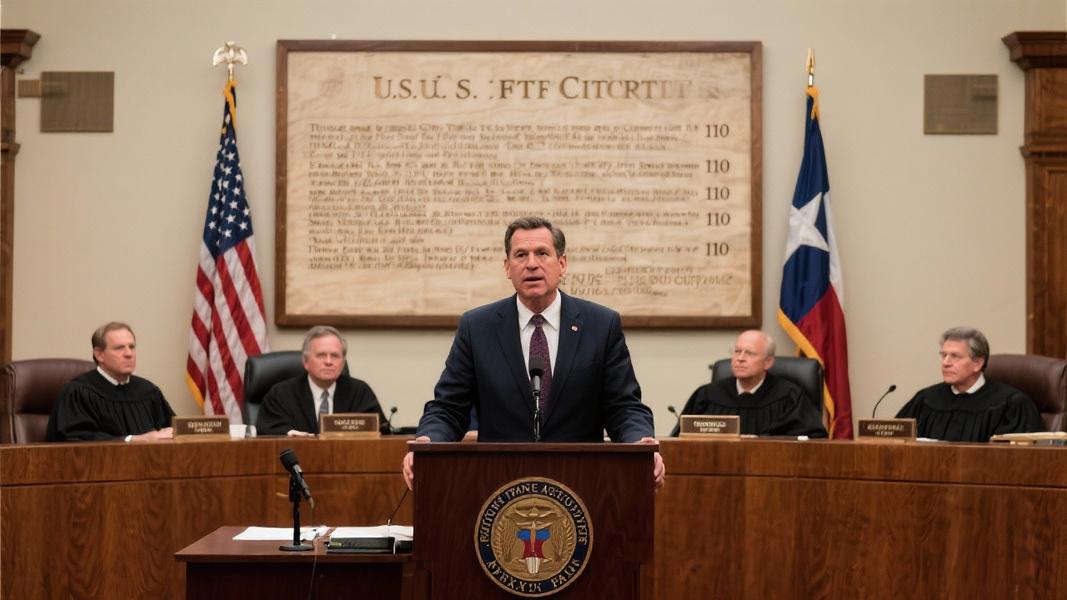
Texas can now enforce its controversial ban on drag performances near children after a federal appeals court lifted a lower court’s injunction, handing a significant victory to state officials who have championed the law as protecting minors from sexually explicit content.
The U.S. Fifth Circuit Court of Appeals vacated a permanent injunction that had prevented Texas from implementing Senate Bill 12, which prohibits “sexually oriented performances” in public spaces or anywhere minors might be present. The ruling represents a major win for Texas Attorney General Ken Paxton, who has vigorously defended the measure.
“I will always work to shield our children from exposure to erotic and inappropriate sexually oriented performances,” Paxton said following the decision. “It is an honor to have defended this law, ensuring that our state remains safe for families and children, and I look forward to continuing to vigorously defend it on remand before the district court.”
What’s at stake?
The legislation, passed by Texas lawmakers in 2023, specifically targets performances featuring “sexual gesturing” or “the exhibition of sexual anatomical areas” that could appeal to “prurient interest.” While not explicitly mentioning drag shows, the law emerged amid growing conservative concerns about children attending such events.
In its ruling, the Fifth Circuit expressed “genuine doubt” about the plaintiffs’ claim that they had a First Amendment right to perform sexually explicit drag shows in front of children. This skepticism suggests the court may ultimately find the law constitutional when the case returns to the district court for further proceedings.
But it’s not a unanimous view among the judges. Judge James Dennis partially dissented, arguing that the law could potentially ban drag performances outright rather than just explicitly sexual content. He claimed that existing laws already prohibit obscene performances and harmful material to minors, suggesting the new legislation might be unnecessarily broad.
Cultural flashpoint
How did drag shows become such a heated battleground? The performances have increasingly found themselves at the center of America’s culture wars, with conservative lawmakers in multiple states introducing similar legislation aimed at restricting drag performances in public spaces or near children.
Opponents of such laws argue they unfairly target LGBTQ+ expression and are often vaguely worded in ways that could limit constitutionally protected speech. Supporters counter that their concern is specifically with sexualized content being accessible to minors, not with drag as an art form itself.
The Texas law was crafted in response to reports of private drag performances deemed inappropriate for children, according to state officials. It doesn’t ban drag performances entirely but restricts where and when certain types of performances can occur.
“This ruling represents a major victory for Texas families,” Paxton declared, framing the decision as part of his broader commitment to protecting children from what he characterizes as inappropriate sexual content.
With the injunction lifted, the battle now returns to the district court, where the law’s constitutionality will be examined more thoroughly. For the moment, though, Texas has cleared a significant hurdle in its effort to regulate performances it deems inappropriate for children — while critics continue to question whether the law’s real target is artistic expression itself.
