
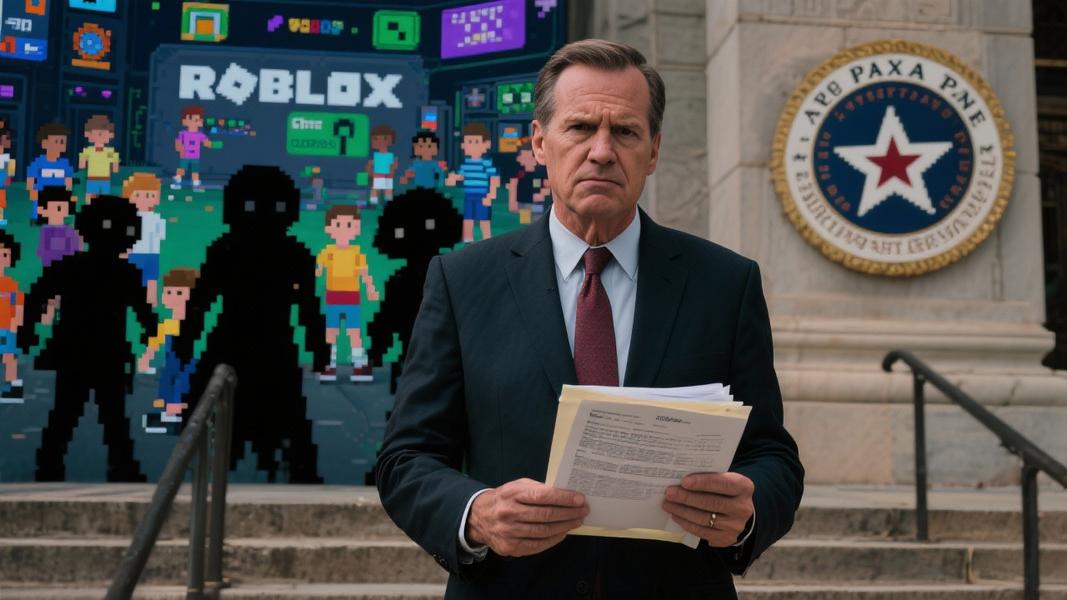
Texas Attorney General Ken Paxton has launched a legal offensive against gaming giant Roblox, accusing the popular platform of failing to shield children from sexual exploitation and predatory behavior. The lawsuit, filed Wednesday, marks the latest in a growing wave of state-level actions targeting tech companies over child safety concerns.
In filings with the court, Paxton didn’t mince words, characterizing Roblox as a “digital playground for predators” where the company allegedly prioritizes “pixel pedophiles and corporate profit over the safety of Texas children.” The gaming platform, wildly popular among kids and teens, allows users to create and share games while interacting with others in virtual environments.
Roblox’s global head of public policy expressed disappointment with the lawsuit, emphasizing the company’s commitment to child safety. “We believe that we are at our best when we are working collaboratively with policymakers,” the representative stated, suggesting the company would have preferred a different approach than litigation.
Growing Concerns About Online Safety
How vulnerable are children in online gaming spaces? According to experts, significantly so. A Rice University political science professor explained the underlying problem: “If those sites are not doing a good job vetting their users and monitoring their users, they could very well be used by predators to lure unsuspecting children.”
The Center for Child Protection echoed these concerns, noting that “children are online now more than ever, which leaves them vulnerable to risks like grooming, exposure to explicit content, and cyberbullying.” This increased digital presence, particularly following pandemic-era shifts in socialization, has heightened risks across gaming platforms.
Texas isn’t alone in its legal pursuit. The Lone Star State joins Louisiana and Kentucky, which have filed similar lawsuits against Roblox, creating a multi-state front challenging the platform’s safety protocols.
Roblox’s Response and Safety Measures
Facing mounting criticism, Roblox has reportedly implemented over 145 safety measures on its platform this year alone. The company is also planning to introduce new facial age technology designed to prevent users from misrepresenting their age — a common tactic used by predators to gain access to younger users.
Still, critics argue these measures have come too late and question whether they’ll be sufficient to address what they characterize as systemic problems. Paxton’s lawsuit represents perhaps the most aggressive governmental action yet, seeking unspecified damages and demanding more robust protections.
The case highlights the growing tension between tech platforms’ freedom to operate and their responsibility to protect vulnerable users. For Roblox, with its massive user base skewing young, the stakes couldn’t be higher — not just in legal terms, but in maintaining trust with parents who ultimately decide whether their children can access the platform.
As online spaces increasingly become extensions of children’s social worlds, the outcome of this case could set important precedents for how gaming platforms balance innovation with protection, and profit with responsibility.
