
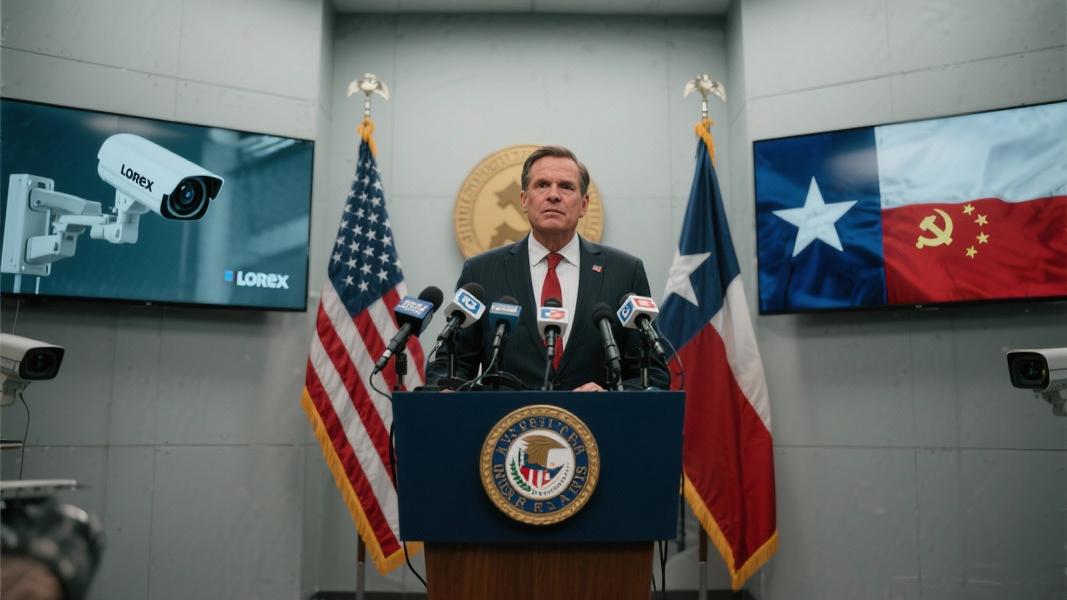
Texas Attorney General Ken Paxton has launched an investigation into security camera company Lorex Technology, citing concerns over potential ties to the Chinese Communist Party that could pose significant risks to both national security and consumer privacy.
The probe, announced on October 29, 2025, targets a company with a complicated ownership history. Lorex, which was founded in 1991, spent a decade under the ownership of Chinese tech giant Dahua Technology before being sold to Taiwan-based Skywatch in 2022.
“Texans should never have to worry that the devices protecting their homes could be tied to foreign adversaries,” Paxton said in a statement. “Any company that gives the CCP a foothold in American life will face the full force of Texas law,” the attorney general warned.
Chinese Connections Persist Despite Ownership Change
What makes this case particularly concerning? Despite Lorex’s transition to Taiwanese ownership, reports indicate that Dahua — officially designated as a “Chinese military company” by the U.S. Department of Defense — continues to supply key components for Lorex cameras. This ongoing relationship has raised red flags about potential backdoor influence from Beijing.
The investigation comes amid heightened scrutiny of Chinese technology in American homes and businesses. Both the U.S. Department of Commerce and the Federal Communications Commission have implemented restrictions on Dahua products, citing serious vulnerabilities to hacking, surveillance, and espionage.
Yet despite these federal warnings, Lorex cameras remain widely available throughout Texas. Consumers can easily purchase the potentially compromised devices through major retailers including Amazon, Costco, and Best Buy — often with no indication of the possible security concerns.
Security Experts Sound Alarm
The investigation highlights the growing challenge of disentangling global supply chains in sensitive technology sectors. Even when companies change hands on paper, their technical infrastructure, component sourcing, and software development may maintain troubling connections to foreign entities deemed hostile to U.S. interests.
“It’s a shell game,” said Dr. Alan Watkins, a cybersecurity analyst who spoke with our reporters on condition his organization not be named. “Companies rebrand or get shuffled between parent corporations, but the underlying technology — and vulnerabilities — often remain intact.”
Paxton’s office hasn’t specified what remedies might be sought if the investigation confirms CCP connections. Options could range from mandatory consumer disclosures to outright sales bans within Texas.
For now, the millions of Texas homeowners who rely on security cameras to protect their families face an unsettling question: Is the technology watching your home also potentially watching you?
