
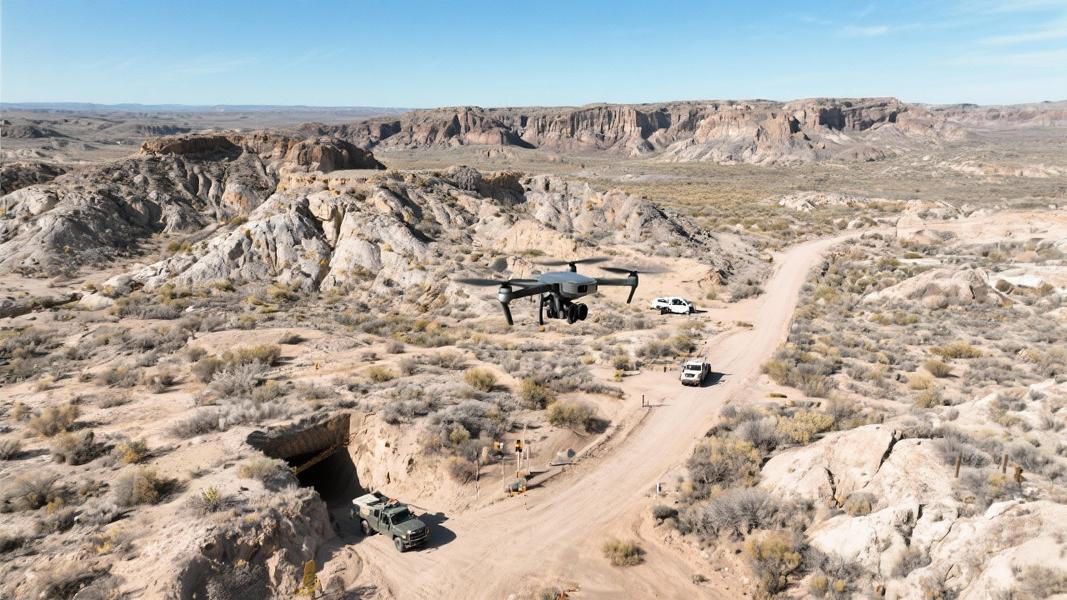
Texas has launched a new offensive in its border security battle — this time focusing on what’s happening beneath the surface. Land Commissioner Dawn Buckingham has directed state officials to search for cartel tunnels along the Texas-Mexico border, marking an escalation in the state’s efforts to combat drug and human trafficking.
The Texas General Land Office (GLO) will now identify tracts of state-managed land along the border, particularly in Hudspeth County and other high-risk areas, that could be vulnerable to underground cartel activity, according to an announcement released by the agency on Tuesday.
Shifting Tactics Underground
The move comes after cartel tunnels were discovered in San Diego and El Paso within the past year, prompting federal authorities to expand detection capabilities. Field personnel will now use aerial and drone technology during routine land inspections to spot possible tunnel entrances or signs of underground activity.
“Texas stands on the front lines of America’s fight for border security,” Commissioner Buckingham stated. “The cartels are constantly adapting, moving from the skies and waterways to underground networks of tunnels, and we will not cede an inch of land to these violent illegal criminals.”
The initiative aligns with recent federal action. The Trump Administration and Department of Homeland Security have allocated $100 million for advancing border tunnel detection technology managed by Customs and Border Patrol, scheduled to deploy across the Southwest U.S. Border beginning November 10.
Coordinated Effort
Is this just the latest in Texas’s increasingly aggressive border security posture? Absolutely. The GLO will coordinate with federal counterparts to identify high-risk areas for tunnel construction and strengthen security measures along state-managed lands.
Under President Trump’s leadership, Mexican cartels have been formally designated as foreign terrorist organizations, granting the federal government broader authority to conduct law enforcement and intelligence operations against these groups.
This tunnel detection initiative builds on Texas’s ongoing border security efforts. In October 2024, Commissioner Buckingham announced that the GLO had acquired a 1,402-acre ranch along the Rio Grande in Starr County to build a border wall. Construction moved swiftly, with paneling on 1.5 miles of border wall completed on this property by January 2025.
The state has been aggressive in securing border territories. In 2023, Buckingham declared Fronton Island, a 170-acre island in Starr County, as state land. After Texas Department of Public Safety and Texas Military Department cleared it through Operation Flat Top, crime at this border hotspot reportedly decreased dramatically.
Evolving Border Strategy
“The safety and sovereignty of our state are non-negotiable,” Buckingham emphasized, “and the General Land Office will use every tool at our disposal to keep Texas safe. Texans overwhelmingly expect action–and that’s exactly what they’re getting.”
While the state pushes forward with these measures, questions remain about how effective drone surveillance will be in detecting sophisticated underground networks. That said, the coordinated approach between state and federal authorities signals a new chapter in border security tactics — one that acknowledges the cartels’ ability to adapt and evolve their smuggling methods.
As border security continues to be a flashpoint in national politics, Texas appears determined to stay one step ahead — or in this case, one layer deeper — in its ongoing battle against cartel activity along its southern border.
