
For Jimmy Burks, the decision to join the Army during the Vietnam War wasn’t born from patriotic fervor or military ambition — it was simply a way to “stay out of trouble.”
“My mother signed the paperwork, so that’s what I did to stay out of trouble,” Burks recalled of his 1968 enlistment, when he dropped out of high school in Comanche, Texas to join the military.
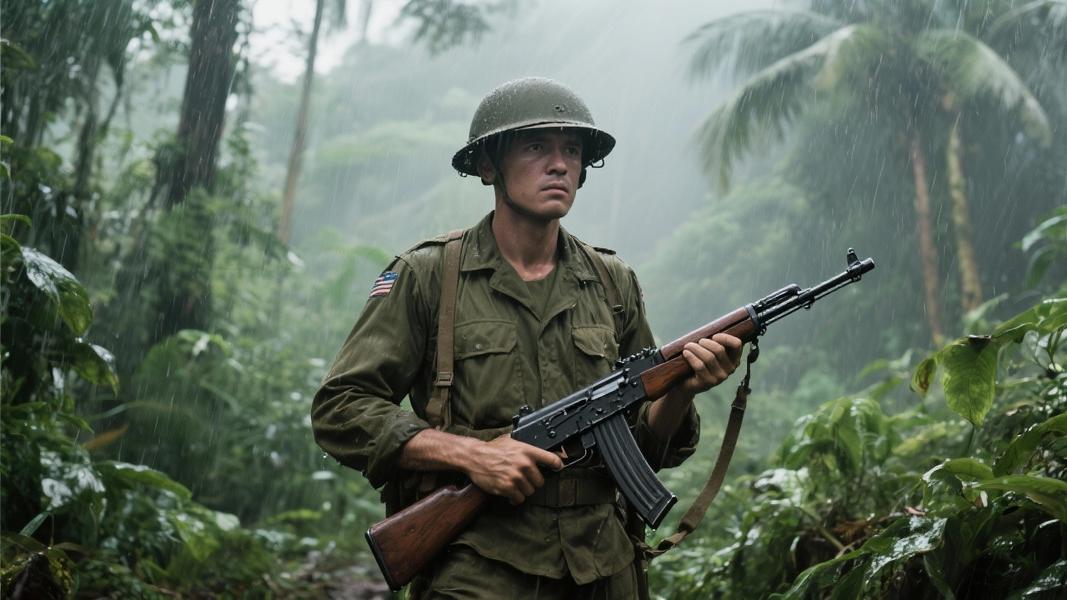
Born in 1950, Burks would soon find himself halfway around the world as an 11B20 Light Weapons Infantryman — known colloquially as “11 Bravo” — serving a grueling yearlong tour in Vietnam during monsoon season, where combat proved both intense and, at times, tragically misdirected.
Into the Unknown
The reality of war hit hard. “It was scary. You didn’t know what was going to happen, if you were going to be shot at, if you had to go out into the field and shoot or whatever,” Burks explained about his initial weeks in the combat zone.
What stands out in Burks’ recollections? The unpredictability of combat and the formidable skill of his adversaries, particularly those from North Vietnam. He described firefights lasting half an hour with casualties mounting on both sides of the conflict.
But the most painful chapter of Burks’ service came not from enemy action but from a tragic battlefield misidentification. “They thought we looked like the enemy,” he stated simply, referring to the friendly fire incident that left him wounded and earned him a Purple Heart.
A Career of Service
Burks’ military journey began formally in April 1969 and extended well beyond his Vietnam service. After his active-duty tour, he joined the Army National Guard, ultimately retiring in 1995 after decades of service to his country, according to records from the Texas Veterans Land Board.
Today, the retired Staff Sergeant resides at the Ussery-Roan Texas State Veterans Home in Amarillo, where his experiences have been preserved as part of an ongoing effort to document veterans’ stories.
That initiative, known as the Voices of Veterans oral history program, has been highlighted by Texas Land Commissioner and Veterans Land Board Chairwoman Dawn Buckingham, M.D., who has championed the preservation of these narratives for historical research and public education.
The program ensures that the sacrifices of veterans like Burks — who went from a small Texas town to the monsoon-drenched jungles of Vietnam and back again — aren’t forgotten as time passes and memories fade.
For Burks, what began as a teenage decision to “stay out of trouble” became a lifetime defined by service, sacrifice, and ultimately, survival — a story now preserved for generations who will never know the sound of artillery in Vietnam’s monsoon rains, but who might better understand the cost of war through the voices of those who lived it.
