
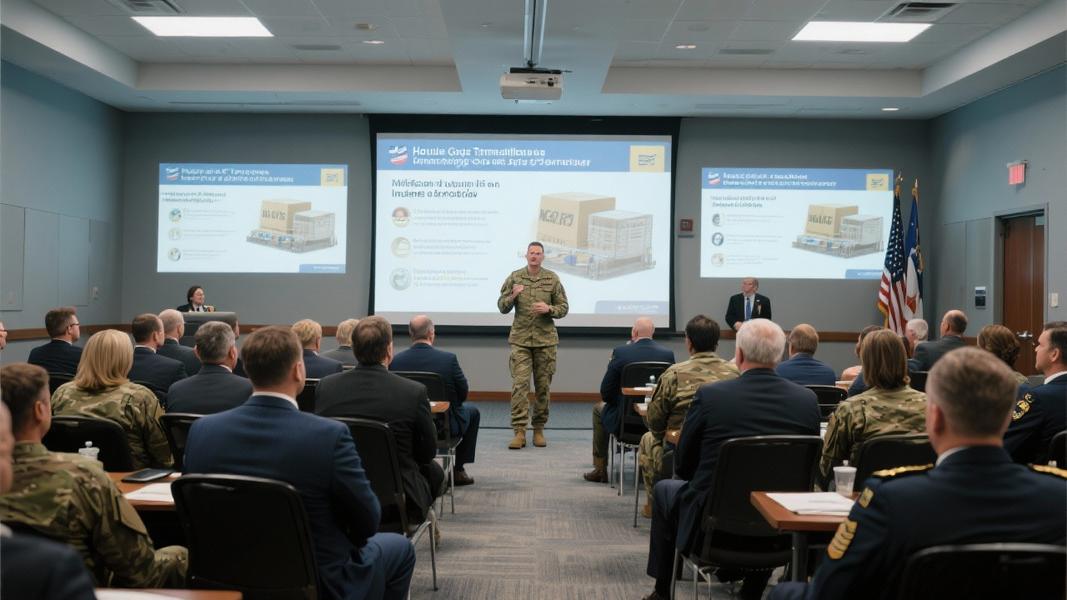
The Department of War is overhauling how it moves military families — and wants industry to help shape the process. In a significant push for transparency, the Permanent Change of Station Joint Task Force (PCS JTF) hosted over 350 industry partners at its 2025 Fall Household Goods Transportation Service Provider Engagement on November 20, focusing on proposed business rule updates for 2026.
Military Moving Reform Takes Center Stage
“What we’re doing here is going to affect every single member within the Department of War,” officials emphasized during the gathering. “Your input remains critical; that’s why we need to hear from you today. We want to ensure that our service members have the best moving experience possible,” stated task force leadership at the event.
The engagement comes at a pivotal time. Established just six months ago in May 2025 under direct orders from the Secretary of Defense, the PCS JTF faces a tight timeline to deliver comprehensive reform recommendations. By September 5, the task force must submit formal proposals for long-term improvements to both its mission and the Defense Personal Property Program (DP3), as documented in official Defense Department communications.
Army Maj. Gen. Lance G. Curtis, who opened the November meeting, assured industry partners that transparency would be a hallmark of the reform process. He pledged to “work with all of our stakeholders with transparency to improve the household goods moving process, and remain proactive in our communication to work through the impact of new business rules will all of our teammates,” according to Department releases.
Learning from Past Failures
Why the urgency for reform? The answer lies in the troubled history of military moving programs. In June 2025, Curtis explained that the termination of the HomeSafe Alliance contract stemmed from that contractor’s failure to meet performance standards, which resulted in missed pickups and miscommunications that disrupted service members’ relocations. “We’re building a system worthy of their sacrifice,” Curtis remarked. “That’s the mission.”
The proposed 2026 business rule updates, which were released as an advisory on October 31, 2025, are part of the household goods program’s annual update process. The engagement session provided a forum for industry feedback and discussion on these changes, which aim to strengthen the DP3 through improvements in efficiency, accountability, and communication — reflecting the task force’s commitment to proactive engagement with moving companies and other stakeholders.
During an Industry Day held in August 2025, Curtis identified four key focus areas: innovative commercial practices, workforce incentivization, program structure and pricing, and broader industry ideas. He emphasized that “while the subject may not seem glamorous, it is critical to the force,” acknowledging the direct impact household goods relocation has on military morale and operational readiness.
Signs of Progress
Despite the challenges, there are encouraging signs. TRANSCOM’s 2025 Peak Season Outlook revealed significant improvements in service delivery. Under the DP3 program, 97% of military shipments were picked up on time, with 90% delivered on time — substantially exceeding the initial goals of 95% on-time pickups and 85% on-time deliveries, according to industry reports.
The PCS JTF “remains committed to addressing PCS challenges and strengthening the Defense Personal Property Program through improvements in efficiency, accountability, and communication,” task force officials confirmed.
What happens when things go wrong? Service members facing shipment issues are encouraged to contact the operations center at 1-833-MIL-MOVE or email [email protected]. The JTF operates a 24/7 call center staffed by military personnel experienced in PCS moves, ensuring that help is always available.
As the September 2025 deadline for formal recommendations approaches, the military moving industry finds itself at a crossroads. The engagement between the PCS JTF and industry partners represents not just a policy discussion, but a recognition that behind every military move is a family whose service to the nation deserves a relocation process that works as efficiently as they do.
