
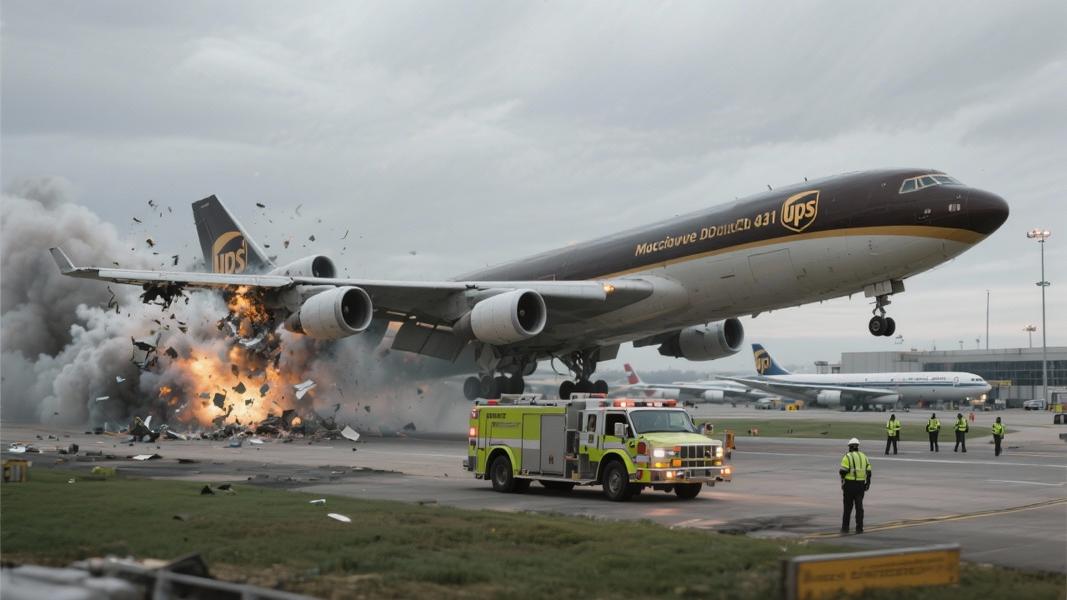
A catastrophic engine failure sent a UPS cargo plane crashing into an industrial area near Louisville’s Muhammad Ali International Airport on November 4, killing 14 people and injuring 23 others in one of the deadliest aviation disasters of the year.
The Boeing MD-11F aircraft, operating as UPS Flight 2976, suffered a separation of its left engine during takeoff and crashed just seconds after lifting off from the runway at approximately 5:13 p.m. local time. All three crew members aboard the Louisville-to-Honolulu flight perished, along with 11 people on the ground, according to a preliminary report from the National Transportation Safety Board (NTSB), which has launched a full investigation.
Devastating Impact
Witnesses described a horrifying scene as the massive cargo jet, with its left engine detached, careened into nearby facilities. The aircraft’s left landing gear struck the roof of a UPS Supply Chain warehouse, carving a 300-foot gash before its wing collided with fuel tanks at Kentucky Petroleum Recycling, triggering a massive fire. The plane then rolled more than 90 degrees to the left before smashing into a semi-truck parking area and auto scrap yard with its landing gear still extended.
“The debris field stretched approximately 3,000 feet south-southeast from the UPS warehouse,” investigators noted in their initial assessment. The extensive wreckage complicated rescue efforts as emergency responders worked through the night to locate victims and secure the hazardous site.
Fleet Grounded
In response to the tragedy, UPS Airlines has indefinitely grounded its entire fleet of McDonnell Douglas MD-11 aircraft, following Federal Aviation Administration guidelines. The aging aircraft — the company operates 109 of them with an average age exceeding 30 years — make up about 9% of UPS’s overall fleet.
How long will these planes remain out of service? Much longer than initially expected, according to internal communications. “Regarding the MD-11 fleet, Boeing’s ongoing evaluation shows that inspections and potential repairs will be more extensive than initially expected,” a UPS executive wrote in a memo to staff.
The timing couldn’t be worse for the shipping giant, coming just weeks before the peak holiday delivery season. Nevertheless, a UPS spokesperson emphasized that the company “will take the time needed to ensure that every aircraft is safe” while relying on contingency plans to maintain service levels during the crucial period.
Investigation Underway
The NTSB’s preliminary report identified the aircraft as N259UP, which was “destroyed after it impacted the ground shortly after takeoff from runway 17R.” The agency has confirmed that “the 3 crewmembers aboard the airplane and 11 people on the ground were fatally injured. There were 23 others on the ground who were injured.”
This crash raises serious questions about the continued operation of aging cargo aircraft. The MD-11 fleet, which constitutes about 4% of rival FedEx’s fleet as well, has been in service for decades, with many planes approaching or exceeding their original design lifespans.
Aviation experts note that cargo carriers typically operate older aircraft than passenger airlines, a practice that has occasionally prompted safety concerns from industry watchdogs. The NTSB investigation is expected to take several months, with particular focus on the engine mount failure that appears to have initiated the catastrophic sequence of events.
For the families of the 14 victims and the Louisville community, however, answers can’t come soon enough. As recovery efforts continue, the crash serves as a stark reminder of the risks that persist even in the highly regulated world of commercial aviation.
