
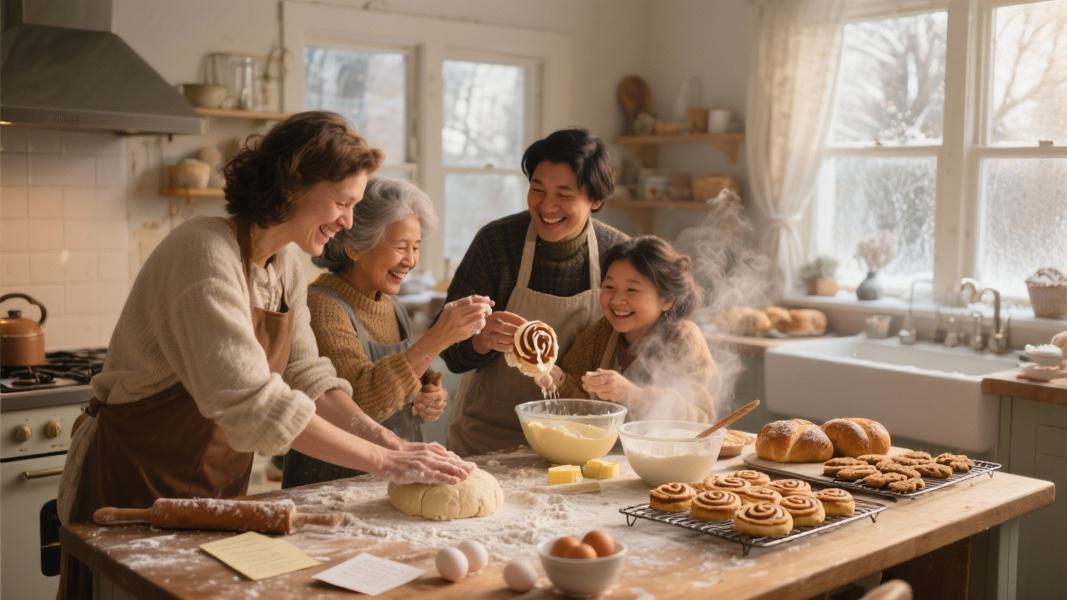
In a chaotic world where screens dominate our attention, more people are finding solace in the simple act of measuring flour and cracking eggs. As winter winds howl outside, the warm embrace of a preheating oven offers more than just the promise of cookies — it’s therapy in a baking sheet.
The Rise of Therapeutic Baking
Baking has emerged as a powerful antidote to modern stress, providing structure through the precise dance of measuring, mixing, and transforming raw ingredients into something delicious. For chef Joanne Chang, co-owner of Flour Bakery in Boston, it’s about connection. “Baking is how I best connect with the world around me — making something wonderful and sharing it with others and seeing how much joy they receive from something I made with my own hands,” she explains.
But the therapeutic benefits of baking extend beyond just warm fuzzies. The term “rage baking” gained popularity through writer Tangerine Jones, who channeled her anger at societal injustices into flour and sugar — transforming volatile emotions into something constructive and sweet, as noted by mental health professionals studying the phenomenon.
For Hannah Skobe, an astrophysics doctoral student, the chemistry of baking provides a fascinating parallel to her scientific work. Meanwhile, renowned cake artist Ron Ben-Israel found himself captivated by the alchemical transformations that occur in baking. “Especially the process of whipping egg whites into meringue fascinated me,” he recalls.
Nostalgia by the Spoonful
What drives so many to their mixing bowls when temperatures drop? For many bakers, there’s a powerful nostalgic element — family recipes that connect generations through handwritten cards and familiar aromas. A parent’s rugalach recipe, the pie a favorite aunt made every Thanksgiving, or the cookies they helped decorate as children all serve as edible time machines to happier moments, researchers have found.
In our increasingly digital world, the tactile experience of kneading dough or cutting butter into flour provides a sensory satisfaction that’s impossible to replicate on a touchscreen. Food blogger Alex George has noticed this trend among her followers who, she says, “love the process as much as the payoff,” according to interviews with home bakers.
The thrill of culinary discovery drives many experimental bakers. George’s caramelized onion biscuits with French onion soup compound butter began as inspiration from “an incredible French onion soup,” while baker Bernard Wong has explored everything from laminated doughs to Asian boiling flour techniques in his quest for the perfect bread, as documented by food researchers.
Finding Control in Chaos
Economic considerations also play a role in the baking boom. “It’s economical, I get to control what’s inside of it, and it passes the time when I’m in my apartment and keeps my hands busy,” Wong shared. Despite his thrifty approach, he doesn’t skimp on quality, often selecting premium ingredients like Callebaut and Valrhona chocolate for his creations.
Baking has also proven to be a powerful language of care. When Skobe brought a banana cake with cream cheese frosting to her workplace, she found joy in watching “all of my friends come to my desk to grab a slice,” as reported in studies on food as social currency.
Ever wonder why baking feels so fundamentally hopeful? At its core, baking represents a belief that following steps carefully will yield something good — a rare certainty in an uncertain world. Whether it’s about feeding others, celebrating special moments, or creating calm amid chaos, baking offers tangible results in a world where outcomes often feel beyond our control, psychologists suggest.
A Young Baker Rises Above
Perhaps no story better illustrates baking’s therapeutic potential than that of 13-year-old Braxton Harst. After experiencing bullying at school so severe that his parents transferred him to a private institution, Braxton found healing through baking. “He’s had a tough year,” his mother revealed. “To see him find this community, to have people encouraging him — it’s been such a gift, especially when he needed it most.”
Braxton’s journey gained unexpected momentum when his vanilla rainbow cake video went viral on TikTok. Now baking approximately five cakes weekly — each taking around two days to complete — the young baker has found both purpose and community through his craft. His late-night baking sessions have become a ritual of self-expression and healing, observers note.
In one particularly touching moment, Braxton was hired to teach a young girl how to bake a cake for her grandmother’s birthday — completing the circle of therapy and community that baking often creates. From Norwegian julekake to elaborate birthday creations, these cultural and personal traditions continue to provide structure and meaning through the simple act of mixing, waiting, and sharing, enthusiasts maintain.
As winter deepens and the world grows more complex, more people are discovering what generations before them knew: sometimes, the best therapy comes with a timer, a mixing bowl, and the promise that if you follow the recipe correctly, something wonderful will emerge from the oven — even when everything else feels half-baked.
