
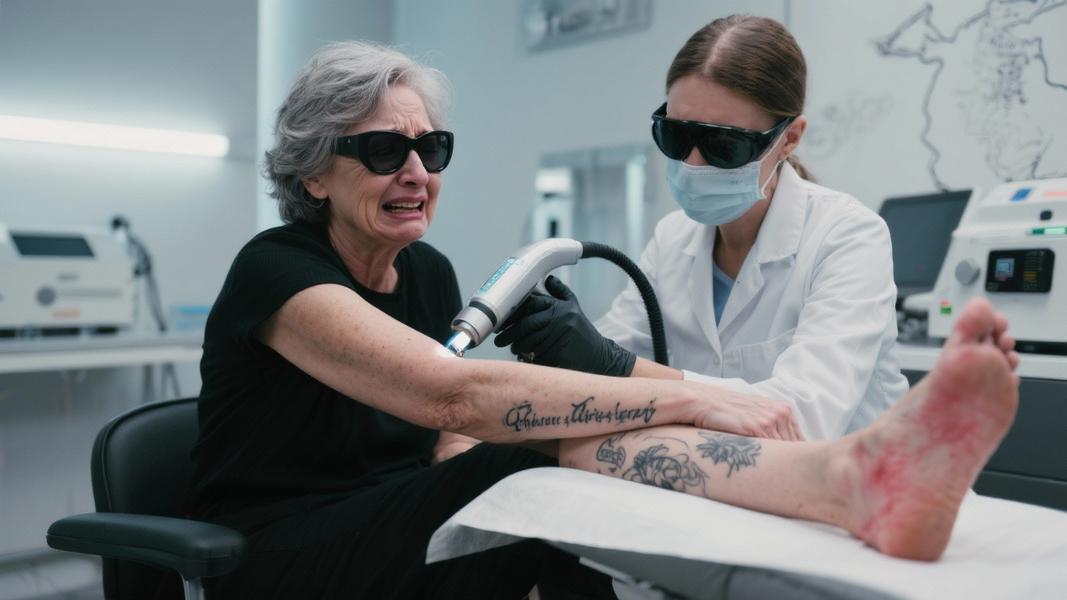
The pain of laser tattoo removal has been likened to “a rubber band being snapped on your skin with hot bacon grease” — and at costs ranging from $75 to $500 per session, the financial sting matches the physical one. Yet despite the discomfort and expense, the tattoo removal industry is booming, projected to grow from $1.13 billion in 2024 to $3.57 billion by 2032.
As tattoos have become increasingly mainstream, so has the desire to erase them. A 2023 Pew Research Center survey found that 32% of American adults have at least one tattoo, with nearly a quarter of those inked eventually regretting their decision. This regret is fueling a rapidly expanding industry of removal services that promises to undo what was once considered permanent.
The Price of Tattoo Regret
What’s the real cost of erasing your ink? According to the American Society of Plastic Surgeons, the average cost per laser treatment hovers around $697 nationwide. However, that figure doesn’t tell the whole story.
“The average cost of laser tattoo removal ranges from $200 to $500 per session, with most treatments requiring multiple sessions for complete removal,” explains MedRein Health, which estimates total costs between $1,500 and $10,000 depending on the tattoo’s size and complexity.
Size matters — considerably. Small tattoos might cost as little as $75 per session, while large, colorful pieces can run $500 or more each time. “For full removal, the total usually sits between $1,000 and $2,500,” states More Than Just Brows. “It can go higher if your tattoo’s on the bigger or more detailed side.”
Most concerning for consumers? Health insurance typically doesn’t cover these procedures, classifying them as purely cosmetic. And with most tattoos requiring between 5 and 15 sessions spaced 6-8 weeks apart, the financial commitment stretches not just your wallet but your patience as well.
The Science and Suffering Behind Removal
Modern laser tattoo removal utilizes Q-switching technology — a method that delivers short, intense pulses of light to break down ink particles small enough for the body to naturally eliminate. Black ink responds best to treatment, while vibrant colors like blue and green have traditionally been more stubborn, though newer technology has improved results across the spectrum.
The experience, however, is universally uncomfortable. “It’s very painful. Nine out of 10,” reports one client. Another rates it a perfect 10 on the pain scale, describing it as “pretty intense” though ultimately “doable.”
Beyond pain, potential side effects include hypopigmentation (lighter skin patches), temporary scarring, infection, redness, and soreness. Some conditions make removal risky or impossible. “We can’t do it if you’re on blood thinners,” cautions one technician who reviews all side effects with clients before they sign mandatory waivers.
Why People Are Erasing Their Ink
What’s driving this willingness to endure both financial and physical pain? The reasons are as varied as the tattoos themselves.
Contrary to popular belief, it’s not always about regret. “They got a tattoo off a whim and they’re like ‘hey, I’m really bored with this. I don’t want this anymore,'” explains one removal specialist. “It’s not about hating their tattoo, it’s about change for yourself.”
Aesthetic evolution is another common motivation. “A lot of people, when they get a new tattoo that makes some of their old tattoos look bad they get (the older tattoos) removed or reworked,” notes another industry professional.
For those seeking a guaranteed solution regardless of cost, surgical excision remains an option — though at $800 to $5,000+ for a single procedure and guaranteed scarring, most opt for the more gradual laser approach despite its extended timeline.
A Growing Industry
North America dominates the global tattoo removal market with a 35.92% share as of 2024, according to Fortune Business Insights. This regional leadership reflects both high tattoo prevalence and increasing comfort with cosmetic procedures.
Businesses like Colorado’s Ink-B-Gone have capitalized on this trend, boasting over “28,000+ Psyched Clients Served” and “13,000+ Tattoos Removed” in their marketing materials. They emphasize flexible payment options: “At Ink-B-Gone, we offer pay-as-you-go pricing to give you flexibility without pressure or bundled commitments.”
Smaller operations are also finding success. Chroma Tattoo Studio & Laser Tattoo Removal charges a minimum of $100 per session, positioning themselves as an affordable entry point in the market.
The industry’s projected 15.6% compound annual growth rate through 2032 suggests that despite the pain — both physical and financial — demand for tattoo removal shows no signs of fading.
For those considering the process, one client offers perspective that captures the paradoxical nature of tattoo removal: “A couple of days later you’re still feeling the sunburn, but it’s OK. If you want it bad enough, you’ll take it off because that’s what you want.” In a world where permanence itself has become temporary, it seems many are willing to pay the price for a clean slate — or at least a canvas ready for the next chapter.
