
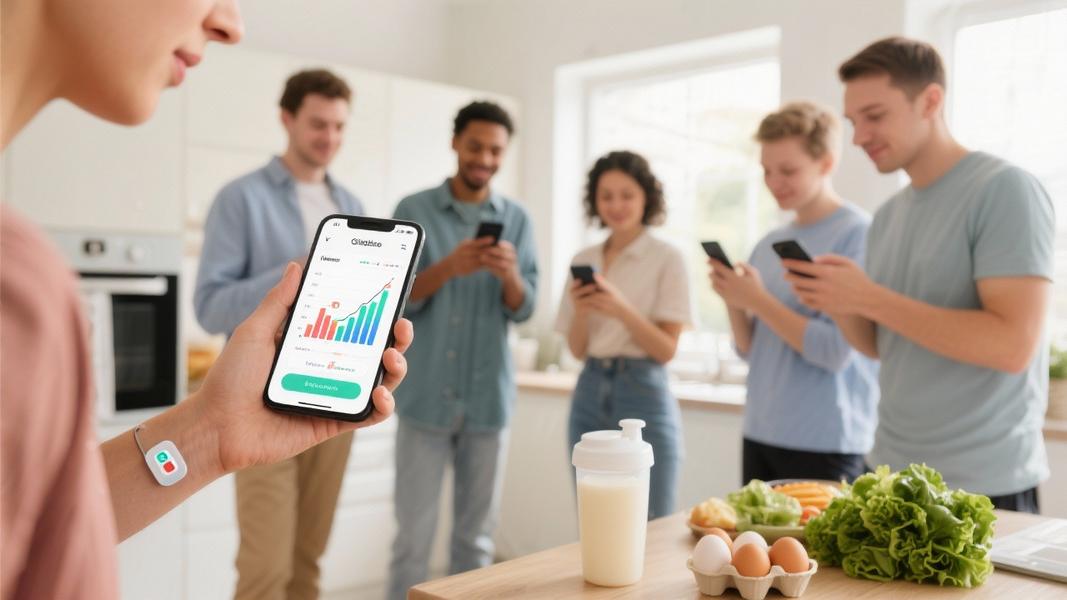
Abbott’s Lingo, the over-the-counter continuous glucose monitor that’s been helping iPhone users track their blood sugar without pricking their fingers, is now available for Android users. The expansion represents a significant step in making real-time glucose monitoring accessible to millions more Americans interested in understanding their metabolic health.
The small, wearable sensor — which attaches to the upper arm for 14 days at a time — streams continuous glucose data to a smartphone app, giving users immediate feedback on how their body responds to food, exercise, and daily stressors. Until now, this technology was limited to iOS users, creating a significant barrier for the large segment of the population using Android devices.
Tracking the invisible vital sign
Why would someone without diabetes want to track their glucose? Turns out most Americans don’t realize they should be paying attention. Four out of five Americans don’t recognize glucose as an important health indicator, despite its critical role in energy levels, mood, and long-term health, according to data shared by Abbott.
“Glucose levels and metabolic health are foundational for overall well-being and chronic disease prevention. The need for more glucose awareness is clear,” said Amy McKenzie, Ph.D., head of Medical Affairs for Abbott’s Lingo business. “Prediabetes – a condition where glucose is elevated but not yet in the diabetes range – impacts more than 98 million U.S. adults, yet 80% of those affected don’t know they have it.”
That knowledge gap is precisely what Lingo aims to address. The device is specifically designed for adults who aren’t on insulin therapy but want to understand how lifestyle choices affect their metabolic health. The company indicates that 95% of Lingo users report developing new habits based on their glucose tracking.
The Lingo Count™: Quantifying glucose spikes
At the heart of the Lingo system is a proprietary metric called the Lingo Count™, which quantifies glucose spikes by both size and duration. This daily metric helps users understand which foods, activities, or stressors cause problematic glucose responses.
The results appear promising. Users with elevated glucose levels — similar to those seen in prediabetes — who reduced their Lingo Count over about three months cut their time above healthy range in half and lowered their average glucose by 10%, Abbott reports.
New real-world data from the company suggests that protein supplementation may play a role in improving glucose stability. On days when users logged consuming protein supplements, they experienced 15% lower odds of glucose spikes above healthy range and averaged a 2 mg/dL reduction in glucose levels. For users with obesity, the benefits were even more pronounced — 18% fewer spikes and a 3 mg/dL average reduction.
Retail expansion makes access easier
Beyond the platform expansion to Android, Abbott has also significantly widened Lingo’s retail availability. Walmart became the first physical retailer to stock the device, with Lingo now available in approximately 3,500 Walmart Supercenters across the U.S. as well as on Walmart.com. The device can also be purchased through hellolingo.com and Amazon.
Priced under $50, the company appears to be targeting both wellness-focused consumers and the growing number of Americans using GLP-1 medications (like Ozempic and Wegovy) who want to monitor their metabolic responses without needing a prescription for a medical-grade CGM.
The Lingo system is structured as a 14-day plan with no commitment and includes a 30-day money-back guarantee, according to the product’s website. Users can also integrate their glucose data with Apple Health or Health Connect, giving them ownership of their health data and the ability to use it alongside other health metrics.
The bigger health picture
Maintaining glucose within a healthy range has implications far beyond avoiding diabetes. Stable glucose levels have been linked to better sleep quality, improved mood, sustained energy, reduced food cravings, and enhanced focus. Conversely, chronically elevated glucose increases the risk of type 2 diabetes, heart disease, and certain cancers.
Could widespread adoption of consumer glucose monitoring reshape how Americans think about their daily habits? While traditional finger-prick glucose testing has been around for decades, continuous monitoring provides a dramatically different experience — showing users exactly how their body responds to that morning pastry, afternoon coffee, or evening workout in real-time.
For Abbott, which pioneered prescription CGM technology with its FreeStyle Libre system for people with diabetes, Lingo represents an expansion into the broader wellness market. And with both iOS and Android users now able to access the technology, the company has removed a significant barrier to adoption for the roughly 46% of Americans who use Android smartphones.
As consumers increasingly take health tracking into their own hands, devices like Lingo may help bridge the gap between medical monitoring and everyday wellness — turning what was once a diabetes management tool into a mainstream health companion that speaks the body’s language, one glucose reading at a time.
