
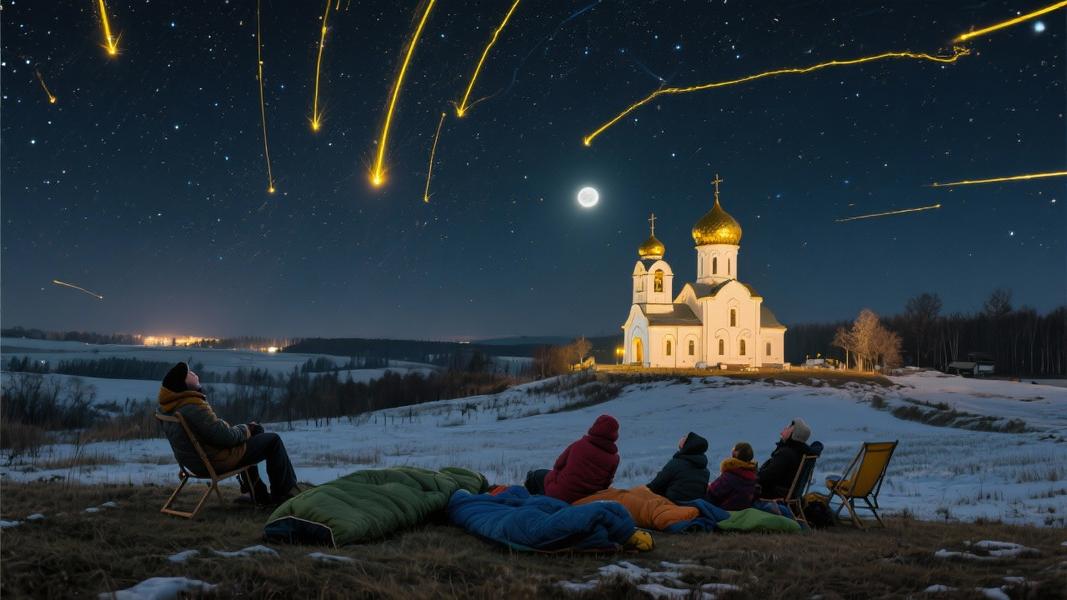
Mark your calendars, stargazers. The night sky is preparing to deliver one of its most spectacular light shows as the Geminids meteor shower will illuminate the darkness on December 13-14, 2025.
Often dubbed the “Old Faithful” of cosmic displays, the Geminids promises to be particularly impressive next year, with astronomers predicting up to 120 shooting stars per hour during its peak. What makes the 2025 show especially noteworthy? The moon will be at just 30% illumination, creating near-perfect viewing conditions, according to the American Meteor Society calendar.
Prime Viewing Opportunity
Unlike some celestial events that require specialized equipment or perfect conditions, the Geminids offers accessibility to casual observers and dedicated astronomers alike. “The Geminids meteor shower, one of the year’s most reliable, will peak on December 13-14, 2025,” the Asheville Citizen-Times notes.
What makes this particular meteor shower stand out from others? Unlike most meteor showers that originate from comets, the Geminids comes from an asteroid — specifically, 3200 Phaethon. This unusual origin contributes to the shower’s reliability and intensity year after year.
Planning to catch the celestial fireworks? Outside Magazine suggests prioritizing the peak night: “If you only have one night, prioritize the peak, when the Geminids burst like fireworks overnight from December 13 to 14.”
Viewing Tips
Astronomy enthusiasts recommend finding a location away from city lights, giving your eyes at least 20 minutes to adjust to the darkness, and bringing warm clothing — December nights can be chilly even in milder climates. No telescopes or binoculars needed; in fact, they might limit your field of view.
The meteors will appear to radiate from the constellation Gemini (hence the name), but they’ll streak across all parts of the sky. That said, you don’t need to fixate on finding the constellation — simply looking up should reward you with plenty of shooting stars.
Got kids? The Geminids offers a rare astronomical event that doesn’t require staying up until the wee hours. The shower is often visible starting around 9 p.m. local time, though the frequency of meteors typically increases after midnight.
Weather, as always, remains the wild card for viewing prospects. But with the shower’s peak falling on a weekend in 2025, sky-watchers will have flexibility to choose the clearest night if conditions aren’t ideal on the 13th.
For those who catch this cosmic spectacle, it might be worth remembering that each fleeting streak of light represents a small piece of asteroid debris burning up in our atmosphere — a brilliant end to a journey that began millions of miles away.
