
Japan’s defense spending is set to hit a historic milestone of $70 billion in fiscal year 2025, reaching the NATO-standard 2% of GDP threshold as the island nation rapidly accelerates its military modernization amid growing regional threats.
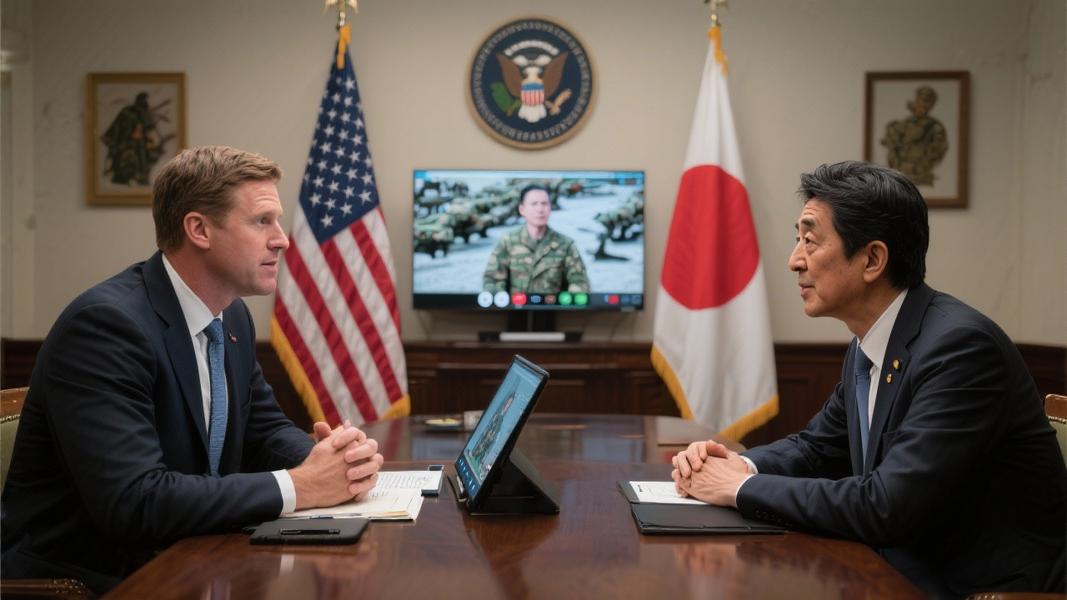
U.S. Secretary of War Pete Hegseth and Japanese Defense Minister Shinjirō Koizumi reaffirmed their commitment to deterring aggression in the Asia-Pacific during a December 11 call, with China’s military activities featuring prominently in their discussions. The conversation highlighted Japan’s defense spending increases and emphasized the importance of realistic training, particularly around Japan’s strategically significant Southwest Islands.
Japan’s cabinet approved a record 8.7 trillion yen ($55.1 billion) defense budget in late 2024, representing a 9.4% increase over the previous year. But that’s just the baseline. When combined with supplementary funding, Japan’s total military spending for FY2025 is expected to reach a staggering 9.9 trillion yen — approximately $70 billion — according to multiple reports.
Breaking from Tradition
The dramatic spending increase marks a significant departure from Japan’s traditionally modest defense posture maintained since World War II. For decades, Tokyo limited military spending to around 1% of GDP under its pacifist constitution. Now, facing what it perceives as an increasingly hostile neighborhood, Japan is committed to hitting the 2% NATO standard by 2027.
“Decades of pathological dependence” on the United States have left Japan’s military “a stunted force not really able to operate efficiently or effectively in most cases,” according to defense analysts quoted in industry publications. The rapid buildup represents Tokyo’s attempt to reverse this situation.
Where is all this money going? A significant portion — 939 billion yen — is earmarked for stand-off weapons including upgraded Type 12 missiles and hyper-velocity gliding projectiles. Additionally, 123.8 billion yen will fund a new communications satellite, while a high-profile purchase of 400 American-made Tomahawk cruise missiles signals Japan’s intent to develop credible deterrence capabilities.
Regional Tensions Driving Change
The spending surge comes amid deteriorating security dynamics in East Asia. China’s expanding naval presence, North Korea’s advancing missile program, and Russia’s increasingly assertive posture in the region have all contributed to Japan’s sense of vulnerability.
What’s next for Japan’s defense transformation? Looking ahead, the defense ministry has already proposed a FY2026 budget of approximately $60 billion, representing a 3% increase over the prior year’s initial request of 8.54 trillion yen, according to sources familiar with the planning.
The U.S.-Japan security alliance appears stronger than ever, with both Hegseth and Koizumi using their recent call to emphasize joint training and deterrence. The readout from their conversation specifically mentioned China’s military activities, suggesting Beijing’s actions remain the primary driver behind Japan’s historic defense buildup.
For a country that once embraced pacifism as a core national identity, Japan’s military renaissance represents not just a budget milestone but a profound psychological shift. Whether this new posture will stabilize the region or contribute to an arms race remains one of the Asia-Pacific’s most consequential open questions.
