
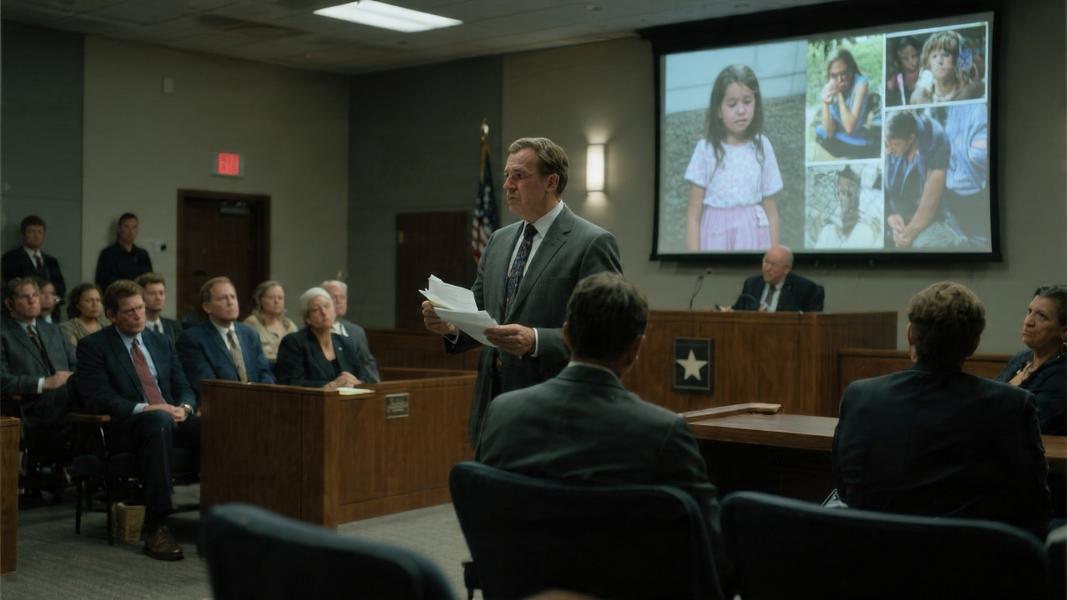
A Texas jury is now deciding whether a FedEx driver lives or dies for the kidnapping and murder of a 7-year-old girl — and the testimony they’ve heard is as disturbing as it is complicated.
Tanner Horner has already pleaded guilty to capital murder and kidnapping in the 2022 death of Athena Strand, a second-grader from Wise County whose disappearance gripped the nation. The only question left is punishment: the death penalty, or life in prison without the possibility of parole. What’s unfolded in the sentencing phase has been a collision of grief, medical science, and an uncomfortable reckoning with what shapes a person capable of such violence.
What Horner Admitted
There’s no mystery about what happened. Horner confessed to investigators that he struck Athena with his delivery van, panicked, attempted to break her neck — unsuccessfully — and then strangled her with his bare hands. He left her body in a field. She was seven years old.
Medical examiner Dr. Jessica Dwyer testified that Athena died from a combination of blunt force injuries, smothering, and strangulation. When asked directly whether the child suffered, Dwyer didn’t hedge. “Yes, I think she did,” she said.
The Defense’s Argument
Still, the defense has spent considerable time asking jurors to look beyond the crime itself — back decades, into a childhood that, by nearly any measure, was a wreck from the start.
Horner’s mother took the stand and testified that she abused substances during the early weeks of her pregnancy with him, using, in her words, “anything I could get my hands on” before she realized she was eight or nine weeks along. She broke down on the stand. “I’m so mad at him. I want to just tear his a– up,” she said through tears. “She was just a baby.” It was a moment that somehow managed to be both damning and heartbreaking at once.
Then came the science. Dr. Aaron Specht, a bone-lead specialist, testified that Horner’s lead levels measured roughly 33,000 micrograms — nearly 24 times higher than average for men his age. That level of lead exposure, Specht explained, causes significant and lasting neurological damage. It doesn’t excuse anything. But it does raise questions about the architecture of a brain formed under those conditions.
Defense experts also presented a constellation of diagnoses: autism spectrum disorder, ADHD, PTSD, depression, major depressive disorder, and substance abuse. The argument, taken together, is that Horner’s capacity for sound decision-making was compromised long before he ever put on a FedEx uniform.
What the Jury Must Weigh
How much does any of that matter? That’s the brutal calculus jurors are now being asked to perform. Capital cases in Texas always hinge on this tension — the documented horror of the crime on one side, the human biography of the defendant on the other. Neither side cancels out the other. They just sit there, side by side, demanding a verdict.
Prosecutors, for their part, have the confession, the forensics, and the testimony of a medical examiner describing a child’s final moments. The weight of that is not small.
But it’s not that simple, either — and the defense knows it. Lead poisoning at 24 times the average, prenatal drug exposure, a stack of psychiatric diagnoses: these aren’t excuses conjured by creative lawyering. They’re documented. Whether they’re sufficient to spare Horner’s life is now entirely up to twelve people in a Wise County courtroom.
Athena Strand’s family has watched all of it. Her mother, her father, and the community that searched for her in December 2022 — they’ve sat through every detail, every diagnosis, every tearful testimony. Whatever the jury decides, nothing brings back a second-grader who was just waiting for a package to arrive at her door.
