
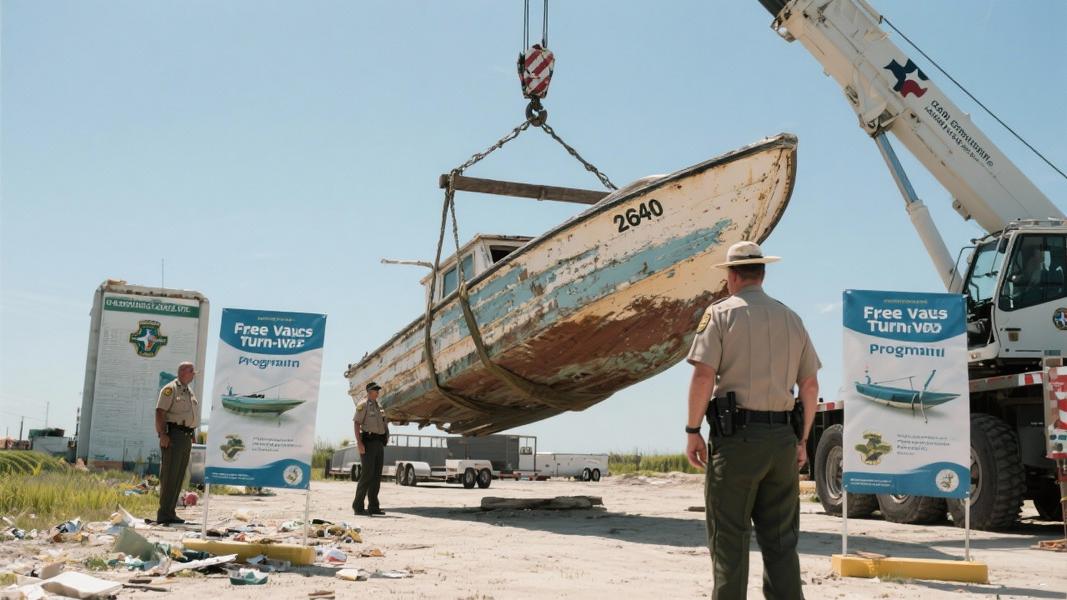
Galveston County has hauled in a record 52 abandoned vessels from its waterways this year, marking a significant milestone in Texas’ ongoing battle against maritime eyesores and environmental hazards.
The vessels, collected through the Vessel Turn-In Program, represent just a fraction of the more than 300 derelict boats and ships that have been cleared from county waters in recent years, according to county officials. These abandoned vessels — ranging from small pleasure craft to larger commercial boats — often pose significant environmental and navigational risks when left to deteriorate in public waterways.
“These aren’t just eyesores,” said a program coordinator who spoke on condition of anonymity. “They leak chemicals, create navigation hazards, and can even become dangerous floating debris during our hurricane season.”
State-Backed Cleanup Efforts
The removal operations fall under the authority of the Texas General Land Office (GLO), which derives its power from the Oil Spill Prevention and Response Act of 1991. This legislation specifically authorizes the GLO to take action against derelict vessels throughout Texas coastal waters — a responsibility that has grown increasingly important as boat abandonment has risen in recent years.
Why would someone abandon a vessel in the first place? The answer often comes down to economics. As boats age, maintenance costs can skyrocket, and proper disposal can run into thousands of dollars — creating a perverse incentive for some owners to simply abandon their vessels rather than pay for proper disposal.
That’s precisely where the Vessel Turn-In Program comes in, providing boat owners with a responsible, legal alternative to abandonment.
Texas Land Commissioner Dawn Buckingham has become a vocal advocate for the program, actively encouraging Galveston County residents to take advantage of the initiative. The program allows vessel owners to surrender their unwanted boats without fear of penalties or fees that might otherwise apply to improper disposal.
Environmental Impact
The environmental stakes are surprisingly high. Abandoned vessels typically contain various hazardous materials — engine oil, fuel, batteries, and other chemicals that can leak into sensitive coastal ecosystems. A single derelict vessel can contaminate surrounding waters for years if left unaddressed.
“Every boat we remove is one less potential environmental disaster waiting to happen,” said a local environmental advocate familiar with the program. “These vessels don’t just disappear on their own.”
The program represents a rare win-win in environmental policy — boat owners avoid costly disposal fees and potential fines, while the county’s waterways stay cleaner and safer for both wildlife and recreational users.
Still, challenges remain. The 52 vessels collected this year represent significant progress, but abandoned boats continue to appear in Galveston’s bays and inlets faster than authorities can remove them in some areas.
For coastal communities like Galveston, where tourism and fishing industries depend on clean, navigable waters, the battle against derelict vessels isn’t just environmental — it’s economic. Each abandoned boat removed potentially represents thousands in preserved tourism and fishing revenue.
As hurricane season approaches each year, the urgency of these removal efforts only grows. During major storms, abandoned vessels can break free from their moorings, creating dangerous floating hazards that damage infrastructure and other boats.
The Vessel Turn-In Program continues throughout the year, with periodic collection events announced through county channels and the GLO website.
