
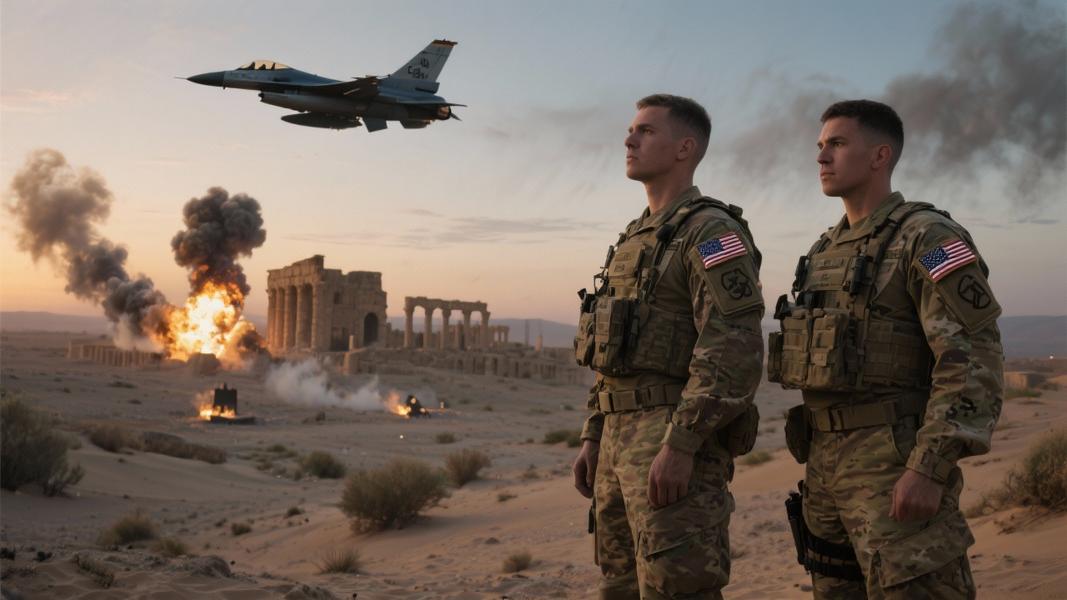
U.S. forces have launched a massive strike against ISIS targets across Syria, hitting more than 70 locations in what the Pentagon has dubbed “Operation Hawkeye Strike.” The military action comes as direct retaliation for the December 13 attack that killed American personnel near Palmyra.
President Trump, who had promised swift consequences, authorized the extensive bombing campaign that targeted ISIS fighters, infrastructure, and weapons sites. “Earlier today, U.S. forces commenced OPERATION HAWKEYE STRIKE in Syria to eliminate ISIS fighters, infrastructure, and weapons sites in direct response to the attack on U.S. forces that occurred on December 13th in Palmyra, Syria,” the administration confirmed.
A Promise Kept
The strikes follow through on Trump’s public vow of retaliation after the deadly ambush that claimed American lives. “This is an ISIS attack,” Trump had declared shortly after the incident, warning that terrorists who target U.S. forces would face severe consequences. The president made it clear that those responsible would be hit “harder than they’ve ever been hit before.”
Military analysts note that the scope of today’s operation — striking dozens of targets almost simultaneously — represents one of the most coordinated anti-ISIS operations since the territorial defeat of the so-called caliphate in 2019. The terrorist group has maintained a persistent, if diminished, presence in the region.
What’s notable about the administration’s response is how specifically it has pinpointed blame. Trump has explicitly separated the attack from any connection to the Syrian government, emphasizing that the ambush occurred in territory not fully under Damascus’s control.
“This had nothing to do with the Syrian government. This had to do with ISIS,” Trump stated, drawing a clear distinction that appears designed to avoid further complicating already tense regional dynamics.
Pentagon officials have declined to provide immediate casualty assessments from the strikes, though satellite imagery suggests significant damage to suspected ISIS compounds and storage facilities. The military has indicated that further details about the operation’s effectiveness will be released following standard battle damage assessment protocols.
The December 13 attack represented one of the deadliest incidents involving American forces in Syria in recent years. U.S. troops have maintained a presence in parts of Syria primarily to prevent ISIS resurgence and to counter Iranian influence in the region — a mission that has occasionally placed them in vulnerable positions.
Despite the decisive military response, questions remain about the future of American involvement in Syria. Will Operation Hawkeye Strike mark the beginning of a renewed counter-terrorism campaign, or is it simply a one-time act of retribution? The administration has yet to outline any shift in its broader Syria strategy.
For now, as smoke rises over ISIS positions across Syria, one thing is clear: the promised retaliation has arrived with overwhelming force.
