
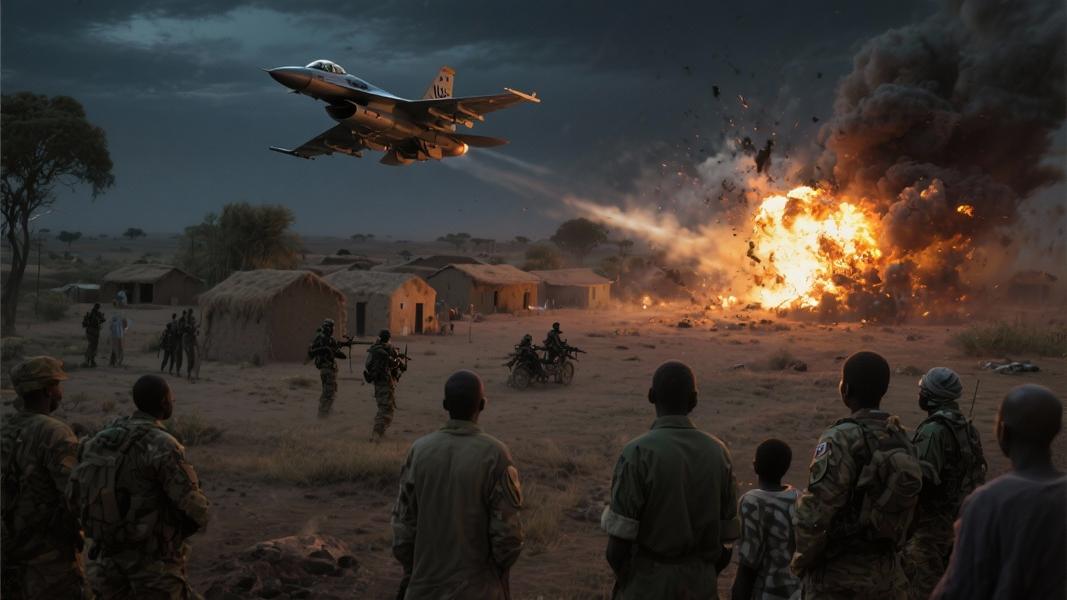
The United States has struck Islamic State targets in Nigeria on Christmas Day, launching what officials described as “powerful and deadly” airstrikes against militants accused of killing Christians in the country’s northwest region.
President Biden announced the military action late Tuesday, framing it as a direct response to escalating violence against religious communities in the region. “Tonight, at my direction as Commander in Chief, the United States launched a powerful and deadly strike against ISIS Terrorist Scum in Northwest Nigeria, who have been targeting and viciously killing, primarily, innocent Christians, at levels not seen for many years, and even Centuries!” the president said in a statement.
The operation, carried out in Sokoto State, came at the explicit request of Nigerian authorities — marking a significant escalation in U.S. military involvement in the region’s ongoing battle against extremist groups. U.S. Africa Command confirmed the strikes, noting they were conducted “at the direction of the President of the United States and the Secretary of War, and in coordination with Nigerian authorities.”
Regional Implications
This isn’t the first time American forces have engaged with Islamic State affiliates in Africa, but the Christmas Day timing and explicit targeting of militants accused of religious violence gives this operation particular significance. The strikes represent one of the most direct U.S. military interventions in Nigeria since ISIS-affiliated groups began expanding their presence in the country’s northern regions.
Why Nigeria, and why now? The timing suggests growing concern about ISIS establishing stronger footholds across West Africa, particularly in regions where government control has weakened and religious tensions can be exploited.
Security analysts have long warned that ISIS affiliates in Africa could become the next major frontier in the global fight against the terrorist organization, as its influence has waned in traditional strongholds in Syria and Iraq.
The Nigerian government has been battling multiple insurgent groups, including Boko Haram and its offshoots, for more than a decade. But the specific targeting of Christians represents a particularly volatile dimension of the conflict.
Questions Remain
Details about casualties, the specific targets hit, and the operational scope remain limited. The Pentagon has yet to release comprehensive assessments of the strikes’ effectiveness or whether high-value targets were eliminated.
The operation also raises questions about future U.S. military engagement in the region. Will this mark the beginning of a more sustained campaign, or is it a one-off response to specific intelligence about imminent threats?
Human rights organizations, while generally supportive of efforts to combat ISIS, have consistently expressed concern about civilian casualties in airstrikes. Those worries are particularly acute in densely populated regions where militants often embed themselves among civilian populations.
As the dust settles on this Christmas Day operation, one thing is clear: the global war against ISIS has opened yet another front, this time in Nigeria’s northwest — a region already struggling with complex security challenges, religious tensions, and humanitarian crises that have displaced millions over the past decade.
