
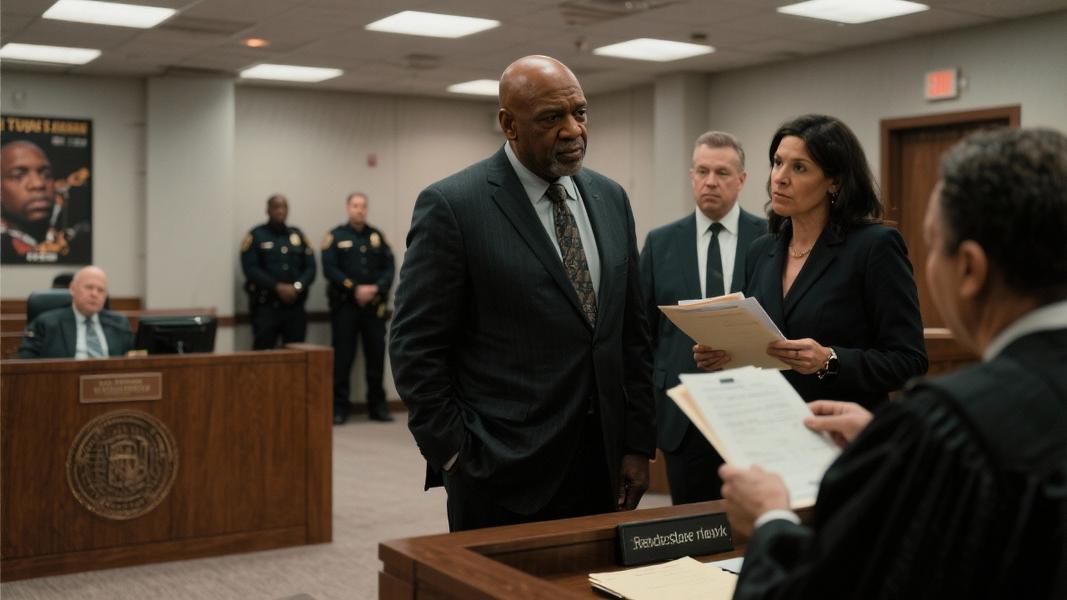
In a surprising legal move, attorneys for the man accused of orchestrating Tupac Shakur’s murder are fighting to suppress evidence obtained during what they describe as an unnecessarily dramatic nighttime raid on his suburban Nevada home.
Duane “Keffe D” Davis, the 60-year-old former gang leader arrested last September for the 1996 drive-by shooting of the iconic rapper, has challenged the search warrant that led to his arrest, arguing it painted him as a dangerous criminal mastermind rather than the retired grandfather he claims to be today.
Misleading Portrait?
“The court wasn’t told any of this,” Davis’s attorneys wrote in court documents challenging the evidence collection. “As a result, the court authorized a nighttime search based on a portrait of Davis that bore little resemblance to reality — a clearly erroneous factual determination, in other words.”
The defense portrays Davis not as a threat but as a cancer survivor who left gang life and the narcotics trade behind in 2008, subsequently working legitimate inspection jobs at oil refineries. They note he’s been living quietly with his wife in Henderson for nine years, surrounded by adult children and grandchildren — hardly the profile of someone likely to barricade himself against police, as authorities suggested when requesting the nighttime warrant.
Las Vegas police justified their tactical approach by claiming they needed to surround and secure Davis’s residence while evacuating surrounding homes, minimizing potential exposure if he chose to resist arrest. During the search, officers collected electronic devices, what they described as marijuana, and containers filled with photographs.
Cold Case Breakthrough
Why now, nearly three decades after Shakur’s murder? The case against Davis stems largely from his own words — public statements he allegedly made after receiving a proffer agreement that shielded him from drug charges. The defense contends Davis fabricated or exaggerated his role in the infamous shooting to profit from documentary appearances and his 2019 memoir.
Despite pleading not guilty to first-degree murder charges, Davis faces an uphill battle. His trial was recently postponed until 2026, with prosecutors citing “overwhelming evidence” in the case that has haunted hip-hop culture for generations.
The Las Vegas Metropolitan Police Department has declined to comment on the motion to suppress evidence, maintaining their standard policy of not discussing ongoing litigation.
For a case built significantly on Davis’s own admissions, the question now becomes whether those statements — and the evidence gathered during that contested nighttime raid — will ever make it to a jury. If successful, his motion could potentially undermine key elements of the prosecution’s case against the man who may hold the final answers in one of music history’s most enduring mysteries.
