
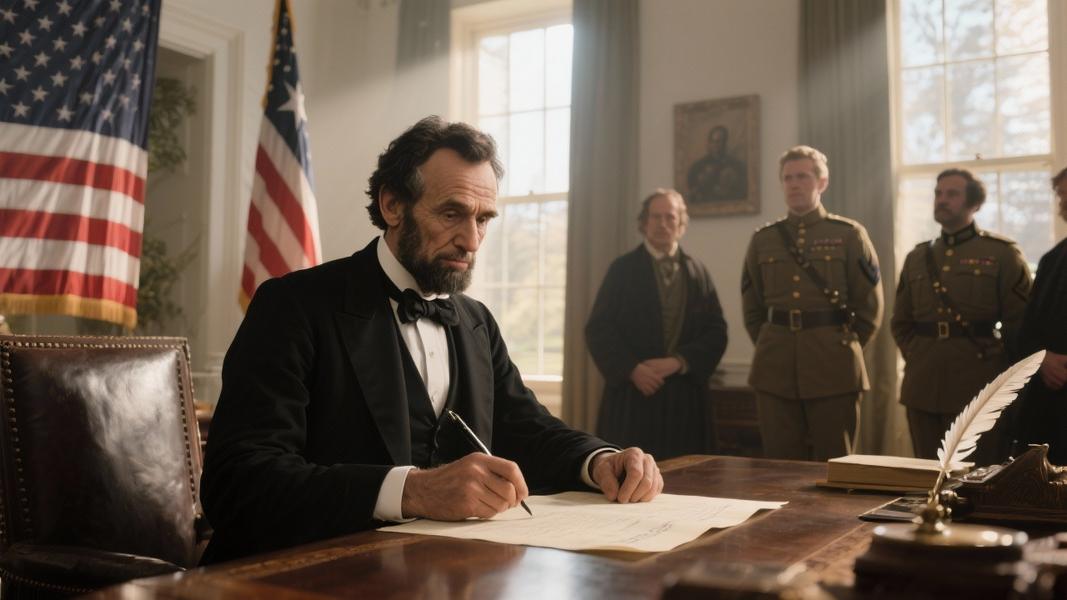
The White House will mark the 163rd anniversary of the Emancipation Proclamation on New Year’s Day 2026, commemorating one of the most consequential presidential actions in American history. The milestone celebrates Abraham Lincoln’s executive order that fundamentally altered the trajectory of the Civil War and American society.
A Proclamation That Shattered the Status Quo
On January 1, 1863, as the nation entered the third calendar year of its bloodiest conflict, President Abraham Lincoln took an extraordinary step by declaring that “all persons held as slaves within said designated States, and parts of States, are, and henceforward shall be free.” With those words, the legal status of more than three million enslaved people in Confederate territory changed forever.
The proclamation wasn’t sudden inspiration. Lincoln had methodically laid groundwork for months, first sharing a draft with his Cabinet in July 1862, then issuing a preliminary version that September. The final proclamation, delivered as promised on New Year’s Day 1863, stated unequivocally that “all persons held as slaves within any State or designated part of a State, the people whereof shall then be in rebellion against the United States, shall be then, thenceforward, and forever free.”
What’s often misunderstood about the proclamation? For one, it didn’t immediately free all enslaved people. Border states that remained loyal to the Union were untouched by its provisions — a political calculation that reflected Lincoln’s precarious balancing act between military necessity and moral imperative.
Unwavering Commitment Despite Pressure
Lincoln faced immense pressure to walk back the proclamation as the war progressed. Yet he remained resolute. In a December 1863 letter, he affirmed, “I shall not attempt to retract or modify the emancipation proclamation; nor shall I return to slavery any person who is free by the terms of that proclamation, or by any of the acts of Congress.”
His commitment was perhaps most colorfully expressed just days after issuing the proclamation. “Still, to use a coarse, but an expressive figure, broken eggs can not be mended,” Lincoln wrote on January 8, 1863. “I have issued the emancipation proclamation, and I can not retract it.” The homespun metaphor carried a profound message: there would be no turning back.
The White House’s decision to commemorate the 163rd anniversary in 2026 continues a tradition of presidential recognition of this pivotal moment in American history. Though initially a wartime measure framed in military necessity, the Emancipation Proclamation has come to represent something far greater in the American consciousness: a decisive turn toward the nation’s founding promise of liberty for all.
That promise would require much more to fulfill — the 13th Amendment, Reconstruction, the Civil Rights Movement, and struggles that continue today. But Lincoln’s New Year’s Day proclamation stands as the moment when America’s moral compass irrevocably shifted.
