
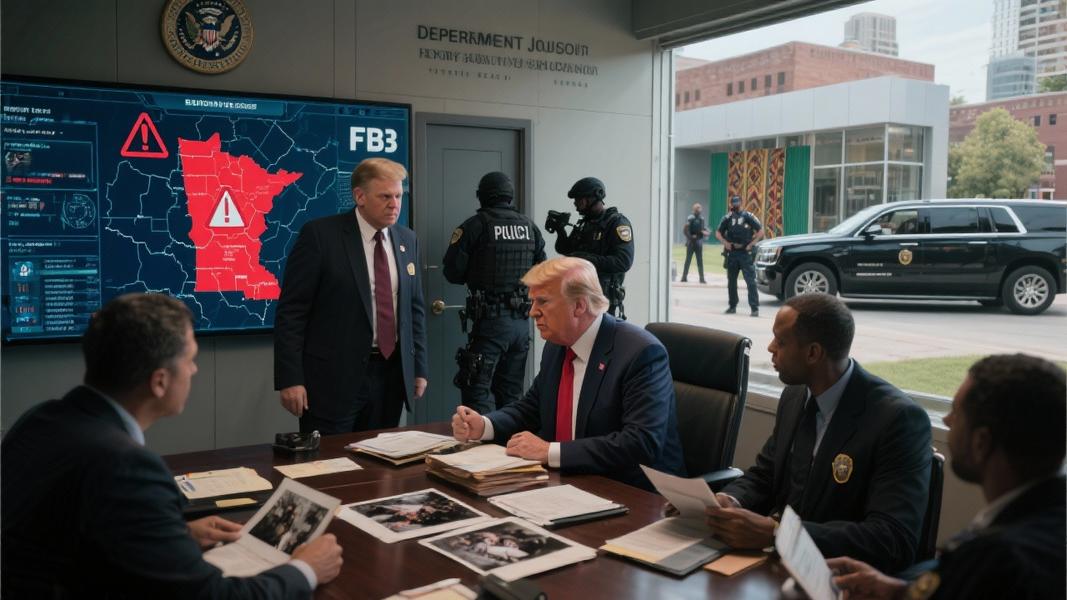
Minnesota’s child care system is reeling from the aftermath of a massive fraud investigation that has uncovered what officials call an “astonishing” scale of theft from a program meant to help low-income families.
The Minnesota Department of Human Services confirmed this month that more than 100 child care providers have been charged with defrauding the state’s Child Care Assistance Program (CCAP), a federally funded initiative that subsidizes care for approximately 30,000 children from low-income households. The investigation has so far revealed that over $300 million was siphoned from the program through various schemes involving ghost children, phantom employees, and fabricated attendance records.
Years of Warning Signs
The scandal didn’t materialize overnight. State and federal authorities began investigating suspicious activity as early as 2014, when routine audits flagged unusual billing patterns among certain providers. By 2018, the problem had grown so severe that federal officials threatened to withhold funding unless Minnesota implemented stricter controls.
“What we found was beyond concerning,” said Janet Thompson, a former state investigator who worked on the case. “We saw centers billing for hundreds of children who were never present, sometimes billing for more children than could physically fit in their facilities.”
The scheme often worked like this: Providers would enroll “ghost children” in their programs, bill the state for their care, and split the proceeds with parents who were willing to participate in the fraud. In some cases, investigators discovered centers that existed primarily on paper, with little or no actual child care taking place.
Follow the Money
How bad did it get? According to court documents, one provider collected more than $4 million in just two years while caring for fewer than a dozen children. Another billed for round-the-clock care seven days a week — a mathematical impossibility given staffing levels.
The money trail has led to some disturbing destinations. Federal prosecutors allege that millions in taxpayer dollars were converted to cash, with substantial sums being transported overseas. “We’ve documented at least $100 million that was carried through Minneapolis-St. Paul International Airport,” said U.S. Attorney Andrew Luger during a press conference last year.
That said, not all providers under investigation have been charged with criminal activity. Some may have simply failed to comply with the program’s complex documentation requirements or made administrative errors rather than engaging in deliberate fraud.
Crackdown Creates New Problems
The state’s response has been swift but not without controversy. The Department of Human Services has implemented a pre-payment verification system requiring providers to submit attendance records before receiving reimbursement — a change from the previous post-payment audit approach.
“We had to act decisively to protect taxpayer dollars,” said Jodi Harpstead, Commissioner of the Department of Human Services. “But we’re also mindful of the need to ensure legitimate providers can continue serving families who depend on them.”
The new system has created headaches for honest providers. Many smaller centers report cash flow problems that threaten their viability. “I’m all for stopping fraud,” said Maria Gonzalez, who runs a small center in St. Paul. “But I’ve had to take out personal loans to cover payroll while waiting for payments that used to come promptly. We’re hanging on by a thread.”
Parents, too, are feeling the squeeze. When centers close or reduce capacity due to financial strain or increased scrutiny, families lose access to care they depend on to remain employed. In some neighborhoods, particularly in immigrant communities where fraud investigations have been concentrated, child care options have dwindled dramatically.
Balancing Act
The challenge now facing Minnesota officials is striking the right balance: rooting out corruption without dismantling a system that serves vulnerable children and families. The state has committed to hiring additional investigators and improving background checks for providers, while also exploring ways to streamline payment processes for those with clean records.
Child care advocates argue that the fraud problem, while serious, reflects deeper issues with how America funds early childhood education. “When you create a complex, underfunded system with massive paperwork requirements, you create opportunities for exploitation,” said Dr. Cynthia Weiss, director of the Early Childhood Policy Institute. “The real solution isn’t just better policing, but better policy.”
For now, the investigation continues, with more charges expected in the coming months. Meanwhile, thousands of Minnesota families are left wondering whether the care they depend on will still be there tomorrow — caught in the messy aftermath of a program that failed to protect both their children and the public purse.
