
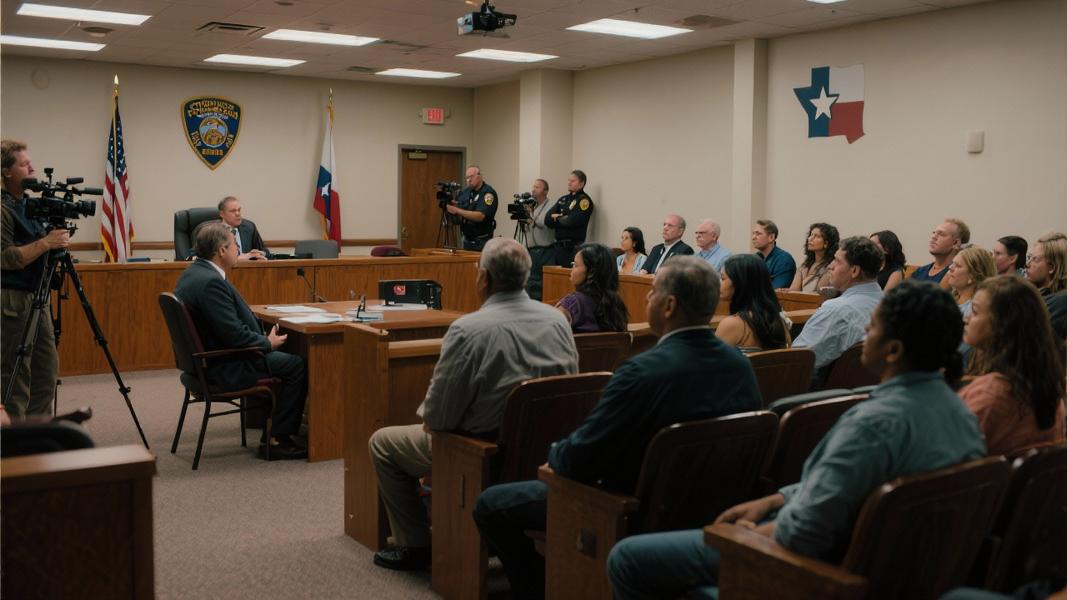
The first former police officer to face trial over the 2022 Uvalde school shooting arrived in court Monday, accused of failing to confront the gunman in time to prevent the deaths of 19 children and two teachers at Robb Elementary School.
Adrian Gonzales, 52, a veteran officer with the Uvalde school district, faces 29 felony counts of child endangerment — one for each child killed or injured in the massacre. Prosecutors allege he had critical information about the shooter’s whereabouts before the gunman entered the school but failed to act according to his training.
Duty to Engage
In his opening statement at the Corpus Christi courthouse, special prosecutor Bill Turner didn’t mince words about what was at stake. “We’re not asking Adrian Gonzales to commit suicide,” Turner told jurors. “He was trained to go to the corner of a building and distract, delay, and impede the gunman while help is arriving. So why are we here? When a child is in danger and calls 911, we have the right to expect a response.”
The prosecution’s case hinges on whether Gonzales, who had spent a decade as a Uvalde city police officer before joining the school district’s force about a year before the shooting, failed to follow his active shooter training. According to his indictment, Gonzales allegedly failed “to engage, distract, and delay the shooter” and did not “follow his active shooter training to respond to gun fire by advancing toward the gun fire” — charges that could result in up to two years imprisonment for each count.
What makes the case particularly significant is CNN’s analysis showing Gonzales was allegedly informed of the gunman’s location before the shooter entered the school building. This timeline, presented by correspondent Shimon Prokupecz, forms a central piece of evidence as prosecutors try to establish that Gonzales had both the knowledge and opportunity to intervene before the massacre unfolded.
Trial Tensions
The trial’s first day wasn’t without drama. Judge Sid Harle denied a defense motion for a mistrial after issues arose with testimony from Stephanie Hale, a former Robb Elementary teacher whose face was shielded from public view due to a court order. The defense argued that changes in Hale’s account significantly affected their strategy, but Harle disagreed, stating, “I don’t believe what was testified to in front of the jury resonated enough to significantly affect your trial strategy.”
Instead of granting a mistrial, the judge indicated he might exclude portions of Hale’s testimony, allowing the proceedings to continue in the coastal Texas city where the trial was moved due to intense local interest in Uvalde.
The courtroom in Corpus Christi was filled with family members of victims as prosecutors detailed the charges: 19 counts representing children killed and 10 for those injured in one of the deadliest school shootings in American history.
Broader Implications
Could this trial set a precedent for police accountability in mass shooting responses? Legal experts suggest it might, as it’s rare for law enforcement officers to face criminal charges for their tactical decisions during such crises.
The Uvalde response has been widely criticized since the shooting, with investigations revealing that nearly 400 officers waited 77 minutes before confronting the gunman. Gonzales is the first to face trial, but the outcome could influence potential proceedings against other officers involved in the response.
As the trial continues, both prosecution and defense will grapple with difficult questions about police training, duty of care, and the chaotic reality of active shooter situations. For the families of Robb Elementary victims watching from the gallery, however, the central question remains simpler and more painful: Could their children have been saved if officers had acted differently?
