
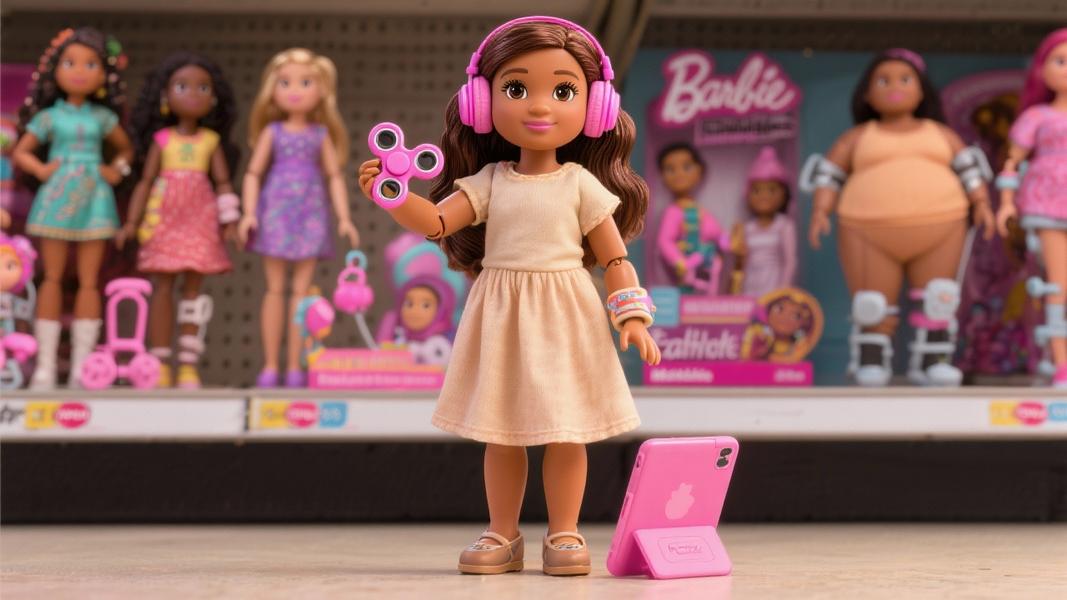
Mattel has finally done it. The toy giant introduced its first-ever Barbie doll with autism this week, marking a significant milestone in the company’s ongoing efforts to create more inclusive and representative toys.
The groundbreaking doll, priced at $11.87, hit shelves Monday at Mattel’s online shop and Target stores nationwide, with Walmart expected to carry the doll beginning in March, ABC News confirmed.
Designed With Purpose
What makes this Barbie truly unique? The doll features several thoughtful design elements that reflect common characteristics of autism, including eyes shifted to the side to represent avoiding eye contact, articulated elbows and wrists for stimming movements, and accessories like noise-canceling headphones, a fidget spinner, and a communication tablet, the Los Angeles Times reported.
“Barbie has always strived to reflect the world kids see and the possibilities they imagine, and we’re proud to introduce our first autistic Barbie as part of that ongoing work,” Mattel said in a statement shared with LiveNow Fox.
The development process wasn’t rushed. Mattel spent over 18 months creating the doll in partnership with the Autistic Self Advocacy Network, ensuring authentic representation that resonates with the autism community.
Representation Matters
Perhaps most interesting is Mattel’s decision to give the doll facial features inspired by company employees in India — a deliberate choice to represent an underrepresented segment of the autistic community, according to a promotional video released by the company.
The January 11, 2026 unveiling comes as part of Mattel’s broader initiative championing representation for children through play, as outlined in the company’s corporate announcement.
For parents and advocates, the doll represents more than just a new toy. It’s a recognition that children with autism deserve to see themselves reflected in the toys they play with — and a chance for all children to develop greater understanding and empathy.
The question now: will other toy manufacturers follow Mattel’s lead? With the autism community representing a significant portion of the population, this Barbie could signal the beginning of a more inclusive era in the toy industry — one where differences aren’t just acknowledged but celebrated.
