
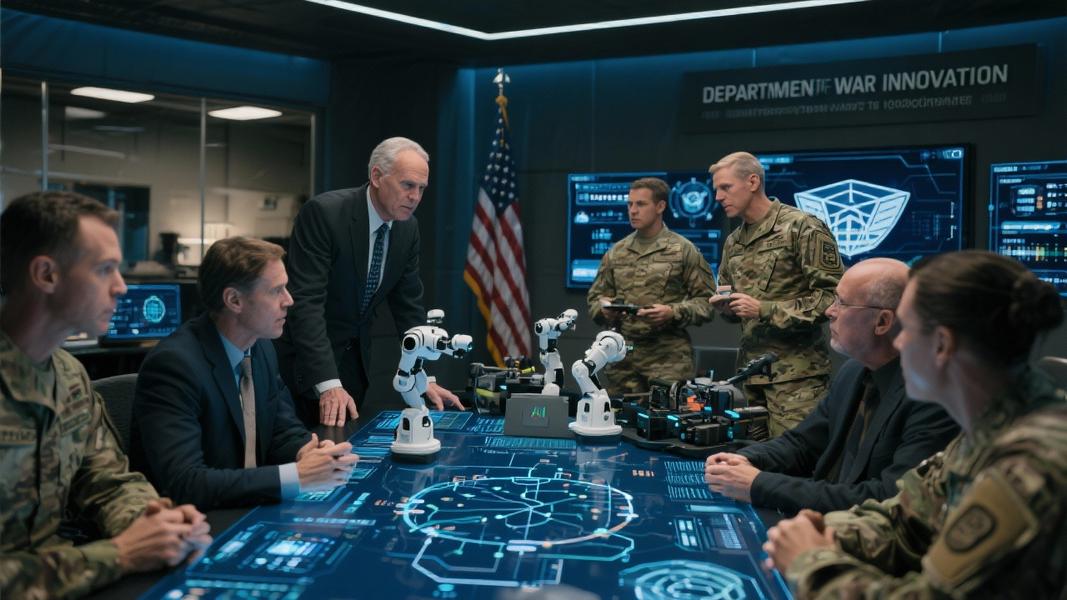
The War Department unveiled a sweeping overhaul of its innovation ecosystem on January 12, 2026, marking one of the most significant restructurings of defense technology development in years. The transformation, spearheaded by Emil Michael, Under Secretary of Research and Engineering and Chief Technology Officer, aims to accelerate cutting-edge technologies to America’s warfighters while slashing the bureaucratic red tape that has historically slowed defense innovation.
A New Innovation Architecture
At the heart of the reorganization is the elevation of the Defense Innovation Unit (DIU) to a Department of War Field Activity. Now led by Owen West, DIU reports directly to the Secretary as a Principal Staff Assistant — a move that signals the department’s commitment to commercial technology adoption.
Similarly, the Strategic Capabilities Office (SCO) has been designated as a Department Field Activity, maintaining its statutory reporting to the Deputy Secretary while operationally aligning under the CTO. The restructured innovation ecosystem now operates under a unified command with six key execution organizations: the Chief Digital and Artificial Intelligence Office (CDAO), Defense Advanced Research Projects Agency (DARPA), DIU, Office of Strategic Capital (OSC), SCO, and Test Resource Management Center (TRMC).
“We are rolling out the red carpet for innovators who want to work with the War Department,” said Emil Michael, Under Secretary of War for Research and Engineering. “This new structure creates a stronger identity for our innovation ecosystem and gives industry a more direct path to move technology into the hands of the American warfighter.”
Bridging the “Valley of Death”
The reorganization comes amid growing congressional pressure to address what insiders call the “valley of death” — the notorious gap where promising technologies wither before reaching production. Congressman Calvert has been particularly vocal, emphasizing the need to invest in DIU to grow the innovation ecosystem and broaden the defense industrial base.
One key initiative addressing this challenge is the Accelerate the Procurement and Fielding of Innovative Technologies (APFIT) program. Initially funded at $100 million in FY22, APFIT has since awarded more than $1 billion to small businesses and non-traditional contractors to accelerate capabilities and strengthen the industrial base, according to defense acquisition experts.
How significant is this shift? For decades, the Pentagon’s acquisition system has been notorious for its glacial pace and byzantine processes. Now, Defense Secretary Pete Hegseth has taken the dramatic step of scrapping the Joint Capabilities Integration and Development System (JCIDS), replacing it with a streamlined Requirements and Resourcing Alignment Board, while also creating a Wartime Production Unit for faster manufacturing, according to Air and Space Forces Magazine.
Strategic Focus Areas
The Department has also narrowed its Critical Technology Areas (CTAs) to six priorities, with a particular emphasis on Applied Artificial Intelligence for rapid integration into operations, industry sources report.
This strategic focusing comes alongside substantial investments in the industrial base. The department recently invested $32.7 million via Defense Production Act Title III authorities in two companies to expand solid rocket motor production capacity — $5 million to Systima Technologies and $27.7 million to REDAR.
“The surge in demand for propellant-based weaponry, coupled with a narrow supplier base, has created a bottleneck in SRM production,” explained Michael Duffey, Under Secretary of War for Acquisition and Sustainment. “With these strategic investments, we are fortifying our national security by expanding critical nodes of the SRM supply chain to accelerate munitions manufacturing.”
Commercial Approach
The War Secretary’s memo, published last November, outlined reform themes including speed and agility, risk acceptance, commercial leverage, strategic alignment, and department-wide accountability. The shift toward commercial-like acquisition practices has drawn praise from industry leaders.
“The Department of War’s move toward an acquisition approach that mirrors commercial development is the most important step it can take to accelerate capability delivery,” said Peter Ludwig, Chief Technology Officer at Applied Intuition, in a statement after Hegseth’s speech. “Modern systems evolve too quickly for bespoke development cycles.”
Yet challenges remain. The department’s ability to sustain this momentum through inevitable leadership transitions and budget cycles will determine whether this reorganization becomes a lasting transformation or just another Pentagon reshuffling. For now, though, America’s defense innovation ecosystem has been given its most significant structural upgrade in decades — with warfighters and technologists alike watching closely to see if it delivers on its promise.
