
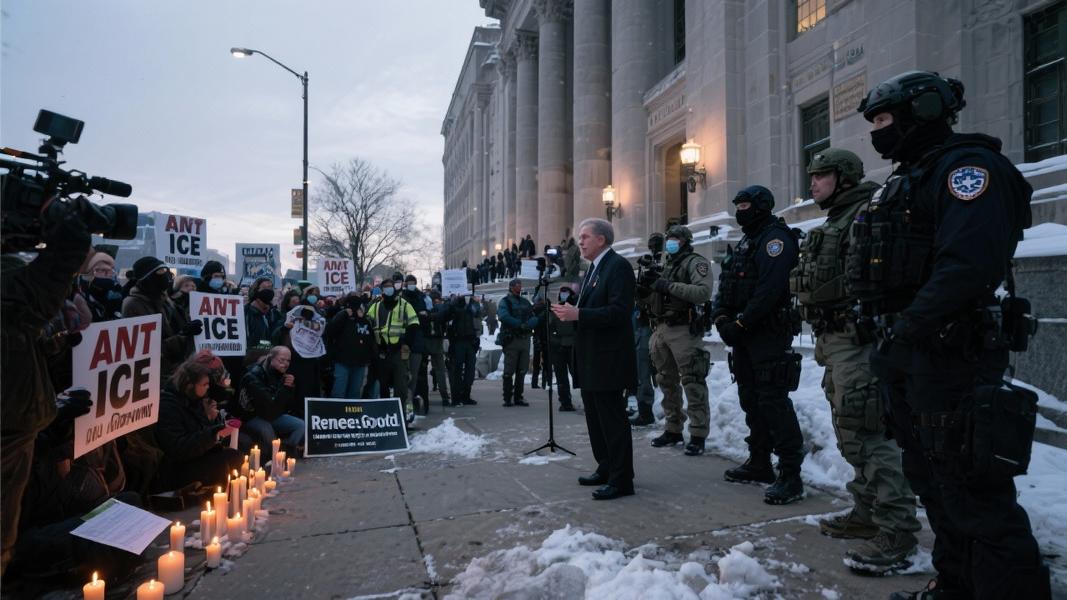
Tensions Escalate as Minneapolis Reels from ICE Officer’s Fatal Shooting of American Citizen
A City in Crisis
One week after Immigration and Customs Enforcement (ICE) officer Jonathan Ross fatally shot 37-year-old American citizen Renee Good in Minneapolis, the city finds itself at the center of a growing national controversy that has sparked resignations, protests, and a high-stakes legal battle.
The January 7, 2026, shooting occurred while Good was in her SUV, which was stopped sideways in the street. The incident comes amid “Operation Metro Surge,” a Department of Homeland Security initiative launched in early December that dramatically increased federal agents in the Twin Cities to more than 3,000.
How did we get here? The surge of federal agents has created unprecedented tension between local and federal authorities, culminating in a lawsuit filed by the State of Minnesota alongside the cities of Minneapolis and St. Paul. The legal action seeks to declare ICE operations in the area unconstitutional and unlawful, with a hearing scheduled for January 14, 2026, at 8:30 a.m.
Local Officials Push Back
Minneapolis Mayor Jacob Frey has not minced words about the federal presence. He’s standing firmly behind his blunt directive for ICE to “get the f*** out of Minneapolis” while calling for a thorough investigation into Good’s death. His comments reflect the growing divide between local governance and federal enforcement operations.
Meanwhile, the case has triggered significant upheaval within the legal community. At least four federal prosecutors in Minneapolis have resigned over concerns about the Department of Justice probe into Good’s alleged ties to protests. One departing prosecutor stated bluntly, “There is currently no basis for a criminal civil rights investigation.”
Minnesota Governor Walz expressed dismay at the resignation of U.S. Attorney Joe Thompson, calling him “a principled public servant who spent more than a decade achieving justice for Minnesotans. This is a huge loss for our state.”
Conflicting Narratives
The official account of events leading to Good’s death remains contested. DHS Secretary Kristi Noem has defended the ICE officer’s actions, claiming that Good had been “stalking and impeding ICE all day” prior to the shooting, according to reports.
This characterization stands in stark contrast to the outrage expressed by local officials and community members who’ve organized vigils and protests in the wake of the shooting. The conflicting narratives highlight the deep divisions that have emerged since Operation Metro Surge began.
The lawsuit against federal authorities represents an extraordinary legal challenge to federal immigration enforcement activities. With both sides digging in, the hearing next week could mark a pivotal moment in determining the boundaries between federal authority and local governance.
As Minneapolis approaches the one-week mark since Good’s death, the city finds itself not just mourning a resident, but grappling with fundamental questions about power, jurisdiction, and accountability that will likely reverberate far beyond Minnesota’s borders.
