
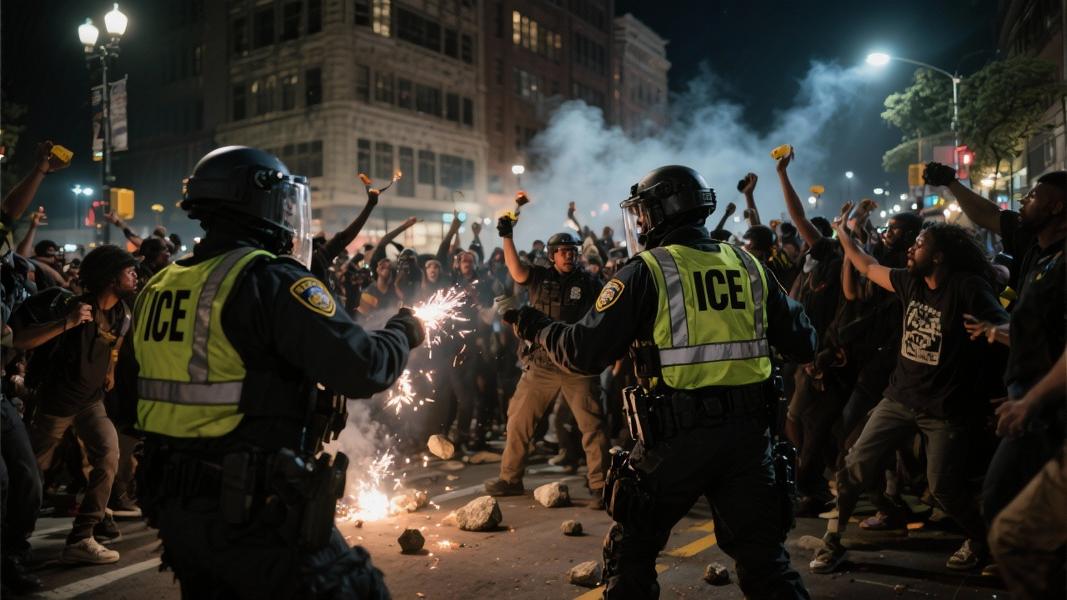
The Insurrection Act, a powerful but rarely used presidential tool for deploying military forces on American soil, hasn’t been invoked in more than three decades — a streak that underscores both its extraordinary nature and the significant implications whenever a commander-in-chief considers its use.
America’s Domestic Military Deployment Authority
Dating back to 1792, the Insurrection Act grants presidents the authority to deploy active-duty military forces within U.S. borders under specific circumstances — when states can’t or won’t maintain order, when insurrections threaten federal authority, or when citizens’ rights are being systematically denied. Despite its far-reaching powers, the legislation has been invoked only about 30-40 times throughout American history.
The last time a president reached for this extraordinary power? The 1992 Los Angeles riots following the acquittal of four police officers in the Rodney King beating case. Then-California Governor Pete Wilson requested federal military assistance from President George H.W. Bush, who responded by deploying approximately 4,000 troops to help restore order.
“It’s not a decision any president takes lightly,” said one constitutional scholar who has studied the act’s applications. “The deployment of military forces against American citizens represents one of the most sensitive actions a commander-in-chief can authorize.”
Legal Framework and Presidential Discretion
What exactly does the Insurrection Act allow? The legislation contains several key provisions that outline when and how presidents can deploy military forces domestically. Section 251 permits deployment at a state’s request, while Sections 252 and 253 grant presidents authority to act even without state approval in certain circumstances — particularly to enforce federal laws or suppress insurrections that deprive citizens of their constitutional rights.
President Bush’s 1992 invocation came through Executive Order 12804, which federalized California’s National Guard and deployed thousands of Army soldiers and Marines to Los Angeles. The troops remained until order was restored in the city, where riots had erupted after the controversial verdict in the King case.
Beyond the LA riots, the act has been used in a variety of historical contexts. Presidents have deployed federal troops to enforce desegregation orders, quell labor disputes, and respond to other instances of civil unrest throughout American history. Each use represents a moment when normal civilian law enforcement was deemed insufficient to maintain order.
A High Bar for Deployment
Why has the Insurrection Act remained unused for over 30 years? Legal experts point to its extraordinary nature and the significant constitutional questions it raises about separation of powers, federalism, and civil liberties.
The threshold for deployment remains deliberately high. Presidents must determine that a situation has deteriorated beyond the capacity of local and state authorities to handle, or that federal laws or constitutional rights are being systematically violated without adequate state response.
That’s by design, many constitutional scholars argue. The framers were deeply suspicious of standing armies and military intervention in civilian affairs, which is reflected in the act’s limited scope and the rarity of its use.
Still, the act remains available as a tool of last resort, sitting in the presidential toolkit should circumstances arise that might warrant its use. Its very existence underscores the tension between federal authority and state sovereignty that has characterized American governance since the nation’s founding.
As one crisis management expert noted, “The fact we’ve gone three decades without needing to invoke it may speak to the resilience of our institutions — or perhaps to the reluctance of presidents to cross that particular Rubicon without absolute necessity.”
