
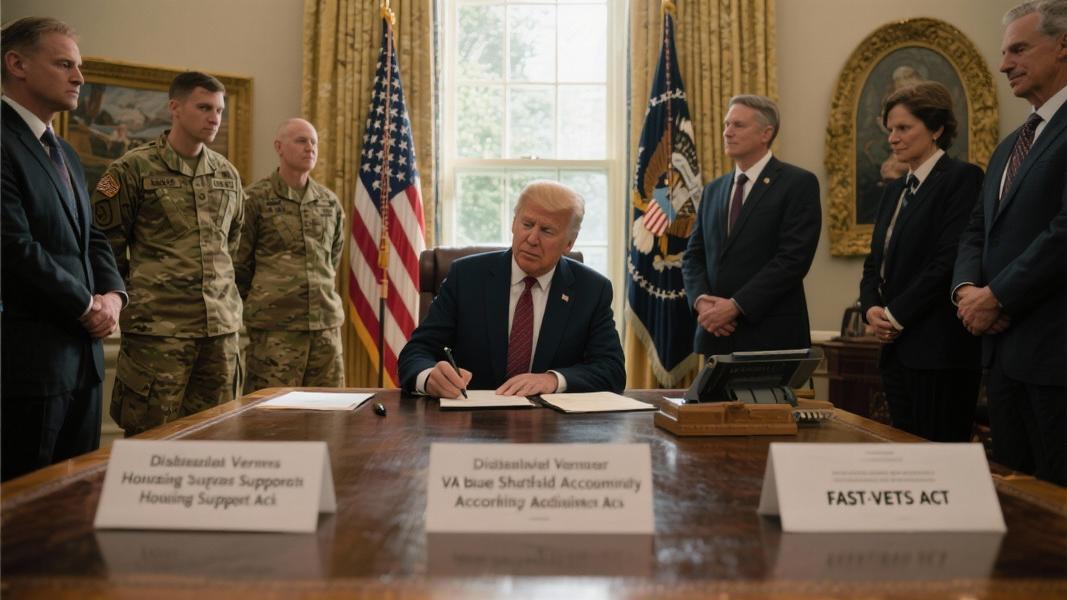
President Signs Three Veterans Bills into Law, Expanding Housing and Employment Support
In a significant boost for disabled veterans, President Biden signed three bills into law Tuesday aimed at improving housing accessibility, financial transparency, and employment transition services for those who served in uniform.
The most impactful of these measures, the Disabled Veterans Housing Support Act (H.R. 224), fundamentally changes how veterans’ disability compensation is treated when applying for housing assistance. The legislation mandates that service-connected disability payments be excluded when calculating income eligibility for housing programs — effectively opening doors for thousands of disabled veterans previously caught in a benefits trap.
Why does this matter? For years, disabled veterans have faced a frustrating catch-22: the very compensation they receive for service-related injuries often pushed their “official” income just high enough to disqualify them from housing assistance programs. The new law, which passed the House in February 2025 after being introduced the previous month, eliminates this barrier.
Three Bills, One Mission
The signing ceremony also included two additional veterans-focused bills. The VA Budget Shortfall Accountability Act (H.R. 1823) requires detailed reporting on funding gaps within the Department of Veterans Affairs, addressing long-standing concerns about transparency in VA finances.
Completing the trio is the FAST VETS Act (H.R. 4446), which specifies when veterans’ vocational rehabilitation plans must be redeveloped. The bill’s full title — Focused Assistance and Skills Training for Veterans’ Employment and Transition Success Act — highlights its aim to smooth the often bumpy road from military to civilian employment.
“This package of bills represents our ongoing commitment to those who’ve served,” the President said during Tuesday’s signing. “We’re working to ensure that service-connected disability compensation won’t prevent veterans from accessing the housing assistance they need, and for other purposes.”
Looking Beyond Implementation
The housing support act doesn’t stop at changing eligibility requirements. As part of the legislation, the Comptroller General will submit a comprehensive report to Congress examining how disability compensation is currently treated across all Department of Housing and Urban Development programs.
This report is expected to include legislative recommendations for better serving both veterans and traditionally underserved communities — potentially setting the stage for even broader reforms in coming years.
But will these changes be enough? Veterans advocacy groups have praised the legislation while noting that housing affordability remains a significant challenge for many former service members, particularly those living in high-cost urban areas.
For disabled veterans like Army veteran Michael Herrera, who lost his left leg during a tour in Afghanistan, the change can’t come soon enough. “I’ve been turned down for housing assistance twice because my disability pay pushed me over the income threshold,” he told reporters last month. “It’s like being penalized for getting injured while serving your country.”
With implementation set to begin immediately, veterans currently seeking housing assistance should check with local VA offices about how these changes might affect their eligibility status. The true impact of these bills will likely become clearer in the months ahead as agencies adjust their policies and procedures to comply with the new requirements.
