
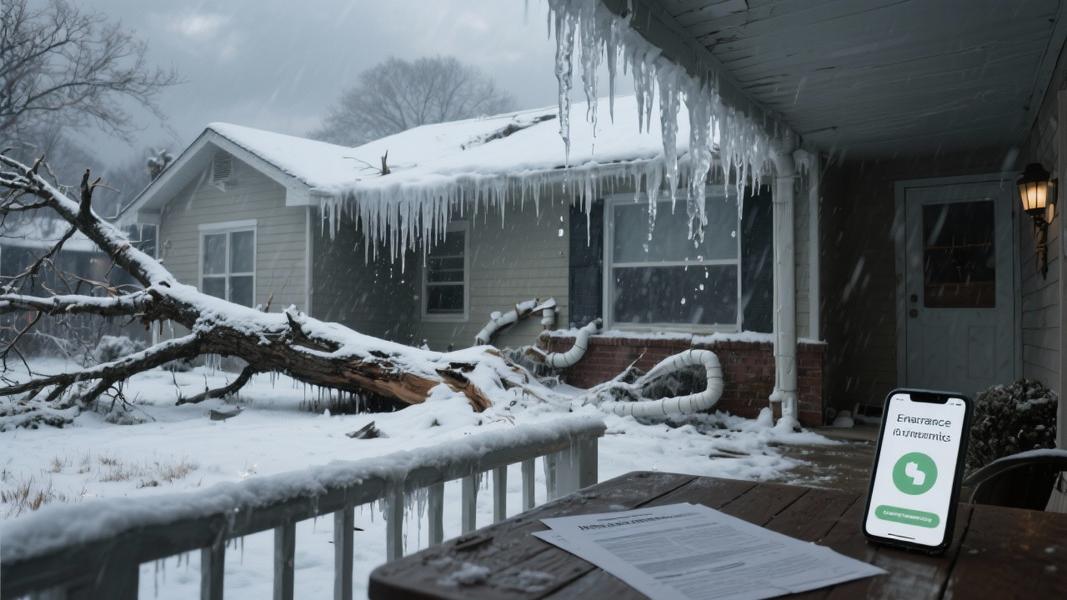
The winter storm that slammed into Dallas-Fort Worth on January 24, 2026, has left homeowners scrambling to assess damages while insurance companies brace for an avalanche of claims. Frozen pipes, collapsed roofs, and water damage have transformed neighborhoods across North Texas into disaster zones as temperatures plunged well below freezing.
For many Texas residents, the pressing question now is whether their insurance will cover the extensive damage left in the storm’s wake. Most homeowner’s insurance policies do cover damage caused by ice and snow, according to information from the Texas Department of Insurance, offering some relief to affected property owners who confirmed their coverage before filing claims.
Claims Surge Overwhelming Insurers
Insurance companies are already feeling the strain. USAA alone has received more than 50,000 claims, with the vast majority stemming from power outages and burst pipes. Industry analysts expect that number to multiply as more homeowners discover damage in the coming days.
“We’re looking at hundreds of thousands of claims across the state,” said one industry expert who asked not to be named. “The scale of this disaster is becoming clearer by the hour, and it’s massive.”
The damage reports flooding in from across the Dallas-Fort Worth metroplex paint a grim picture: homes with multiple burst pipes, ceilings that have collapsed under the weight of ice, and water intrusion damaging walls, floors, and personal belongings. Many residents found themselves unprepared for the severity of the winter storm, despite Texas having faced similar weather events in recent years.
Act Fast, Document Everything
What should affected property owners do now? Insurance experts emphasize that acting quickly is crucial. Taking immediate steps to mitigate further damage not only protects your property but also preserves your rights under your insurance policy.
Legal experts specializing in insurance claims advise property owners to document everything thoroughly. Take photos and videos of all damage before beginning cleanup, save receipts for any emergency repairs, and keep detailed records of all communications with your insurance company.
For businesses, the situation can be even more complex. Commercial properties face not only physical damage but also potential business interruption losses that could extend for weeks or months.
Alternative Coverage Options
What about Texans who struggle to find coverage in the traditional insurance market? The Texas Windstorm Insurance Association (TWIA) provides an alternative for those unable to secure coverage through private insurers, though their focus is primarily on windstorm and hail damage rather than freeze-related issues.
Still, many homeowners are discovering gaps in their coverage they never knew existed. Deductibles, exclusions, and policy limits can significantly impact how much financial assistance they’ll actually receive.
“We’re seeing people who thought they were fully covered suddenly facing thousands in out-of-pocket expenses,” noted a local insurance agent. “The fine print matters, especially in disasters of this scale.”
As claims continue to mount, residents across North Texas face a long road to recovery. With repair contractors already booked for weeks and materials in short supply, the economic impact of this winter disaster will likely be felt well into summer—a cold comfort for those currently living with tarps on their roofs and fans drying out their water-damaged homes.
