
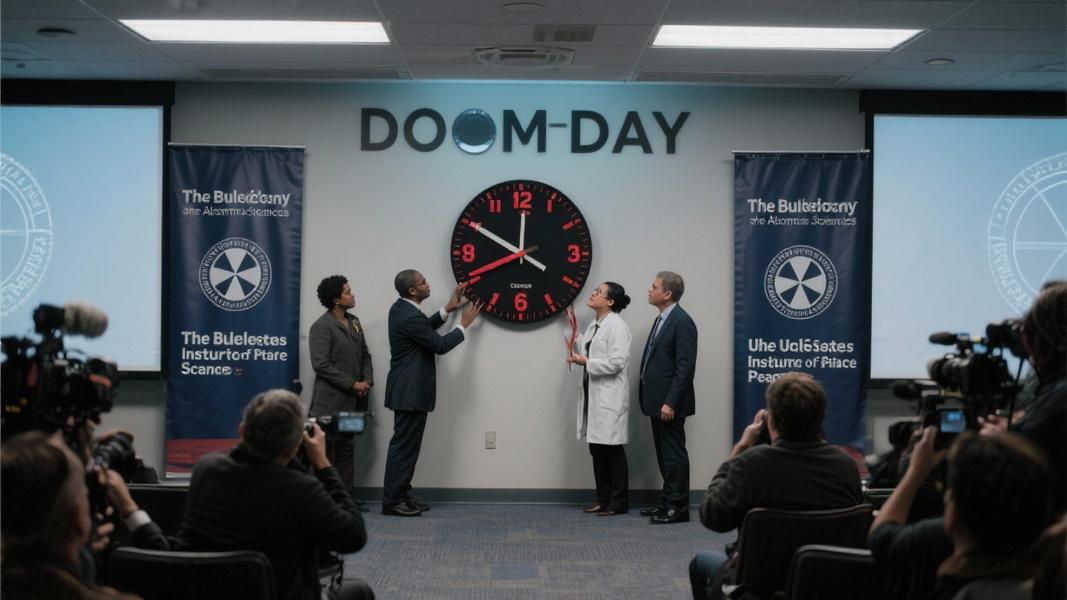
The Doomsday Clock just ticked closer to apocalypse. In an alarming development that signals growing global peril, the Bulletin of the Atomic Scientists has moved the symbolic Doomsday Clock to a mere 85 seconds to midnight — the closest to catastrophe it has ever been in its 79-year history.
On January 27, 2026, the Bulletin’s announcement marked a four-second advance from last year’s already precarious 89 seconds, reflecting scientists’ deepening concerns about humanity’s proximity to potential annihilation. The clock, which has served as a metaphorical warning system since 1947, has never before indicated such imminent danger.
Multiple Threats Converge
What’s pushing humanity closer to the brink? A perfect storm of existential threats, according to the scientists. The adjustment reflects escalating dangers from nuclear weapons proliferation, accelerating climate change, emerging biological threats, and increasingly powerful artificial intelligence technologies developing with insufficient safeguards.
“In every area, we have failed to take the steps that are necessary to reduce risks, and there are new developments in every area that make the risks greater,” said Steven Fetter, a Professor of public policy at the University of Maryland and Science and Security Board member. His stark assessment underscores the Bulletin’s growing alarm that global leaders aren’t adequately addressing these converging crises.
The clock’s movement represents more than just symbolic hand-wringing. Since its creation by Manhattan Project scientists who helped develop the first atomic weapons, the Doomsday Clock has served as a barometer for humanity’s proximity to self-destruction. Its settings are determined annually by the Bulletin’s Science and Security Board in consultation with its Board of Sponsors, which includes numerous Nobel laureates.
A Dangerous Trajectory
This isn’t a sudden lurch toward danger. The clock has been creeping closer to midnight for years, moving from 100 seconds in the early 2020s to 90 seconds in 2023, then 89 seconds in 2025, before reaching the current record of 85 seconds. Each adjustment signals the scientists’ increasing concern about humanity’s trajectory.
Is there any hope of turning back the clock? The Bulletin insists there is — but only with urgent, coordinated global action. The proximity to midnight isn’t meant to inspire fatalism but rather to shock the world’s leaders and citizens into recognizing the severity of the threats and taking decisive action.
Local news coverage of the announcement has been widespread, with stations like WAAY 31 News broadcasting special reports explaining the significance of the new setting and its implications for global security.
Looking Forward
The Bulletin’s decision comes at a time of heightened international tensions, environmental tipping points, and rapid technological advancement. The 85-second mark serves as both warning and challenge — a stark reminder that humanity’s continued existence isn’t guaranteed without conscious effort to address these threats.
Notably, this is the first time the clock has been set to a measurement smaller than minutes and seconds, with the 85-second mark representing an unprecedented level of precision in the Bulletin’s assessment of global danger.
As the world absorbs this sobering milestone, the question remains whether it will serve as the wake-up call scientists intend — or whether next year might see the clock tick even closer to midnight’s final chime.
